Home Retrofit

Canada is preparing for a major expansion of renewable electricity as the country attempts to meet rising power demand, electrify more of its economy and reduce greenhouse gas emissions. However, the rapid growth of energy-intensive data centres, particularly in natural […]
The post Renewables Set to Lead Canada’s Power Expansion as Alberta Data Centres Drive Demand appeared first on Green Building Canada.
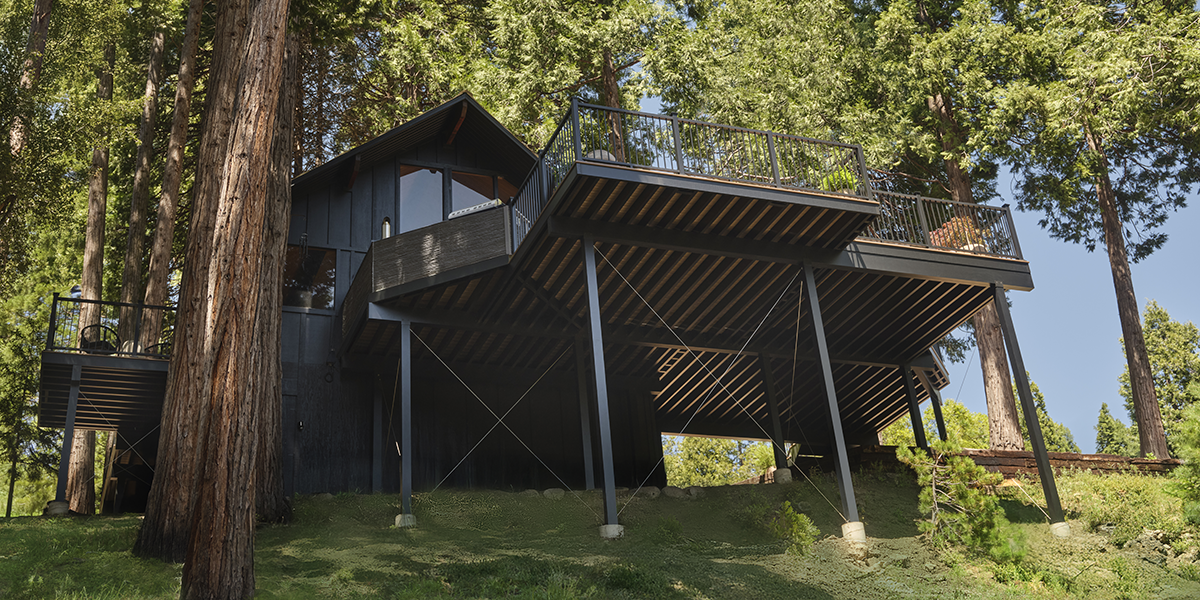
A couple who spent their careers in healthcare wanted a home where they could age in place and that reflected their values: the importance of wellness, connections to nature, and a minimized carbon footprint. They got their wish with the 5,700-square-foot single-family home in Greenwich, Connecticut that they completed in 2025.
Since 2017, each annual service report of our 15+ year old boiler had been concluding with some minor comments and a bigger one – “replacement within the next two years recommended”. The Boiler Upgrade Scheme (BUS) was officially launched in 2022 to support the transition to low-carbon heating. Towards the end of 2023, the grant amount for a heat pump under the scheme increased to £7,500. The timing of this happened to be good for us and conscious that often with such grants you blink and miss them, we filled in the application with our provider in the summer of 2024.
The prerequisites then were a fully refundable (until the day before the installation) advance payment of £200 and a recent EPC (under 10 years) with no outstanding recommendations for cavity wall insulation. Our house is a three-bedroom semi, built as part of a council estate in Hove around 1950.
Regardless of the peace of mind that we wouldn’t have issues with the application, we did understand how important reducing heat loss is in an old home when you want to supply heat with an all-electric system. Electricity is still expensive and crucially we wanted to be sure this solution would work well and efficiently. We had done a lot of work in the house to improve efficiency: loft retrofit insulation, ground floor retrofit insulation with the opportunity of a ground floor extension, new double-glazed windows, and a new entrance door.
Once our application was submitted, we were booked in for a home survey about three weeks later. The home survey was meant to confirm the property’s eligibility for a heat pump and collect all the necessary information to run a heat loss calculation. The surveyor looked at every room, the loft and the outside, taking some measurements and making notes of materials and evidence of insulation. They took note of our boiler details, reviewed pipework and measured radiators.

The team calculated the heat loss and identified that with each individual radiator’s output it couldn’t be met. They suggested replacement radiators, but they were only able to offer a particular make – unfortunately with very little choice both in terms of dimensions and style. Here’s where we put out engineer hats on and ran the calculations. Over a period of a month, we bounced ideas and ran the numbers, checking specifications, dimensions and locations. We agreed to add four radiators in different rooms. Our provider wouldn’t be able to undertake this installation as they could only do it for their offered products. As we chose to go our own way, we would have to install the new radiators on our own and have the provider’s installation team review the system ahead of installing the heat pump.
We also had to resolve the issue of the space arrangement of the tank and vessels. Our preferred option was to house these in the utility cupboard where our boiler and washing machine previously were, as any other solution would be quite intrusive in running all required connections. The space was marginally smaller than what was required, but the install team working around this by finding and specifying a slim line version of the tank.

The installation took three days in early January 2025, and the pump has been running smoothly and keeping us warm without issues for just over a year now.
The first thing I noticed was how uniform the temperature felt throughout the house and throughout the day. With our boiler, in an effort to be as efficient as possible, we were running an almost militant schedule of operation with different running hours and setpoints per room depending on our schedule. With the heat pump running constantly all spaces feel equally comfortable 24/7.
A common concern around heat pumps is how noisy they can be. Although our external unit is on the wall on a path shared with our next-door neighbours, they have happily declared that they never hear it. Perhaps our context is idea, or perhaps domestic heat pump technology has managed to deliver practically quiet equipment, but it was definitely a happy myth buster for us.
We have optimised the heating for domestic hot water, as well as the weekly high temperature legionella cycle to match the times of day when our tariff is lowest.
The original set up of the heat pump was controlled by our existing smart meter based on the thermostat. We experimented with different settings and features and found that the weather department is the most efficient. This reads the outside temperature from sensors on the heat pump and adjusts the flow temperature in the system to ensure a stable internal temperature.

Our heat pump is a 8kW pump with blygold coating because of our coastal location. According to its specification, the seasonal coefficient of performance should be 3.48 for heating and 2.75 for hot water. Our total produced heat in the year was 6,192 kWh and the total input was 1,819 kWh, just about verifying the efficiency to 3.4 for heating. For hot water, our total produced heat was 1,183 kWh from a total input of 430 kWh, achieving exactly 2.75. Based on metered data these efficiencies were almost 100% verified in use.
We’ve been monitoring our energy consumption and playing around with our data since 2018. It tells an interesting story.
Our gas energy consumption decreased between 2018 and 2024 when the gas supply was disconnected after the installation of the heat pump. The rate of decrease varied and different energy efficiency measures contributed to a demand reduction: radiator ’s and smart control and programming of heating operation, retrofit floor insulation, loft insulation and new double-glazed windows and door. Our electricity consumption has remained relatively stable bar a spike over the pandemic, with an upward trend since the installation of the heat pump.

Looking at our last year of gas heating and our first year of the heat pump, our energy consumption over 2025 has been a fraction of that of 2024, with a 32% reduction on average. Although this is just an indicative comparison as the weather conditions of different years will impact a system’s performance, the drop in energy consumption during the heating season is impressive.
With the electricity prices remaining high and further increasing, this ambitious downward trend is unfortunately not reflected in the cost comparison. Our first year with the heat pump cost us about £100 more than the year before (approximately 7% increase). The energy landscape is continually changing, and it isn’t easy to predict future trends. Perhaps the only way to control this right now is through on-site energy generation and a lesser reliance on the grid as a result.

The journey requires patience, but the rewards are substantial: a more comfortable home, lower-carbon heating, and a meaningful contribution towards our net-zero ambitions for 2050.”
Overall, switching to a heat pump has been a strongly positive experience for us, with the increased level of thermal comfort in the house being the most impactful advantage of the new system. We initially thought that our house would be a straightforward candidate for a heat pump: fairly typical typology, no major space restrictions, and in the best possible state in terms of energy efficiency for its age and condition. Still, there were many considerations to make a heat pump a workable solution in a house that was never originally designed for one. In many ways, this is simply the latest chapter in the house’s evolution. The house has seen a few heating systems in its 80-year life, from coal burning fireplaces in each room, to gas fireplaces, open cylinder gas boiler, a combi boiler and now a heat pump. Each transition would have required thoughtful adaptation, skilled workmanship and a willingness to embrace change. We were fortunate that the teams we engaged with – from the initial sales discussions through to installation – were flexible and accommodating to purposeful conversations about our needs.
Both professionally and personally, I would enthusiastically recommend a transition to a heat pump to anyone interested. Your chosen provider will have an eligibility checklist; but beyond that, success often depends on investing time, asking questions, and communicating clearly throughout the process. The journey requires patience, but the rewards are substantial: a more comfortable home, lower-carbon heating, and a meaningful contribution towards our net-zero ambitions for 2050.
The post A Domestic Heat Pump: A Year in Review appeared first on UKGBC.

THE GAMECHANGERS
COUNTRY BEST PRACTICE AWARDS PROGRAM PROVIDES TOPICAL ANALYSIS OF KEY TRENDS, OPPORTUNITIES, CHALLENGES AND RISKS REPRESENTING SIGNIFICANT REGIONAL INTEREST OR CONCERN ACROSS A RANGE OF INDUSTRIES AND WORK AREAS. THE GUIDE PRESENTS ACCESSIBLE INSIGHT INTO THOSE ISSUES TRANSCENDING GEOGRAPHICAL BORDERS AND IMPACTING STRATEGIC DECISION MAKING AT AN INTERNATIONAL LEVEL.

Country Best Practice Awards 2022 provides a unique perspective on evolving corporate landscapes in major jurisdictions around the world and an opportunity to discover more about the people behind the most interesting facets of their sector.
Country Best Practice Awards are presented to those professional sector organisations and individuals who are demonstrating consistent excellence and quality in their fields, and those deemed to have continually made the greatest contribution to their country’s economic growth.METHODOLOGY
subscribers were asked to nominate / vote for those who they felt (in their own experience) were the leading players within their associated jurisdiction.
Country Best Practice Awards special report will provide professional thought leaders with a platform for sharing their views on current market conditions and developments of their region and the role they play within it.© GBE GBC GBL NGS ASWS Brian Murphy aka BrianSpecMan **
12th January 2017 – 2nd December 2021


© GBE GBC GBL NGS ASWS Brian Murphy aka BrianSpecMan **
12th January 2017 – 2nd December 2021
© GBE GBC GBL NGS ASWS Brian Murphy aka BrianSpecMan **
12th January 2017 – 2nd December 2021
The post GBE Awards (Navigation) appeared first on Green Building Encyclopaedia.
GBE > Projects > Calculators > G#43961
Context:
After 50 years in construction as a technician, architect, consultant specification writer on £2420m worth of projects, as an environmental specification consultant and in Architectural Education; BrianSpecMan Murphy has become very conscious of the knowledge gaps that exist within students, graduates, professionals and construction industry wide.
GBE Green Building Encyclopaedia, GBL Green Building Learning & GBC Green Building Calculator websites have been, are creating or planning several Design & Decision Tools (D&DT), Jargon Busters, CPD seminars and Lectures, Brain Dumps, Checklists, Issue papers, Guest Articles, etc. to try to address some of those knowledge gaps:
GBC Design & Decision tools and Carbon Calculators being developed include:
Ambition and progress:
Method Statement of Approach:
Under Greek advice we got back to Mechanical Ventilation basics
Identifying and recording: (Substantially complete)
Following Swedish advice: investigate the surface materials
Continuing GBC approach looking at building fabric: and exploring the ingredients: (Substantially developed)
Cataloguing ingredient chemistry, materials and products that have potential to affect IAQ: (only >125 so far)
Capture data about chemistry and material ingredients (Pending)
© GBE GBC GRC GIC GGC GBL NGS ASWS Brian Murphy aka BrianSpecMan ******
11th July 2026
Initials, Abbreviations, Acronyms:
© GBE GBC GRC GIC GGC GBL NGS ASWS Brian Murphy aka BrianSpecMan ******
11th July 2026
The post GIAQC Green Indoor Air Quality Calculator (Proposal) G#43961 appeared first on Green Building Encyclopaedia.
GBE > Projects > Calculators > G#43948
Initials, Abbreviations, Acronyms:
© GBE GBC GRC GIC GGC GBL NGS ASWS Brian Murphy aka BrianSpecMan ******
11th July 2026
The post GIC Green Interior Calculator (Proposal) G#43948 appeared first on Green Building Encyclopaedia.
If you’re missing from this list contact BrianSpecMan


Building Biology Association BBA logo


Partner Organisation Courses & Events
40 St Dunstans Road, Worthing, West Sussex BN13 1AB United Kingdom


(Just occasionally events about the greening of concrete, mostly not)


(Not very eco, no evident filtering of exhibits and exhibitors)


Show 21-23 June 2016
Webinar 25th November 2015 FM Trends Debate
(forus on health and wellbeing and evidence based design)
FIRA Furniture Industry Research Association
(Constructing Excellence, occasional green issues)


GBE Green Building EncyclopaediaBrianSpecMan CPD: This page centre column (NGS also)
Speakers like Jonathan Hines (Director of ARCHITYPE) and Nick Baker (Martin Centre, University of Cambridge) are participating.
![]()
(Green, BIM, etc.)


(occasional green issues)
SKA Rating Assessor Courses


(Skills, training and events centre)
(New home for CAP’EM Build4 exhibition)


(Some of the best CPD going) (Training and membership group)
(BrianSpecMan is one of their core trainiers)


Timber Expo NEC Birmingham
video http://www.timber-expo.co.uk/industry-news/visitors-video-2012/#.UdE8c5yoD3A
Spring issue of Expozine


© GBE GBC GRC GIC GGC GBL NGS ASWS Brian Murphy aka BrianSpecMan ******
22nd December 2012 – 10th July 2026


How to specify low impact healthy materials in Refurbishment
GBE In-house CPD at HTA Architects.

Circular economy for buildings About
GBE Learning Webinar #1 How to take action now

How NOT to overheat buildings About
GBE Learning Webinar #2 How to take action now

GBE CIOB Overheating (Event) G#27397


September 5th: 5Plus Architects:

Green or Violet materials, which do you use (CPD) #G15560

Circular Economy ZWS SEDA (Event) G#27448
© GBE GBC GRC GIC GGC GBL NGS ASWS Brian Murphy aka BrianSpecMan ******
20th December 2012 – 10th July 2026
© GBE GBC GRC GIC GGC GBL NGS ASWS Brian Murphy aka BrianSpecMan ******
20th December 2012 – 10th July 2026
The post Event Organisers (Events) G#43929 appeared first on Green Building Encyclopaedia.
This summer is delivering heat domes, hurricanes and flooding across the country and homes are getting wiped out or otherwise undergoing irreparable damage. Not to mention the impact to a homeowner’s health and comfort, which can be profound both short term and long term.