Tag: blog

  • Promoting Sustainability: A Glimpse into COCENA’s Green Building Advocacy at SIERRA’s eFACiLiTY®

    On January 7, 2025, the Coimbatore Civil Engineers Association (COCENA) hosted a pivotal event at SIERRA’s eFACiLiTY® Building, shining a spotlight on the future of sustainable construction.

    The event brought together civil engineers, industry leaders, and sustainability advocates, all eager to engage in discussions about green building practices, sustainability, and energy efficiency in construction.

    Program Highlights and Key Insights

    The event was thoughtfully organized to provide attendees with a comprehensive understanding of the significance of green buildings. The schedule included a mix of ceremonial and informative segments:

    Insights from Key Speakers:

    The event kicked off with a welcome address by Mr. Muthamilselvan, President of COCENA, who highlighted the organization’s vision for sustainable construction practices. Following this, Mr. Guruvayurapon, State Assistant President & Advisor of COCENA, shared insights into the association’s ongoing activities and commitment to greener initiatives. Mr. S. Alwar Babuji, Activity Chairman, provided an engaging introduction to the event and emphasized its technical importance, while Mr. Karthi, Past President & Advisor, offered a historical perspective and reinforced the importance of the green building movement in today’s world. The President, Mr. Muthamilselvan, honoured Mr. Giridhar, CEO & Managing Director, SIERRA ODC Private Limited.

    A Deep Dive into Green Building Principles

    Presentation by Mr. Giridhar JG: His engaging presentation gave attendees a closer look at the impacts of climate change and the role of buildings in contributing to this global challenge. He highlighted how atmospheric CO2 levels have been rising since the industrialization era and the health impacts associated with this increase, including the effects of both elevated CO2 and particulate matter from emissions. The session emphasized the dire need to control carbon emissions and the urgent goal of achieving NetZero by 2050 to mitigate the effects of climate change.

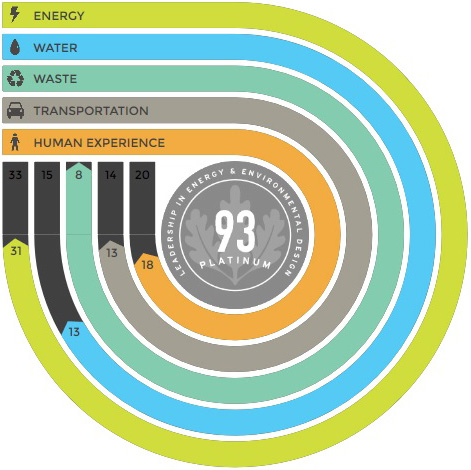
    This was followed by the eFACiLiTY® Building video presentation, which provided insights into the various measures taken to reduce emissions. These measures included energy conservation, water conservation, waste reduction, recycling, rainwater harvesting, improving occupant health & well-being, automation, and more. The video also highlighted how the eFACiLiTY® building achieved the World’s 2nd Highest ranking Green Building under the USGBC’s LEED NC v2009 rating system and India’s Highest ranking WELL Platinum certified Healthy Building, rated by the IWBI’s WELL V2 rating system.

    Guided Tour of SIERRA’s eFACiLiTY® Building

    Attendees were then led on a guided tour of SIERRA’s eFACiLiTY® Building, where Mr. Malleeswar, Assistant Manager – Systems and Mr. Reuban, Senior System Administrator, walked them through the building’s green features, automation systems, and employee wellness strategies. The tour offered a firsthand look at how sustainability is integrated into every aspect of the building, from energy-saving technologies to eco-friendly materials and design choices.

    The attendees spent approximately three hours exploring the building and engaging with the experts on-site, gaining valuable insights into how sustainability is embedded in the building’s architecture and operations.

    Key Takeaways for Participants

    Attendees left the event with a wealth of knowledge, from technical insights into energy-saving techniques to understanding the broader environmental and economic benefits of sustainable construction. The program also highlighted how green buildings contribute to healthier communities and long-term cost savings.

    Looking Ahead: COCENA’s Commitment to Sustainability

    COCENA’s event at SIERRA’s eFACiLiTY® Building effectively highlighted the association’s commitment to advancing green building practices and promoting sustainability within the construction sector.

    At SIERRA, we remain dedicated to supporting initiatives like these, which inspire engineers and industry professionals to adopt sustainable practices in their own projects.

    As we continue our journey toward a greener, more sustainable future, we look forward to collaborating with stakeholders across the industry and fostering more knowledge exchange on innovative green building technologies and practices.

    By leading through example, SIERRA is proud to be part of the growing movement toward a more sustainable Coimbatore, and we look forward to seeing the positive impact of these efforts ripple throughout the region.

    About SIERRA and eFACiLiTY®

    SIERRA with over two decades of expertise, is headquartered in India, with offices in Malaysia and the USA, serving over 200 clients across 30 countries.

    eFACiLiTY® is our leading IWMS & CAFM solution, offering 35+ modules that also cater to Environmental Sustainability and Health & Well-being needs of Smart Buildings.

    Hashtags:
    #GreenBuildings #SustainableConstruction #EnergyEfficiency #COCENA #SustainabilityMatters #EcoFriendlyArchitecture #GreenBuildingTour #SustainableLiving #FutureOfConstruction #GoGreen #GreenInfrastructure #SmartBuildingPractices #ClimateAction #BuildGreen

  • CEBACA’s Technical Updation Program & Insights into eFACiLiTY® Building Innovations

    On August 13, 2024, the Coimbatore Builders and Contractors Association (CEBACA) hosted a highly informative Civil Engineers Technical Updation Program at SIERRA’s eFACiLiTY® building. SIERRA’s eFACiLiTY® Building is rated as the World’s 2nd Highest ranking Green Building under USGBC’s LEED NC v2009 rating system and India’s Highest ranking WELL Platinum certified Healthy Building rated by IWBI’s WELL V2 rating system.

    The event provided attendees with valuable insights into the latest advancements in green building technologies and practices. The program featured a series of engaging presentations by industry experts on crucial topics related to green building and sustainability:

    Green Building Norms

    Mr. Yusuf Turab, Managing Director of Inhabit & Buildscape, Coimbatore, shared his expertise on green building norms, offering attendees an overview of the standards and best practices that drive sustainable construction and design.

    Power Generation

    Mr. L.R. Venkatesh from Vesat Renewables Private Limited, Coimbatore, addressed power generation, offering tips on power savings and strategies. He highlighted innovative solutions for renewable energy and discussed how these can be integrated into green building projects to enhance sustainability.

    Water Saving Tips

    Mr. Prakash Krishnan, Chairman of the India Plumbing Association, Coimbatore Chapter, shared practical water conservation tips. He talked about the benefits of using aerators on faucets, water recycling, and other effective measures to reduce water usage and manage resources efficiently.

    In addition to these expert talks, Mr. Malleeswar, Assistant Manager – Systems at SIERRA ODC Private Limited, gave a detailed overview of the green features and automation implemented in the eFACiLiTY® building, as well as the employee wellness strategies integrated into the facility. This highlighted the building’s emphasis on sustainability through advanced technologies and thoughtful design. These strategies contribute to a healthier and more productive work environment, setting a benchmark for future green building projects.

    The event was a significant opportunity for civil engineers and construction professionals to stay updated on the latest trends and technologies in the field of green building. CEBACA’s initiative to organize such a comprehensive program underscores their dedication to promoting sustainable practices and advancing the industry’s knowledge base.

    Overall, the Civil Engineers Technical Updation Program was a resounding success, providing valuable knowledge and practical insights that will benefit the participants and contribute to the growth of green building practices in the region.

    Hashtags:
    #CEBACA #eFACiLiTYBuilding #GreenBuilding #Sustainability #EmployeeWellness #AutomatedBuildings #PowerGeneration #WaterConservation #SustainableDesign #FacilityManagement #GreenBuildingNorms #RenewableEnergy

  • First Software Company in India to be WELL Certified

    Did you know that we spend about 90% of our time indoors? That is roughly 22 hours each day. Hence our indoor environments, such as the amount of daylight, the air quality indoors, the temperature, humidity, and the types of food we consume, among other things, have a compelling influence on our overall health and well-being.

    At our eFACiLiTY® building, your health is our priority. We believe that spaces have the power to positively impact every employee’s health, safety, and well-being, including yours. And that’s why we’re so pleased to share the news about our WELL Certification.

    We worked in tandem with a team at InHabit, a Coimbatore-based Green Building Consultant that helped introduce an array of positive, health-focused changes. Ergonomic furniture, water quality standards, circadian lighting, and outdoor physical activity spaces were just a few features we have incorporated that were informed by the WELL Building Standard™ (WELLTM).

    WELL combines best practices in design, construction, and operations with evidence-based scientific research – harnessing buildings as vehicles to support human health and well-being. Beyond the physical features, WELL also informs our organization’s policies and protocols, from the benefits we provide to our employees to the operational protocols we follow to keep our space safer and healthier.

    We invite you to visit our eFACiLiTY® building and explore the new features in our space and policies:

    • The Air Quality standards maintained inside our eFACiLiTY® building exceeds the standards set for the operation theatres in hospitals
    • Installation of additional fresh air fans with HEPA filters supplying 60% enhanced fresh air helps us to constantly maintain CO2 levels well below 600 ppm, PM5, and PM10 levels below 10 ppm within the facility. People having respiratory issues like asthma, dust allergy, etc. get mobile alerts when the air quality parameters breach optimum levels in their respective locations
    • Our eFACiLiTY® Smart Facility App ensures that the employees maintain a healthy diet. They are alerted when they try to order any food containing ingredients that could trigger allergies. The app promotes healthy food options by providing nutrient information and ingredients used in each meal item
    • Legionella control, sediment filtration, microbial elimination, and periodic water quality testing ensure high-quality water availability around the clock in our facility
    • Our eFACiLiTY® Occupant Wellness App caters to the human health & wellness standards for buildings specified in the WELL Building Standard™
      and equips our employees to monitor their physical activity, nutrition, and environmental parameters, enabling them to benchmark their physical activity amongst their peers at work. It enables them to move towards a much healthier lifestyle and improve their overall health & well-being
    • Our interiors, hallways, and staircases are designed with aesthetically pleasing regional artwork, light works, and various natural design elements like indoor plants installed at strategic locations
    • We have also integrated WELL related policies into our HR policies rendering them more employee health & well-being friendly and supportive to their personal life & family
    • We support mental health & well-being through our commitment to providing mental health education, programming, and initiatives like standing desks, fitness equipment, etc.
    • Feel a sense of security knowing that we have developed an emergency management plan and supporting resources

    Our eFACiLiTY® Building at Coimbatore is also rated as the World’s 2nd Highest Ranking Green Building under the U.S. Green Building Council LEED rating system NC v2009 and India’s Highest Ranking Green Building under the India Green Building Council (IGBC) Green New Buildings rating system.

    Learn more about WELL Certification at www.wellcertified.com

    Hashtags:
    #wellbuildings #IWBI #wellness #healthybuildings #healthyspaces #wellbuildingstandard #wellv2 #healthyworkplace #healthandwellness

  • Top 10 Reasons to Go Green | Green Living | Green Buildings

    10 Excellent Reasons to Go Green

    The moment anyone starts talking about going green, the question that pops up in the minds of most people is “why go green?” People talk about how the planet has been affected badly because of the tons of plastic and thousands of chemical products that are an environmental hazard. Of course, there are several ways to go green, however, the many reasons to go green now outnumber the ways to go green. The sad part is that most of these reasons are conveniently forgotten. One needs to pause for a moment and take stock of things, which will probably motivate all to join the very tiny band of crusaders who are desperately trying to make people understand the urgent need to go green. Here are 10 great reasons to go green:

    1) Adds value to your home

    Once you take steps to make your home eco-friendly, it automatically boosts the value of your home several points. By adopting sustainable energy practices like going for solar panels on your roof and windows, and opting for waterless urinals, and recycling grey and black water, you save money in the long run, and do your little bit towards saving the planet and making it greener. Using renewable energy methods has a positive effect on the environment.

    2) Considerable energy savings

    According to the U.S. Department of Energy, if all the buildings in the country were to go green, there would be $20 million savings on energy alone every year. What’s more, is a green home is entitled to special discounts. Remember, saving energy can start at very basic levels like using waterless urinals/toilets and recycling greywater. For instance, using the washing machine at full load each time helps save water and power as well.

    3) Smaller water bills

    Do you want to save a substantial amount on your water bill? Insist on using plumbing systems that are water savers and go for only Energy Star-rated appliances. These simple tricks will help you save hundreds of dollars, and you are still doing your bit for a greener planet.

    1) Adds value to your home

    Once you take steps to make your home eco-friendly, it automatically boosts the value of your home several points. By adopting sustainable energy practices like going for solar panels on your roof and windows, and opting for waterless urinals, and recycling grey and black water, you save money in the long run, and do your little bit towards saving the planet and making it greener. Using renewable energy methods has a positive effect on the environment.

    4) Green homes outlast others

    A green home can outlast a regular home. An eco-friendly home is built with care and it will turn out to be durable and will certainly last longer. It is a fact that recycled products tend to last a good 5 times longer than regular materials. There are sizable savings on maintenance and repairs of your home as well.

    5) Breathe easy

    When you live in an eco-friendly home and drive a vehicle that is eco-friendly as well, you are helping reduce pollution to that extent. The quality of the air indoors and outdoors is bound to be superior as it is cleaner and healthier, making you breathe easily. In the long run, breathing pure air will reflect in the perfect health of you and your family. Moreover, good health means fewer medical bills to pay.

    6) Think of your kids

    Give thought to your kids and what they will inherit tomorrow. It is the bounden duty of all parents to endeavor to leave behind a healthier world for the next generation. By helping create a cleaner and greener world, you are ensuring a bright future for your kids and their kids.

    7) Reduced carbon footprint

    Going green has a positive effect on reducing the carbon footprint. This is accomplished by reduced pollution. Moreover, when the amount of conventional energy being used is reduced, a cleaner and greener environment is guaranteed.

    8) Creativity in Recycling/strong>

    There is another side to recycling other than the considerable savings in energy and money. Several attractive and useful items can be created from recycled materials. This helps bring out the creativity in the artisans and also lays the path for being energy and material efficient. Going green involves recycling materials, hence insist on recycled materials when constructing new buildings.

    9) Self-sufficiency

    Green initiatives always end up with people depending less on fossil fuels, thus reducing noxious and toxic emissions. People can become self-sufficient and devise new ways to commute to work, saving energy in the process. Living sustainably involves using renewable sources of energy and other natural resources.

    10) Eating green

    Eating green is not only good for leading a healthy, disease-free life, it also has an impact on the ecosystem. Insisting on organic food and dairy products contributes to the economy and helps reduce the greenhouse emissions that would otherwise be caused by the indiscriminate use of chemical pesticides and fertilizer to grow food. Organic farming helps maintain the delicate ecological balance and goes a long way in conserving the planet.


    Hashtags:
    #gogreen #goinggreen #greenliving #sustainableliving #ecofriendly #sustainability #renewableenergy #recycling #greenbuilings #greenhomes #saveenergy #greeninitiatives
  • Green Building rating recommendations: How it is helping us during COVID-19?

    Green Building rating recommendations: How it is helping us during COVID-19?

    Green Building
    Hand Sanitizers

    When we embarked on our green building journey, as a building owner and as an occupant who may spend half my lifetime in this building, the importance of reducing the operational costs and making the ambience healthy was my key interest. At this time, grappling through the worst pandemic that I have seen in my lifetime, some of the decisions that I made influenced by the LEED rating system’s green building certification requirements flashed in my mind giving a sense of gratification and validation.

    Before the 21-day lockdown was announced, there was a lot of uncertainty on how this COVID-19 pandemic was heading and fear started gripping our people. The awareness and importance of using hand sanitizers and washing hands frequently set-in to most people.

    Hand Sanitizers
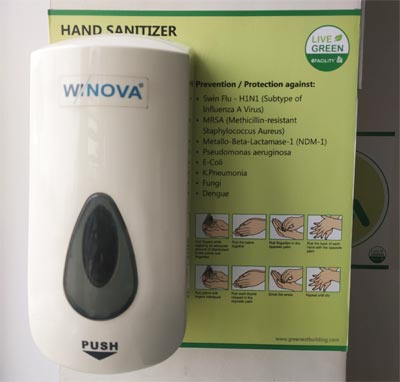
    Thanks to the LEED requirements for Green Buildings, we had installed hand sanitizer dispensers in all the floors of our building which came into good use. While the usage was very minimal over the years it spiked very high during the pre-lockdown period.


    Sensor operated Hand-wash Taps

    Green Building
    Sensor Taps

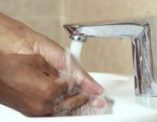
    As part of our water-saving initiative, we had installed sensor-operated taps in our cafeteria and all toilets fitted with aerators. These taps gave a better sense of hygiene and the aerators continued to save a lot of water as the usage tripled as people were recommended to wash hands more often as a precaution.


    Steam Cleaners
    Green Building
    Steam Cleaning

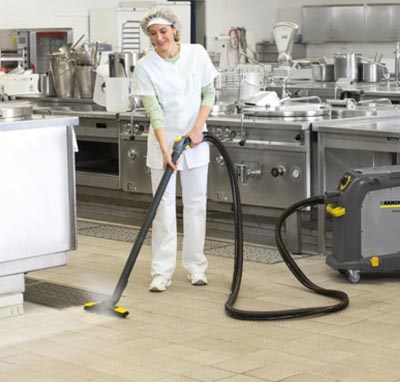
    We wanted to reduce the water used for floor cleaning (as our floors are predominantly uncarpeted), control the dust during cleaning and avoid chemical detergents as per LEED requirements. The topic “LEED and Human Health” led us to the awareness of the usage of UV cleaning devices to reduce the germ loads on all high-touch surfaces like all countertops and fixtures in bathrooms, kitchens and dining areas, doorknobs and handles, light switches and elevator buttons. We couldn’t find any commercial UV cleaning equipment in India at that time and further search led me to Steam Cleaning. The steam cleaners save 75% water, there is absolutely no rise in the dust during cleaning, uses just plain water (no detergents) and more importantly generates dry steam reaching up to 160°C that kills 99.99% germs (better than powerful chemical disinfectants). We were so happy and impressed with steam cleaning and went ahead implementing the same. Today we feel good that our high-touch surfaces, floors, toilets, kitchen and dining areas get disinfected every single day, using just 1/4th water and absolutely no chemicals. When COVID-19 started spreading, I checked on the precautionary measures to be taken at offices and I found that steam cleaning is more effective than all other forms of disinfection as it even kills the germs settled in joints/cracks where regular methods fail.

    COVID-19
    Fresh Air Filtering

    Ventilation

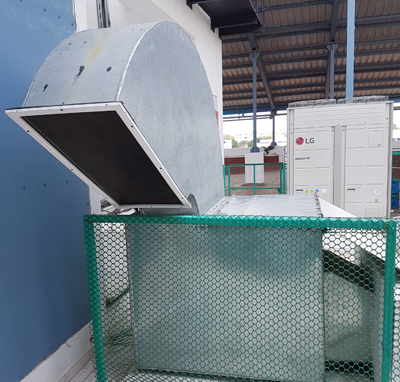
    Ours is a software development centre that is densely populated and air-conditioned which makes it precarious for seasonal flu and cold to spread easily. The LEED requirement based implementations to provide enhanced fresh air supply, usage of MERV 13 filters for reduced dust levels, monitoring of PM 10 and PM 2.5 levels (particulate matter) is today helping us reduce the spread of all airborne infections and improve the lung capacity of our people over a period who get to breath high-quality fresh air with very low dust levels. To ensure less energy usage, our filters are cleaned more often, systematically. All this made us feel safer during the pre-lockdown period.


    Close to office accommodations

    Green Building recommendations
    LEED Arc Skoru

    We use the U.S. Green Building Council’s Arc Skoru platform that helps us to benchmark our green building’s performance against all similar buildings across the globe. The survey performed for this purpose captures the distance traveled by our occupants which impacts the carbon emissions due to staff commute to work. This made us look into this aspect seriously and we started providing walkable subsidized accommodations very close to our office and also incentivize people moving to closer neighborhoods. We also set up an in house cafeteria to provide subsidized healthy food to avoid people movement for lunch.

    A week before the lockdown, the availability of public transportation reduced and restaurants were closing, but our operations weren’t hit much since most didn’t have any difficulties to reach office or have problems with the availability of food.

    The lockdown was finally official. What was said to be a 7-day lockdown, was extended to 21 days.

    Touch-free Lighting & HVAC controls

    The lighting at our facility switches-on/off automatically based on the occupancy detection and LUX level detection ensuring that there is no manual intervention needed. The indoor air conditioning units are again automatically operated based on the entry/exit of people detected by the access control systems. Our employees use our eFACiLiTY® Smart Building Controls app if they want to operate their lights and air-conditioners manually. Our facility is void of switch controls or remotes reducing the possibility of infection spread through high-touch surfaces. The automation was implemented primarily as an energy-saving initiative.

    Fully Automated Building

    Our plants need to be watered regularly, the security of the premises has to be taken care, the air conditioning system should run properly to ensure that the data centre is not affected, the fire alarm, security systems should operate flawlessly, in case of any power failure the diesel generator should kick-in and we should be intimated well in advance if the DG set is set to run out of fuel.

    eFACiLiTY® Building is one of the most automated buildings in the world and this was designed primarily to save on the resources. Owing to the full-fledged automation, all these requirements during this lockdown are fully taken care without the need for anyone to visit the office. Today, our facility is running on autopilot with absolutely no physical intervention and our facility management team remotely monitors if all systems are performing at its best. Our solar arrays continues to generate power efficiently, enhanced by the automated cleaning process.

    The fresh air supply is operated for a few hours every day even though there are no occupants to ensure that the building doesn’t become polluted with stagnant air in which bacteria thrive making it unsafe when we resume operations.

    PS: Our eFACiLiTY® Building is rated as the World’s 2nd Greenest Building under the LEED NC v2009 rating system and we are extremely happy that we chose the LEED rating system for our validation.

    Hashtags:
    #LEED #USGBC #GBCI #Covid19 #coronavirus #OfficeBuildings #eFACiLiTYBuilding #eFACiLiTY #greenbuilding #SteamCleaning #sustainability #sustainablebuilding #LivingStandard
  • The Greenest Achievements in the 21st Century

    Since we have started to be more attentive to our environment on a global level, a lot of things have changed. What used to be just a pipe dream, such as wind turbines and solar panels now goes without saying, and recycling is completely ubiquitous rather than extraordinary. Admittedly, there is still a lot of work to be done, but today we are going to take a look at some of the greenest achievements in the 21st century to realize just how much we have advanced in the field of environment conservation, and what amazing projects scientists worldwide are working on.

    Hybrid wind-wave projects

    Renewable energies have long been recognized as desirable sources, especially in recent years. While in 2016 renewable energy sources comprised almost 20% of the overall energy production, it is still a huge progress compared to the previous years. Half of that amount belonged to the contributions by solar energy and wind power, hence the idea of using waves to aid marine technology. This is done in the form of offshore wind-wave projects, aka hybrids.

    At the moment, these projects are still too expensive and face challenges embodied in harsh weather conditions and corrosive marine environment. Still, there are some systems (Wave Dragon, PowerBuoy, Wave Roller and so on) which are gaining new insights and constantly improving. Basically, the idea is to use the wind power when the waves aren’t that powerful, so there is always sufficient energy produced. Also, this minimizes the wave caused erosion on land, so it can be used as a sort of a protection system, too.

    Wave energy development

    Harnessing the tidal power sounds great, doesn’t it? After all, that is one rule we can always count on. Naturally, the countries which have invested the most in setting up electricity generators on the ocean surfaces are the ones which have vast coasts: Australia, Canada, USA (Alaska in particular) and the UK. India is also very much interested in such projects since they could in this way gain the energy which equals 13% of their total electric production. As for the US, its opportunities are even larger. They could generate almost the third of the annual amount of electricity (4,000 TWh). For this reason, funds are being invested in the developments of wave power technologies. Sandia National Laboratories apparently managed to double the conversion power, so the future looks pretty bright.

    Improvement of batteries

    Considering the fact how much progress we have made in terms of IT technology, it is relatively surprising that we still haven’t produced anything that should replace ordinary Lithium-ion batteries. Their efficiency level hasn’t changed much, has it? A list of technologies which are suffering from battery inefficiencies is a long one, just as the one why manufacturers are lagging with innovations. Nevertheless, there is room for some ground-breaking improvements.

    Solar Panels in Sahara

    After all, is there a better place for solar panels than a desert? Last year the greatest project regarding solar panels was introduced to the world. The biggest solar plant in West Africa has opened thanks to joint efforts of the EU and France. Around 130,000 solar panels on 60 hectares were set with the aim of reducing carbon emissions by 25,000 tonnes per year. The aim is to provide energy to Burkina Faso and to cover 30% of the total energy production by the year 2020. Chances are it is going to happen soon.

    Another incredible solar park in Sahara is waiting for the final confirmation. Developer TuNur is planning to use the renewable electricity to provide 2 million of European homes with energy so they wouldn’t be so dependent on Russia or the Middle East for energy (they get 60% from these sources). The $5bn low-carbon emission venture should be completed by 2024, at the same time providing jobs for some 20,000 people.

    Asian Renewable Energy Hub (AREH)

    Asian Renewable Energy Hub is a joint project of three extremely influential companies dealing with sustainable energy: InterContinental Energy, CWP Energy Asia, and Vestas (along with some key partners).

    The final aim is to help Indonesia use renewable resources to the fullest. In short, the electricity should be generated from Western Australia’s wind and solar power, and the equipment for that would be manufactured in Indonesia. This would open thousands of job vacancies, too, both in Australia and Indonesia. The generated power is to be transported to Indonesia by two undersea HVDC cables with the total transmission capacity of 3 GW. One part of the energy would be used for the Pilbara region in Australia (mostly for mines), while some 6,000 MW would go to South East Asia.

    To conclude, the future looks as amazing as these ventures. In a couple of decades, we can expect with full confidence for these to have become common occurrences

  • Old Dominion Law Demonstrates Renewed Commitment to Green Government Buildings

    Feature image: 
    Photo courtesy of the Office of Virginia Governor Bob McDonnell

    As I mentioned in my last blog, there are some wonderful advancements in the Southeast that need celebrating. Here’s an update from the Commonwealth of Virginia that keeps the state on the leader board.

    Green Building in the Southeast (Part Two)

    read more

  • The Road to Rio+20: Houston is a city leading by example

    Note: this blog was originally published on The Guardian

    When you think of Houston you might think of 10-gallon cowboy hats, Nasa and a terrific barbecue. But you might not necessarily think about green building and sustainability initiatives.

    read more

  • Out with the old…

    We’re excited to announce that the USGBC blog has moved to the new USGBC.org website.

    Head there now to check out our recent posts, including:
    And don’t forget to update our RSS feed link in your readers.

    Thank you for sticking with us during this change and for reading the USGBC blog. See you on the other side!

    – The USGBC blog team
  • Good COP, Bad COP

    Cross-posted from GreenSource’s The Green Source: A Blog of Sustainable Building

    read more