Joanne Wheeler, Head of Policy at UKGBC, said:
The CCC’s message is clear: the UK cannot hit its climate targets unless we dramatically speed-up the decarbonisation of our buildings. Heat pump deployment has slowed, government support for low-income households AND public buildings has been cut, and electricity is still priced in a way that holds back clean heat. Without urgent action, we risk locking-in higher bills, inefficient homes and a widening gap to our 2030 commitments.
But this is also a moment of huge opportunity which the incoming Prime Minister should seize. Electrification is now the cheaper, safer option, for most households, and the technologies and skills already exist to transform our homes and workplaces. UKGBC’s members are ready to deliver as demonstrated through our latest Whole Life Carbon Framework, and we look forward to working with ministers to build the comfortable, affordable, climate-ready buildings the UK needs”.
The CCC’s 2026 Progress Report lands at a moment of global instability and domestic uncertainty – and its message for the built environment is clearer than ever. The UK is still cutting emissions overall, but the pace has slowed, and the Government’s current plan no longer reaches the UK’s 2030 Paris commitment. The CCC is clear that the UK must “almost double” the annual rate of emissions reduction to stay on track, and that the biggest gap sits within our sector.
This year’s report is also shaped by the second major fossil fuel price shock in four years. The war in Iran has pushed up global energy prices again, exposing the UK’s continued dependence on fossil fuels for heating and transport. However, the CCC’s analysis shows that households with a heat pump have seen far smaller bill increases than those with gas boilers and petrol cars – a reminder that electrification is not just a climate strategy, but one of economic resilience too.
Against this backdrop, the CCC’s verdict is blunt: the UK is not moving fast enough to decarbonise buildings, and without a major acceleration, the sector will become one of the biggest barriers to meeting the 2030 NDC and the Sixth Carbon Budget.
Emissions reductions slow from the built environment
Emissions from buildings fell slightly in 2025, but this was driven largely by higher energy prices suppressing demand rather than structural decarbonisation. The CCC notes that emissions fell because heating became less affordable – not because homes became cleaner or more efficient. Heat pump deployment remains far too slow to make a meaningful dent in emissions, and the CCC warns that without further action, emissions are likely to rebound as soon as prices fall or we get a colder winter.
The Government’s own Carbon Budget and Growth Delivery Plan (CBGDP) assumes a slower transition to low-carbon heat than previous plans, and slower than the CCC’s recommended pathway. By the mid-2030s, buildings are predicted to become the highest-emitting sector in the Government’s trajectory. To meet the 2030 NDC, the UK needs annual emissions reductions of around 22.5 MtCO₂e across the economy – almost double the recent average. For buildings, that means cutting emissions by nearly 3 MtCO₂e every year between now and the mid-2030s, that means installing heat pumps 30 times faster than we are currently.
The heat pump sized gap in the UK’s Net Zero pathway
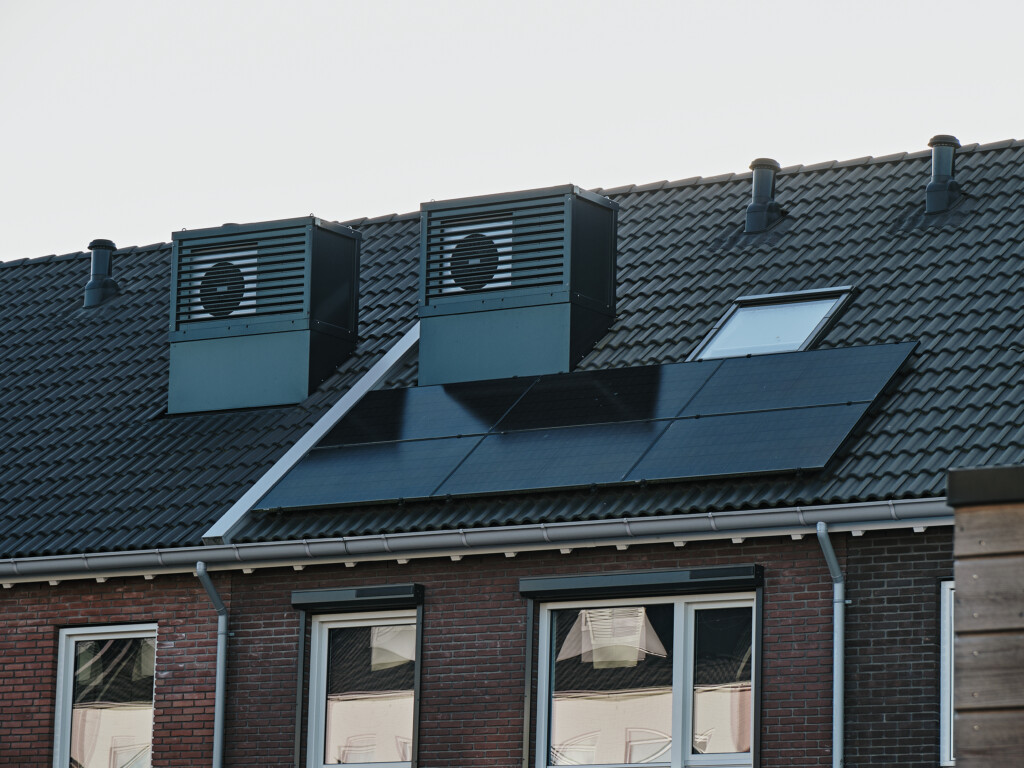
Heat pumps remain the single biggest lever for decarbonising buildings, yet deployment has stalled at exactly the wrong moment. Around 50,000 retrofit heat pumps were installed in 2024 and 2025 – a tiny fraction of what is needed – and growth slowed dramatically to just 7% last year. The closure of the Energy Company Obligation (ECO) scheme, which previously delivered around a third of all retrofit heat pumps, has created a major policy vacuum. Without a replacement soon, the CCC warns installations could fall significantly in 2026.
New build progress is better, with 25% of new homes now built with a heat pump, and regulations requiring low-carbon heating in all new buildings n England and Wales finally coming into force through the Future Homes and Buildings Standard. But because applications submitted before the deadline can still be built to old standards, fossil-fuelled homes will continue to be constructed well into the late 2020s.
The long-term picture isn’t good, with around 60% of the emissions reductions required from buildings after 2030 reliant on policies that currently carry significant risks or are simply insufficient. The Government has also reduced its assumed heat pump deployment compared to the previous plan, widening the gap further.
Electricity is (still) too expensive
The UK continues to have one of the highest electricity-to-gas price ratios in Europe. Although the Government cut some policy costs from electricity bills, falling wholesale gas prices meant gas became even cheaper relative to electricity. As a result, the electricity-to-gas price ratio increased, making heat pumps less financially attractive despite the policy changes. For a typical household on a standard tariff, electricity remains more than four times the price of gas per unit – a structural barrier to heat pump adoption.
The CCC was clear in their progress report last year that this must change, and this year’s core message is no different. Removing the remaining policy costs and legacy levies from electricity bills would bring the ratio down so that a typical household would be able to break even on lifetime costs when switching to a heat pump with a grant. However, the CCC’s citizens’ panel emphasised that households want a heat pump to pay back positively over its lifetime, not simply break even. Achieving this will require cheaper electricity, better installations, and continued support for solar and flexible tariffs.
The (household) economic case for electrification
The CCC’s household cost analysis includes more detailed modelling of the economic impacts for various households compared to previous years. Heat pumps alone do not yet deliver lifetime savings for most households on standard tariffs, but when combined with solar panels and time-of-use tariffs, they do. The CCC estimates that a typical household could save around £460 per year by switching to a heat pump, solar and a flexible tariff.
The Iran war has made the economics even clearer. Bill increases since the start of the conflict have been almost four times higher for households with gas boilers than for those with heat pumps. For rural households with oil boilers, the difference is tenfold.
Electrification is the most effective form of energy security.
Public and commercial buildings
One of the most concerning findings in the report is the lack of plan for public and commercial buildings (although not the recent MEES announcement changes this). The closure of the Public Sector Decarbonisation Scheme (PSDS) has removed the only dedicated funding stream for heat decarbonisation in the public estate. Treasury is considering public-private partnerships, but these are expected to focus on solar and efficiency rather than heat.
The CCC estimates that the loss of PSDS funding removes almost 5 MtCO₂e of annual abatement in the Sixth Carbon Budget period – one of the largest single gaps in the Government’s entire decarbonisation plan. Non-residential energy efficiency policy has made progress recently with the delivery of the long-promised MEES updates, but this will need to be coupled with support and incentives for owner-occupiers to upgrade their buildings.
A Decisive Moment for the Built Environment
The CCC’s analysis makes it clear that buildings are now the UK’s biggest climate test, and its biggest opportunity. Electrification of heat, combined with energy efficiency, flexibility and cheaper electricity, is the fastest route to cutting emissions, reducing bills and strengthening energy security. But the current policy landscape is not yet capable of delivering the scale and pace required.
The next two to three years will determine whether the UK can close the gap to its 2030 target and set the buildings sector on a credible path to Net Zero. At UKGBC, we are keen to support government with our members’ expertise and experience to remove barriers for households and businesses, and put in place long-term, stable policies that give industry the confidence to invest.
This is the moment to turn words into real delivery – ad to ensure that the built environment becomes a driver of climate progress, not a drag on it.
The post CCC Progress Report 2026: Buildings are Now the UK’s Biggest Climate Test appeared first on UKGBC.