Blog

  • Designing Out Plastics in Building Fabric (Guest post) G#43392

    Designing Out Plastics in Building Fabric Guest post

    GBE > Advertise > Collaborate > Services > Guest Posts > G#43392

    About:


    Designing Out Plastics in Building Fabric

    Plastics are embedded in modern construction practice.

    They are present in insulation products, vapour control layers, damp-proof membranes, window frames, sealants, floor finishes, service conduits, and composite cladding systems.

    The term building fabric refers to the physical elements that form the envelope and structural components of a building—walls, roofs, floors, foundations, windows, and doors—excluding mechanical and electrical services.

    Designing out plastics in building fabric therefore involves intentionally reducing or eliminating polymer-based materials from these components during design and specification.

    This objective is not primarily aesthetic. It arises from three interrelated concerns:

    1. The fossil-based (non-renewable) origin and associated greenhouse gas emissions of most plastics
    2. Their persistence and end-of-life disposal challenges
    3. Fire performance and toxicity risks to both occupants and firefighters under certain conditions

    However, plastics also offer demonstrable advantages in durability, moisture resistance, thermal performance, and cost control.

    It is also important to recognise that while some projects—particularly commercially driven schemes—may prioritise cost; clients and design teams are entirely at liberty to adopt low-plastic ambitions within project briefs. In some cases, plastics may be screened out where viable non-plastic alternatives exist before detailed numerical justification is undertaken.

    Nevertheless, any proposal to eliminate plastics must ultimately remain technically robust, transparent, and defensible, particularly where regulatory compliance and performance are concerned.

    Defining Plastics in Construction Context

    Plastics are synthetic or semi-synthetic materials composed primarily of polymers. Common examples include:

    • Polyvinyl chloride (PVC) – window frames, pipes, membranes
    • Expanded/extruded polystyrene (EPS/XPS) – insulation
    • Polyurethane (PUR/PIR) – insulation boards
    • Polyethylene (PE) – vapour control layers and damp-proof membranes
    • Acrylics and silicones – sealants and glazing

    Most are derived from fossil-based feedstocks.

    Their environmental impact is measured using Global Warming Potential (GWP), typically over a 100-year assessment period. However, this can be contrasted with typical building design lives (e.g., ~60 years in the UK), and differing time horizons can influence how materials are comparatively assessed.

    Whole-life carbon is evaluated through Life Cycle Assessment (LCA) under ISO 14040/14044 and BS EN 15978.

    Environmental Product Declarations (EPDs) provide verified data, but variability in assumptions, scope, and Product Category Rules (PCRs) can limit direct comparability. Therefore, designing out plastics must be assessed through structured LCA rather than material preference alone.

    Plastics and Embodied Carbon

    Plastic-based products often exhibit high embodied carbon per kilogram due to fossil-based energy-intensive manufacturing.

    However, performance efficiency complicates comparison:

    • PIR insulation has higher embodied carbon per kg
    • But requires thinner layers due to better thermal performance

    Thus, replacing plastics may increase:

    • Assembly thickness
    • Use of connective and supporting materials
    • Transport impacts

    Assessment must therefore occur at system or elemental assembly level, not just component or material level.

    Additionally, carbon is only one factor. Broader considerations include resource use, chemistry, water impacts, and human health, which may present conflicting priorities.

    Fire Performance Considerations

    Plastics can contribute to fire load and may emit toxic gases such as hydrogen chloride or hydrogen cyanide.

    Fire performance is regulated under Approved Document B and classified using BS EN 13501-1, which includes:

    • Reaction to fire
    • Smoke production
    • Flaming droplets

    While plastics rarely improve fire safety directly, they can be used safely when correctly detailed and protected.

    Although stricter façade rules apply above 18m, recent fires in lower-rise buildings demonstrate that regulatory thresholds alone do not eliminate risk.

    Designing out plastics may simplify compliance (e.g., mineral wool A1/A2 materials), but must still balance:

    • Moisture performance
    • Buildability
    • Thermal detailing

    Structural loading is generally a minor consideration, as most insulation materials are lightweight.

    Moisture Control and Vapour Permeability

    A key technical advantage of plastics is predictable moisture resistance.

    Polyethylene VCLs and DPMs provide reliable vapour and water barriers.

    Alternatives—such as intelligent membranes or bituminous systems—require careful hygrothermal modelling (BS EN 15026).

    It is important to distinguish:

    • Vapour diffusion
    • Air infiltration

    Air leakage often transports significantly more moisture than diffusion.

    Therefore, airtightness detailing remains essential regardless of material choice.

    Designing out plastics must therefore be supported by verified moisture risk assessment, not assumptions.

    Durability and Maintenance

    Plastics often provide long service life with minimal maintenance.

    For example, PVC windows resist rot and corrosion and may last 30+ years. Alternatives such as timber can achieve similar durability but typically require ongoing maintenance regimes.

    Maintenance contributes to:

    • Operational carbon
    • Lifecycle cost

    Whole-life costing (ISO 15686-5) is therefore essential.

    Claims that natural materials are always environmentally superior must be balanced against maintenance frequency and premature replacement risks.

    Potential Substitution Strategies

    Designing out plastics is best approached selectively:

    1. Insulation Substitution

    • Mineral wool (non-combustible)
    • Wood fibre boards (biogenic carbon storage potential)
    • Cellulose (recycled content)

    However, biogenic carbon accounting requires caution, particularly regarding end-of-life assumptions.

    Future circular economy scenarios may significantly alter outcomes.

    2. Alternative Membranes

    Bituminous or rubber-based membranes can replace polyethylene in some applications.

    However, many still contain polymers, and full elimination may not be practical without compromising moisture protection.

    3. Timber Windows Instead of PVC

    Timber or aluminium-clad systems reduce polymer use. However:

    • Aluminium has high embodied carbon unless recycled
    • Maintenance requirements must be considered

    4. Bio-Based Sealants and Adhesives

    Emerging alternatives exist but often lack:

    • Long-term durability data
    • Certification history

    Compliance with performance and fire standards remains essential.

    Additionally, some formulations have introduced PFAS (everywhere and forever chemistry) or other chemical considerations, requiring careful scrutiny.

    Circular Economy Considerations

    Plastic waste presents challenges:

    • Limited recycling due to contamination
    • Composite assemblies difficult to separate
    • Incineration reduces landfill but emits CO₂

    Design strategies should prioritise:

    • Design for Deconstruction (DfD)
    • Accessible fixings
    • Clear documentation

    Circularity depends as much on system design and detailing as on material choice.

    Regulatory and Standards Context

    Embodied carbon regulation in the UK remains partly voluntary and evolving.

    • RIBA 2030 targets are voluntary
    • Local authorities increasingly require Whole Life Carbon Assessments
    • Welsh and other regional policies exist or are emerging

    There is currently no prohibition on plastics where compliant.

    Designing out plastics is therefore a design-led decision, not a statutory requirement.

    Addressing Cost Objections

    Plastic materials often reduce upfront cost.

    However, project viability discussions can be influenced by:

    • Short-term cost planning
    • Underestimation of long-term maintenance

    In some cases, investing in higher-performing, durable solutions may better support building function and user outcomes.

    Specifiers must demonstrate:

    1. Regulatory compliance
    2. Whole-life carbon benefit
    3. Acceptable cost within constraints

    Limitations of a Plastics-Free Approach

    Complete elimination is currently impractical in most UK projects.

    However, it is important to note that alternatives do exist in some areas, including:

    • Airtightness systems (e.g., timber-based panels)
    • Below-ground waterproofing (e.g., clay-powder and geotextile based systems)
    • Glazing (e.g., advanced vacuum and solid glass edged units)
    • Service penetrations (e.g., rubber-based or alternative grommets)

    Despite this, achieving a fully plastic-free building fabric remains complex.

    A targeted reduction strategy informed by LCA is more realistic than absolute prohibition.

    Conclusion

    Designing out plastics in building fabric is feasible in selected applications but requires rigorous, system-level assessment.

    Plastics present challenges:

    • Fossil origin and embodied carbon
    • Fire toxicity risks
    • End-of-life disposal

    But also benefits:

    • Moisture resistance
    • Thermal efficiency
    • Durability
    • Cost-effectiveness

    An evidence-based approach requires:

    • LCA (ISO 14040, ISO 14044, BS EN 15978)
    • Comparable EPDs (BS EN 15804)
    • Hygrothermal modelling (BS EN 15026)
    • Fire classification (BS EN 13501-1)
    • Whole-life costing (ISO 15686)

    Design decisions should be grounded in performance criteria and transparent trade-offs, not material hierarchies.

    Designing out plastics should therefore be treated as a targeted optimisation strategy, not an absolute rule.

    Importantly, while detailed numerical assessment is essential, early-stage screening and informed design judgement also play a valid role in reducing plastic use where appropriate.

    Only through a balanced combination of evidence, design intent, and practical delivery considerations can plastic reduction align with climate goals, building performance, and regulatory expectations.


    GBE Team 

    Guest Author

    Name: Preeth Vinod Jethwani

    Editorial input: BrianSpecMan


    © GBE GBC GRC GIC GGC GBL NGS ASWS Brian Murphy aka BrianSpecMan ******
    27th March 2026

    Images:


    GBE Team 

    Guest Author


    Guest Posts on GBE A01 BRM 020420 PNG, GBE Guest Post (Collaborate) G#

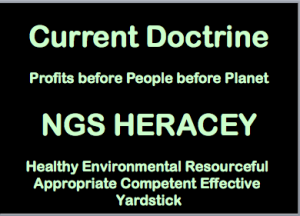
    Current Doctrine v Heracey(tm)

    Current Doctrine v NGS Heracey(tm)


    GBE HeraceyTM GBE HERACEY™ (Jargon Buster)

    GBE HeraceyTM


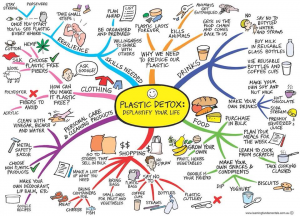
    Plastic Detox Deplastify Your Life

    Plastic Detox Deplastify Your Life

    GBE Green Building Encyclopaedia, CPD Continuing Professionals Development, Services EE Embodied Energy EC Embodied Carbon LCA Life Cycle Assessment EPD Environmental Product Declaration A03 BRM BrianSpecMan 040326 S1 Cover Slide BPF British Plastics FederationRecoup Recycling Plastics LogoRecycled Plastic Blockwork Placing


    © GBE GBC GRC GIC GGC GBL NGS ASWS Brian Murphy aka BrianSpecMan ******
    27th March 2026

    See Also:


    GBE Guest Posts


    GBE Circular


    GBE HERACEY™


    GBE Links


    GBE Other’s Stuff


    GBE Brain Dumps


    GBE Brainstorms


    GBE Issue papers


    GBE CPD Titles


    © GBE GBC GRC GIC GGC GBL NGS ASWS Brian Murphy aka BrianSpecMan ******
    27th March 2026

    Designing Out Plastics in Building Fabric (Guest post) G#43392 End.

    The post Designing Out Plastics in Building Fabric (Guest post) G#43392 appeared first on Green Building Encyclopaedia.

  • BPF Services EE EC LCA EPD (CPD) G#43351

    BPF Services EE EC LCA EPD CPD

    GBE > Encyclopaedia > Files > CPD > Topics > G#43351

    About:


    GBE CPD Metadata

    • File Name: GBE CPD Services EE EC LCA EPD A03BRM040326 BPF.PDF in Dropbox
    • File Type: PDF of PPTX
    • File Size: PDF Show: 11.8 mb
    • Number of Slides/Pages: PDF Show: was 92 Slides now 107 of 188
    • Created for: CIBSE EA 2013, BPF Event 2025
    • Presented to: CIBSE EA 2013, BPF Event 2025
    • Author: BrianSpecMan aka Brian Murphy ONC HNC Construction BSc & PGDip Architecture (Hons+Dist)
    • © GBE GBL GBC NGS ASWS 2008-2026
    • Created: 2008
    • Revision: A03
    • Updated: 04/03/2026
    • CAWS 1987: R10 – Y99
    • Tags: CPD, Lecture, NGS CPD CIBSE EA Services EE EC LCA BIM, National Green Specification, Continuing Professional Development, Chartered Institute of Building Services Engineers, East Anglia, Embodied Energy, Embodied carbon, Life Cycle Assessment, Building Information Modelling, Cover Slide, BrianSpecMan
    • ProductSets: Building Services, LCA Calculations,
    • UserGroups: Services Manufacturers, Services Engineers, Services Students, Services Constructors

    GBE CPD Content

    (without images; See the slide show for the pictures)

    •Life Cycle Embodied Energy – Fact or Fiction?
    •BPF Pipe Division 2025 Leeds
    Brian Murphy of National Green Specification
    © 2013-2025
    •Life Cycle Embodied Energy – Fact or Fiction?
    •CIBSE EA
    Brian Murphy of National Green Specification
    ©2013
    •Brian Murphy will provide:
    •A glimpse into the world of EE, EC, LCA, EPD, BIM, D&DT, M&E Carbon Calculators, CIBSE TM65 & TM66
    •Validation of manufacturers information
    •Offer some tools to help steer a safe root between sustainability and liability
    •Suggest new career opportunities
    •OE/C > EE & EC
    •During the Sustainability Revolution we are progressing towards:
    •low energy demand/carbon buildings
    •shift our focus from operational energy and carbon towards
    •embodied energy & embodied carbon
    –building fabric (walls floor roofs etc)
    –Services (pipes ducts cables and kit)
    •If BRE and BREEAM ever catch up
    •UK Perspective
    •bre’s BREEAM Environmental Assessment Method
    –Non-domestic, voluntary, going global, fail>pass>excellent>outstanding>green
    –Tick box exercise, found wanting in many areas and supporting tools
    Emphasis on low operational energy buildings so biased (weightings) as a result
    –5-7% of credits down to materials (weighting must change & % increase)
    •Code for Sustainable Homes (created by bre based on EcoHomes/BREEAM)
    –Government (DCLG) requirement for funded housing slow development to higher standards
    –Delayed, progressively adopted in private housing development, then scrapped
    –No requirement in private houses and self build (many living a >3++++ planet lifestyle + eco bling)
    •bre’s Green Guide to Specification
    –Backed by Construction Products Association
    •Predominantly conventional materials manufacturers
    •predominantly big or medium sized enterprises
    •Or highly automated low labour force with big turnover
    –Predominantly violet materials, but claims a level playing field
    –Generic LCA, whole elements, conventional construction
    •bre’s GreenBookLive
    –Environmental Profiles EP  ≠ Environmental Product Declaration EPD, until EN 15804
    –products, violet ingredients, carpets, PVC, bitumen
    –EPD being worn as a green badge when it is not a green badge
    •The UK at least needs an OR EQUIVALENT with a level paying field and green materials included
    •bre are breaking into the EU & Global market with BREEAM
    •EU and the world needs an OR EQUIVALENT
    •Carbon in buildings
    •Sequestered Carbon in biobased materials
    •Embodied Carbon & Energy in materials
    •Embodied Carbon in embodied water in materials
    •Embodied Carbon in transport of materials
    •Embodied Carbon in transport of people, plant, materials and waste
    •Embodied Carbon in construction
    •Carbon load of mains water in use
    •Carbon in Energy & Fuel & Heat
    •Operational Carbon in operation & maintenance
    •Green & Violet Materials
    Definitions
    Coined at ‘Green is the colour’ 1999 BD Conference at RIBA
    •Basics
    •Avoid or reduce use of:
    –Cement, Concrete, Steel, Brick, Mortar, Plastics, Aluminium, Chemistry,
    •Increase use of:
    –Timber, Solid Wood Systems, Natural Stone, Natural fibre boards and insulation
    –Reclaimed and reused materials
    –Recycled materials avoiding chemistry and cement binding
    •Violet Materials
    •Non-renewable, finite
    –Fossil derivatives, fuel, hydrocarbons, high embodied carbon
    •HydroCarbons: Oils, Greases, lubricants
    –Petrochemical, chemicals, synthetics:
    •Paints
    •Plastics (from hydrocarbons)
    •Unsustainable
    –Carbon based: e.g. Fuel
    –Release Carbon in manufacture or use: e.g. Cement
    •High embodied energy: e.g. energy intensive manufacture
    –Metals: Aluminium (was made with renewable energy, today more gas and coal)
    –Steel 7% of manmade carbon
    –Hot dip galvanizing: molten zinc 24/7/365
    –Plastics: Hot melt, injection, extrusion, pultrusion, moulded
    –Cement (UK uses more waste as fuel but tyres are fossil fuel too)
    •Hazardous materials and hazardous waste:
    –Wet, sticky, gooey or flows:
    •resins, paints, sealants, chemicals, adhesives
    –Fine particulate:  e.g. cement, asbestos, ceramic fibre
    –Corrosive, acidic, alkali,
    –Fire suppression chemistry
    –Air conditioning chilling chemistry, leaks, decanting leaks
    –Carbon Black in rubber components
    •Ozone depleting & Global Warming
    –Foamed plastics CFC HCFC HFCs HFAs
    Aluminium production PFCs
    •PFAS forever and everywhere chemistry
    •Green: Environmentally Sustainable Materials
    •Renewable: timber,
    •Rapidly renewable: Plant based materials
    •Abundant: Site subsoil, rocks, sand, gravel,
    •Recycled & Recyclable:
    –Post-consumer content,
    •Reclaimed & Reused:
    –on site materials, timber as timber not chipboard
    •Carbon already out there:
    –reclaimed bricks, slates, stone
    •Carbon sequestration: low, neutral or Carbon negative:
    –Plant and timber based
    –Grow aggregate by carbonation C8Systems
    •Low embodied energy: Plant based, minerals
    •Local: low transport miles, fuel, emissions and congestion
    •What are the issues? MEP Pipes
    •Weight:
    –Concrete, Clay, SS, Glass v Plastics, GMS
    –Affects transport emissions (only?)
    •Materials:
    –Embodied Energy: Cooking, Melting
    –Embodied Carbon:
    •resource material & Fuel
    –But LCA & EPD cover many other issues
    –Substituting Plastics
    •Example PVC v ABS v HDPE
    –Substitutions can lead to reduced performance if done badly
    •Calculated at building or systems level in LCA
    –So violet look grey and green look grey
    –But specifiers are considering materials too
    •Risks 1
    •BRE Green Guide to Specification
    –Generic materials by sector
    –Sector data collection
    –Average figures derived
    –Opportunity for high impact manufacturer can hide behind sector average
    –No incentive to be greener
    –PVCU windows were an example
    •Risks 2
    •One Click LCA
    –(1 click is a marketing lie, its complex)
    •EPD to EN 15804 AMD 1 & 2 cannot be seen in the same place nor figures merged in calculations
    •Most are AMD 1
    •All new EPD must be AMD 2
    •5 years overlap until all are AMD 2
    •So LCA is effectively unusable for now
    •Risks 3
    •Carbon Calculators
    •Whole building, Retrofit, Historic, Interiors, Insurance Repair, MEP, Glazing, Flooring, Reclamation & Reuse, Pre-Demolition Audits
    •BSRIA 2021
    •CIBSE TM65 Project
    • CIBSE TM 65
    •Some of the information may be readily available from your supply chain or needs to be calculated from the information provided with generic materials impact data.
    •I may also need to purchase licenses to other data sets including:
    •CIBSE’s TM65 project Outputs including:
    •TM65.1 Domestic Generic and
    •TM65.2 Domestic Product
    •TM65.3 Non-domestic Generic and
    •TM65.4 Non-Domestic Product
    •CIBSE’s TM66 project outputs including: TM66 Lighting
    •TM65 Methodology, data sets and Calculator
    •CIBSE TM65 Manufacturer Form
    •CIBSE TM65 Reporting Form
    •CIBSE TM65 Calculator
    •£100 to download
    •As are all the TM65 publications
    –Now condensed into 1 document not 4
    •Build your own calculator?
    •Using TM65 Data sets and Method
    •Home@ix Affordable Houses Developer Ever After Cottage house type.
    •This can and should ideally include:
    •Building Sub- and Super-structurer,
    •Building Fabric (walls, roofs, floors) cladding,
    •Interiors: finishes, linings, decoration, furniture and fixtures,
    •Above and below ground Mechanical, Electrical and Public Health (MEP) services;
    •Hard, soft and wet landscape and
    •Grey, green and blue infrastructure and services.
    • GMEPC calculator
    •I have started the building calculations in Green Building Calculator (GBC is a MS Excel calculator of my own creation, more notes below)
    •I will start the services calculations in the same spreadsheet within their own dedicated worksheet(s); these spreadsheets need to be developed by me from scratch urgently.
    •I will populate these cells with the information you provide, but it may be as easy for you to communicate them to me by adding them directly into the spreadsheet.
    •If you have already been auditing your impacts, you may have some of the information needed for this task in Life Cycle Assessments (LCA) or Environmental Product Declaration (EPD)
    •GMEPC Calculator
    •To carry out the services calculations
    •I will a need a comprehensive set of information on the services installations you are responsible for inventing, designing, manufacturing and its installation.
    •I need to quantify, by weight or volume, all different materials and products in the whole installation
    •then convert to embodied energy and embodied carbon and
    •if you include any plant- or timber-based materials then sequestered carbon too.
    •Scope of Analysis: Everything
    •System includes the following components:
    •Roof mounted solar thermal tube assemblies (STTA),
    •Roof integration supports, drainage and flashings to roof coverings
    •Robustly insulated pipes from STTA down to heat distribution control panel (HDCP)
    •Robustly insulated solar domestic hot water cylinder (SDHWC)
    •with back up mains powered top mounted immersion heater.
    •with display panel, heat distribution pump, thermostats, etc.
    •SDHWC located close to HDCP and close to SDHWC
    •Robustly insulated pipes from HDCP to SDHWC
    •Power and communications wiring between many or all components of the system
    •Switch, sockets and jointing back boxes, conduit or electrical looms and connectors
    •Air source heat pump (ASHP) and support/restraint system
    •Robustly insulated pipes from ASHP to HDCP
    •Robustly insulated pipes from HDCP to SDHWC
    •Robustly insulated pipes include all joints, bends and valves robustly insulated
    • MVHR
    •Is the following by you and does your system connect to these?
    •Mechanical Ventilation with Heat Recovery (MVHR): heat exchanger and filters
    •Insulated ductwork or ducts in insulated voids
    •Room side ventilation inlets and any return grilles
    •External inlets and outlet
    •Robustly insulated pipes delivering heat to or from HDCP
    • Attic Loft Space
    •If any of your services are to be in the top floor’s loft space them, we will need to add access walkways above the thermal insulation to prevent it being squashed to become ineffective.
    •Can you also provide me with:
    •Layout information (as PDF format) I cannot read CAD files unless you suggest a low-cost reader)
    •Plans and sections showing appliance positions and pipes, ducts and cable routes
    •Alternatively, this information could be a 3D sketch with length dimensions
    •Or a 2D sketch showing trunk and branches with length dimensions
    •Domestic services Systems
    •DHW System
    •Isolated Non Systems
    •BofQ
    •EE EC SC
    •LCA EPD
    •I will also need:
    •Duct and pipe wall thickness(es) along lengths and which materials for each
    •Wires, their make-up, metal core(s), profile, thickness, spacers, sleeves and sheaths
    •Supports: fixings, fastenings, spacing, size, profile, materials.
    •Any fire or acoustic proofing at passages through elements of the building
    •Controls: you may already have a parts list?
    •Circuit boards: I believe there is a standard impact for industry average circuit boards
    •Pipes Ducts Wires Volumes
    •Any ready parts that you buy in:
    •If you can name the manufacturer, product name and model number then we can do internet searches for product dimensional data and impact data.
    •MEP PDC
    • Country of origin of products
    •To be robust I need to know:
    •location (country of manufacture)
    •power supply you use to manufacture mains electricity or direct from renewables.
    •In view of the launch event on the 5th of November which needs to demonstrate some of these figures during a live demonstration of Home@ix your earliest response to this will be most helpful.
    •For me to carry out other actions with this information.
    •If your information is coming in phases this will be better than waiting to complete it all in one go.
    • GBC (Green Building Calculator)
    •GBC is a design and decision tool to assemble a numerical and textual model of a building(s) in which designers/users define the building(s) then select materials and products in each of its elements to obtain:
    –upfront embodied energy and carbon
    –in use energy and carbon
    –building and running costs.
    •It will emphasize choice of Green Building materials and Products in the quest to reduce the environmental impact and health of building
    •but inevitably includes Violet Building Material and methods where no green choices exist and for comparison purposes.
    •GBC includes essential inputs, ingredients, and outputs:
    •Drop Down Lists
    •TM65 Manufacturer Forms Merged
    •MEP Equipment LUT
    •MEP System LUT
    •Inputs:
    •GBPDC (Green Building Product Data Collection)
    •GBPB (Green Building Price Book)
    •GBREA (Green Building Readymade Elemental Assemblies)
    •Outputs:
    •GBPMP (Green Building Product/Materials Passport
    •GBMS (Green Building Method Statement)
    •GBRS (Green Building Robust Specification)
    •Status Quo
    •Our industry
    •Self serving
    •Fiduciary rules > Profit focused
    •Compromise happy
    •Building is a means to an end
    •Competent building is optional
    •Competent  Appropriate Environmental Construction is unlikely
    •BIM & D&DT
    •Government procurement via Building Information Modeling (BIM)
    •we have the tools to draw and measure/quantify > cost
    –but where is the Information & Modeling?
    •BIM libraries are appearing:
    –full of dumb models
    •Design & Decision Tools are needed to:
    –analyse, compare, choose appropriate products, materials
    –make changes to our specification habits.
    •Everybody needs to become involved in driving change:
    –designer, specifier, cost controllers, value (vandel) engineers, manufacturer, installer, facilities manager.
    •Architects
    •Many Architects don’t fully understand
    –physics of buildings and science of materials,
    •Focus on philosophy, poetry, art and BS
    •Quite often short on knowledge
    •Rarely brief the engineers in sustainable approaches to be adopted
    •Engineers with calculations can run rings round them
    •Engineers
    •Engineers are focused on the numbers of structural and services engineering
    •whilst Environmental Assessment Method (EAM) are on efficiency drives;
    –Tick box exercises
    •Engineers need better guidance on the environmental opportunities.
    • Services Engineers
    •Services Engineers read the journals about novel approaches to:
    –low energy lighting, lighting controls,
    –sustainable urban drainage,
    –water saving appliances and valves,
    –smart meters and smart or intelligent buildings,
    •but we still see many dumb solutions born out of:
    –Business as usual
    –fear of health and safety or PII responsibility
    –some knowledge applied badly
    –resulting in wasteful practices and higher energy consumption
    •Specifiers
    •Standard specifications are the norm,
    –reliant upon the drawing annotation or schedules to point at the specification clauses relevant to the project.
    •Standard specification quite often:
    –permit the use of recycled aggregates or OPC replacement
    –but do not require their use,
    –unless the Engineer is proactive in requesting them in drawing annotation,
    •Industry norm will be adopted for familiarity, supply chain continuity, simplicity and piece of mind.
    •QS & Cost controllers
    •compromise between what we design and what we build with:
    –cost cutting,
    –value ‘vandal’ engineering
    –looking at more than one item at a time and finding cheaper overall solutions
    •Usually cost cutting in disguise
    –Engineering value out of buildings
    •Specification substitution
    –Highlighted by Grenfell Enquiry
    •with low initial cost as the primary criteria for success
    •CAPEX v OPEX
    •TOTEX no where to be seen
    • Contractors
    •substitutions
    –often replacing a good product with a worse one or a different performing product
    •surreptitious substitutions
    –Nobody verifies anything
    –with profit margin as the primary criteria for success
    •Constructors
    •Further degradation of ambitions occurs on site through lack of communication from the design team,
    •lack of understanding by site agents and managers leading to poor substitutions,
    •poor supervision, lack of care or lack of knowledge of new systems or methods
    •leading to misguided ambition or poor workmanship.
    •Sustainability Revolution
    •Aiming for:
    •Healthy Environmental Resourceful Appropriate Competent Effective Yardstick Construction, it is possible. (HERACEY™)
    •Falling a long way short mostly
    •Even the dark greens are not always successful
    •Thermal bridging permitted by mixing component size to reduce waste change k value of materials in cavity walls
    •Resource Efficiency v
    Effectiveness
    •Interreg: Cradle to Cradle Network
    •CARBON
    •Definitions
    •Carbon
    •Carbon Dioxide
    •EE Embodied Energy (fuel choice)
    •EC Embodied Carbon (fuel & reactions)
    •RC Renewable Carbon (Biobased mats.)
    •SC Sequestered Carbon
    •ECh Embodied Chemistry
    •EW  Embodied Water
    •Carbon
    •Carbon C
    •Charcoal
    •Carbon Black?
    –Highly polluting dying ingredient used in rubber tyres, membranes
    –Fine powder, carcinogenic
    •Diamond
    •Graphite?
    •Buckminsterfullerine C21
    •Carbon Steel: Iron and Carbon
    •CFC Chloro Flouro Carbon, HCFC, HFC
    •PFC (intermittent polluting emission from aluminium production)
    •Methane CH4
    •Carbon
    •Abbreviation: C in Periodic Table
    •Atom: 1 part carbon
    •A material
    •‘Carbon’ also an unhelpful shortening of Carbon Dioxide
    •They are not the same thing and result in different calculations
    •Take care to be sure which is being described, tabulated, calculated
    •Carbon Dioxide
    •A gas
    •1 part Carbon and 2 parts Oxygen
    •Abbreviated CO2
    •An important part of the Earth’s Atmosphere
    –Not enough and its too cold,
    –too much and its too hot
    •Carbon Dioxide
    •Can be liquid at cold temperature
    •Recently used as a blowing agent in foamed plastics
    •Has been used to fill double glazed sealed units
    •Used in fire extinguishing once evacuated
    •Carbon Dioxide
    •Main Greenhouse Gas (GHG) produced from the burning of fossil fuels
    •such as coal, natural gas and crude oil.
    •Carbon In Fuel & UK Power
    •Carbon In Fuel & UK Mains Elec
    •Renewable Carbon
    •Carbon in the form of cellulose fibre asgrown by plants and trees is renewable over a much shorter period
    •Some is naturally fast growing
    •Some slower and artificially fast grown in plantations
    •Uses include: Food, Oils, Biomass fuel, Bio-fuels, material for cloths, utensils, boats, construction materials
    •Renewable Carbon Materials
    •Materials using plant and tree-based cellulose
    •Trees: 40-100 years >
    –Wood many applications
    •Plantation thinnings: much sooner >
    –small section and composite timber products, timber fibre and flour
    •Wood fibre:
    –Thermal and acoustic insulation, underlayment isolation, soft batts and rigid boards, moisture management without mechanical ventilation
    •Rapidly Renewable Carbon Materials
    •Plants: 1 growing season:
    –E.g. cellulose fibre
    –E.g. Hemp shiv
    •Bamboo: 1 growing season >
    –animal food
    –Flooring, linings, boards, etc.
    –Liquid store, pipes, scaffolding
    •Oils and resins:
    –1 growing season > Linseed oil,
    –Linoleum flooring
    –Paints, oils
    •Renewable carbon materials v Non-renewable carbon materials
    •Plant based materials with properties of plastics
    •Potato starch made into equivalent of expanded polystyrene
    –At end of use + water > reverts to starch
    •Bio-plastics are being developed using plant-based material and plant extract resins
    –With the properties of plastics
    –Foamed plastics in particular
    •Plant based resins in place of synthetic resins
    – used to make carpet
    •Resin and cellulose
    –furniture
    •Carbon Sequestration
    •The naturally occurring or deliberate removal of carbon from the atmosphere
    •The storage of carbon in materials or a store or a sink where it will remain.
    •Types of sequestration include:
    –’geological’ where CO2 is captured and buried underground or under ocean e.g. in porous stone
    –’biological’ where CO2 is absorbed during the growth of plants and trees.
    –‘Oceanic’ where CO2 is absorbed by the surface of the oceans
    –‘Soil’ where CO2 is absorbed by topsoil
    •Carbon Sequestration in Construction
    •usually refers to building products derived from plant materials
    –such as wood and hemp,
    •where CO2 is absorbed as part of the growing process.
    •The carbon remains ‘locked’ in the material for the lifetime of the building
    –And potentially beyond end of first life.
    –BRE Green Guide usually assumes its burned or landfilled
    –But we have ½W2L
    –Circular Economy in full swing not long until 0W2L
    •Carbon Trading
    (a kind of Fiction)
    •Kyoto Summit’s Protocol called for Carbon reductions by all nations
    •USA and a few others refused to sign up if it meant this might affect their business community’s profitability or profligacy
    •A last-minute suggestion to try to get the USA to sign up was to invent a way for the developed countries to do nothing and pay another country for its share of unused ‘carbon credits’
    •Carbon-Offsetting
    •Carbon offsetting is the term given to the process of buying into projects that either absorb CO2 or prevent emissions of CO2 to counteract activities that produce CO2.
    •Examples include investing in tree planting, buying ‘green’ electricity tariffs, and contributing to energy efficiency measures in developing countries.
    •However, whilst many of these actions may have long-term benefits for the environment, offsetting should not be used as an excuse to relax efforts to reduce our current carbon emissions as it is current CO2 levels and emissions that need reducing.
    •(Ecos Renews 17)
    •Carbon-Offsetting
    •Beloved by large corporate organisations and the financial sector, but derided by the environmental lobby as a “cop out,” carbon-offsetting works on the good old-fashioned principle of robbing Peter to pay Paul.
    •If you can’t, or chose not to, reduce your CO2 emissions then carbon offsetting is a way of compensating a poor eco attitude.
    •Carbon-offsetting is where wealthier northern hemisphere nations fund environmentally sound projects in the emerging economies of Africa and Asia swapping their high CO2 emissions for the latter’s low or non-existent emissions.
    •Typical examples of the type of carbon offsetting undertaken is tree planting – prevalent in the UK; and renewable energy and ICT technologies in Africa and Asia.
    •A clear distinction should be made with ‘carbon trading’ which is highly regulated stock market activity and legally controlled.
    •(Building Magazine Steve Piltz, Turner & Townsend ’08)
    •Carbon Offsetting
    •A kind of Fiction
    •Ask an abstaining couple to abstain from sex
    •So you can have affairs when you want
    •Everything is in balance


    •Embodied
    •A kind of Fiction
    •Energy or Carbon or Water
    •Conceptually Embodied in material
    •Not embedded
    •But left in the factory or released to the atmosphere or discharged into the drain or disposed in landfill

    Embodied Energy

    •All the energy required and used to grow, harvest, extract, manufacture, refine, process, package, transport, install of a particular product or building material.
    •What about:
    –maintaining and disposing of it?
    –embodied energy of the labour force
    •that  made it, stock it & travel to site to install it?
    •Embodied Carbon
    •Conceptually, Carbon ‘embodied’ in the material but not ‘embedded’ (no longer or never present in the material)
    •Usually, the totalling up of the carbon
    –used to create a material or product
    –Or released in the manufacturing
    –Includes the carbon from fossil-based fuels used in the manufacturing processes and transporting
    •Embodied Energy v
    Embodied Carbon
    •Don’t mix them up
    •They are not the same thing
    •Many materials use energy to manufacturer
    –Depending on the fuel choice
    •different levels of carbon outputs
    •Some materials release Carbon/CO2
    –To the atmosphere
    –Plastics
    –Cement
    •Steels are high embodied energy
    •Plastics are high embodied carbon and energy
    •Cement is high embodied energy and carbon
    •Embodied v Embedded Carbon
    •Embodied is understood
    •Embedded:
    –Unhelpful term too close to Embodied
    –Related to Sequestered Carbon?
    –But ……proposed definition…..
    •Embedded Carbon?
    •Plastics are made from hydro-carbons and still contain them
    •The have ‘embedded’ carbon
    •They can be ‘un- or re-processed’ back to hydro-carbons
    •In time landfills will be mined to reclaim plastics to turn back into hydro-carbons
    •to make fuel or other plastics
    •Carbon Sequestration
    •Growing plants, bamboo, wood, etc.
    •Turns carbon dioxide from atmosphere into renewable carbon cellulose fibre
    –Waste product is oxygen
    •Stores carbon dioxide in wood fibre
    •Timber in construction stores CO2
    •For the life of the building
    •Renewable Carbon Sequestration
    •Carbon8Systems
    •Carbon Dioxide, Water and particles
    •Combine to grow calcium carbonate ‘stones’ around the particles
    •Stones that can be aggregates
    •Grow tiles around particles
    •GBC V2>V3
    Element EE EC & SC: Hemp
    •GBC V2 EE EC SC Look Up Table
    More datasets needed
    •ICE 3.0 database
    carbon reporting options
    •Low Carbon alternatives
    •OPC Ordinary Portland Cement
    •Replace with OPC substitutes
    –GGBS Ground Granulated Blast Furnace Slag Cement (from steel production)
    –Or 65% GGBS blended with 35% OPC
    –PFA Pulverised Fuel (High Carbon Coal)Ash Cement
    •OPC replaced partially or completely
    –with Lime
    –Lower cooking temperature
    –Carbon sequestered during construction and during building life
    •Carbon negative,
    positive & neutral
    •Grow Trees
    –Carbon sequestration from atmosphere
    –Carbon negative C-ve
    •Convert to wood or paper
    •Burn wood or paper
    –Release carbon to atmosphere
    –Carbon positive C+ve
    •Net result: Carbon neutral C+=-
    •But there is a little energy and possible carbon in converting the  tree to wood or paper
    –not quite Carbon neutral a bit Carbon positive C+ve
    •Carbon Negative
    •Hemp-lime construction
    •Uses hemp shiv as an aggregate C-ve
    •Uses lime as a binder C+ve
    •To make a material like concrete C-ve
    •But many other positive properties
    •But add cement for fast set C+ve
    •Add aluminium oxide to react with cement to foam like aerated concrete E+ve
    •But still C-ve
    •Carbon Positive
    •Often used confusingly
    •meaning carbon negative with a ‘positive’ swing
    •Carbon Neutral
    •Conceptually, a state whereby the CO2generated by a process is exactly balanced by the amount of CO2 either offset or sequestered by the process.
    •A carbon neutral building is one that either uses no fuel that generates CO2or where its consumption of CO2-generating fuel is equally balanced by exported renewable energy.
    •The definition continues to be debated as to the extent of direct / indirect CO2that is included in the equation
    •E.g. CO2 generated in the construction of the building.
    •Carbon Load
    •Associated with water supply:
    –Water is cleaned with chemicals and energy
    –Water is pumped with energy into water towers to deliver by gravity
    •A water sector is a major
    –User of energy
    •The energy sector is a major
    –user of water
    –waster of  energy and heat (75% of input)
    –Power stations use steam turbines
    –Turbines are fed with water turned to steam
    –The steam is cooled in cooling towers
    –Steam escapes and some water is recycled
    •Its time this was sorted out, where is CH&P,
    –whichever fuel they choose
    •Low Carbon Building (LCB):
    (In use)
    •LCBs are buildings which are specifically engineered with Carbon Dioxide reduction in mind (a major Greenhouse Gas (GHG) with Climate change potential).
    •So by definition, a LCB is a building which emits significantly less Carbon Dioxide than regular buildings.
    •There is at the moment no emissions threshold under which a building would qualify as a LCB.
    •But to be genuinely Carbon or CO2neutral, a LCB would have to achieve at least 80% Caron or CO2 reduction compared to traditional buildings.
    •Achieving 80% Carbon Reduction is easy!
    UsableBuildings Bill Bordass
    •Achieving 80% Carbon Reduction is easy!
    UsableBuildings Bill Bordass
    •Life Cycle Assessments & Environmental Product Declarations
    •Definitions:
    EP LCA EPD PEF
    •LCA Life Cycle Assessment
    •Cradle-to-*
    •LCA for transport
    •Carbon Sequestration in LCAs
    •BRE Green Guide to Specification
    •Environmental Profile EP
    •EPD Environmental Product Declaration
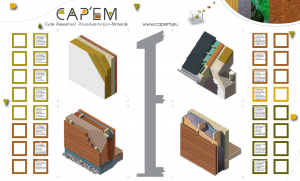
    •CAP’EM Project
    –Low cost LCA
    •Carbon Footprinting
    •EU PEF Product Environmental Footprinting
    •Definitions:
    •Life Cycle Assessment (LCA) a number crunching process to determine the environmental impact of manufacturing materials or products, it requires full disclosure of materials, recipes and commercially sensitive information so it should be protected by non-disclosure agreements.
    •Environmental Product Declaration (EPD) a public declaration of the text and numerical results of the LCA process without revealing commercially sensitive material.
    •Don’t start if you won’t finish
    •Manufacturers contemplating spending on an LCA & EPD need to be aware of the costs, process, obligations, permissions and marketing opportunities.
    •It is not practical to provide a firm quote in advance, before understanding the source of resources used, manufacturing processes, product, packaging and waste.
    •The following sets out the various tasks in the process; where possible indicating the bulk of the costs
    •Preparation
    •To prepare for the first meeting (face to face or online), become aware of the data you have in your order or accounts books, inbound and outbound, transport, materials, energy consumption, renewable energy, electrical and other fuels and any data on waste, emissions and packaging.
    •Understanding your materials flow diagram in sourcing, imports, ingredients, machinery modules, handling materials, manufacture, recycling, waste, packaging, transport.
    •If you have been preparing information for LCA and EPD previously you may already be familiar with this information.
    •We also need to see your technical and promotional literature, test evidence and certification; this will inform the words included in the EPD.
    •Track record
    •We sometimes suggest you decide which 12 months represent your average business activity,
    –(Avoiding Brexit, Covid, Grenfell, Ukraine and now USA influences)
    •If your production line is new you will not have a representative track record.
    •We suggest you collect all data from the first days of production to build up your track record as soon as possible.
    •It may be that the EPD is delayed to get 12 months track record or the EPD states the short track record.
    •You could consider having it updated quarterly until you have 12 months of consistent data; or even showing progressively better data?
    •But this is unlikely to be acceptable on EPD platforms until 12 months.
    •We should take the LCA EPD practitioner’s guidance on that.
    •Marketing through the EPD
    •The EPD Template offers the opportunity to do a little marketing within the pages of the template or on the back cover.
    •But this is should be a technical response rather than a marketing one, where we have taken the opportunity to compare a material with its competition in a generic way, by embedding EPD results into the text.
    •You could start to prepare those factual statements and arguments.
    •We will also review the text for any risks of greenwash and offer safer statements so none of your competition could argue to the contrary.
    •I like them to be detailed in a succinct way, writing specifications is a good discipline for this kind of writing.
    •The process is divided into two stages:
    •LCA with is the number crunching exercise done in private by an LCA practitioner
    •EPD is the public declaration to include the results of the number crunching but not the inputs to the calculation of LCA
    •Normally the LCA and EPD practitioner will be happy to sign a Non-disclosure Agreement so that the manufacturer is confident about releasing Intellectual Property information.
    •Fee: [Upon application].
    •Guide price: circa £10,000 for simple material,
    –complex products considerably more
    •Prospects: See Renuables Ltd. Quotation
    •Intellectual property
    •LCA is an analytical process to determine the environmental impact of an ingredient, material, product, accessory, subsystem, assembly, element or building; including inputs and outputs energy, heat, water, wastes, packaging, everything.
    •The manufacturer needs to disclose sources, materials, recipes, mix ratios, transport methods and distances, manufacturing processes;
    –all of which are the Intellectual Property of the manufacturer.
    •LCA includes ALL of the resources, materials, chemicals, additives, transports, processes and energy used by machinery no matter how little you use
    •Scope of Assessment and why they are necessary
    •The scope of the assessment is from the source, to at least the factory gate (see A1 to A3 below)
    •Anything less than the total declaration of impacts is likely to get caught out when the competition do their LCA and EPD and compare notes or scrutinize any published EPD with a fine-tooth comb.
    •If the manufacturer is not prepared to disclose all of the information to the LCA practitioner, then LCA is not for them.
    •But as you will be increasingly aware that:
    •Specifiers are now considering the environmental impact of their specification choices and are asking for LCA and EPD datasets
    •Designers are using LCA calculators for components, elements and whole buildings and they rely on EPD databases and individual EPDs
    •UK Government Procurement is reported to require EPD certified products in all projects.
    •EPD are a promotional opportunity to:
    •Display and explain the numbers without disclosing the Intellectual Property information
    •Remember ‘Architects cannot read’ and ‘Architects cannot count’ so lots of images, logos, graphs, tables, charts, drawings, details, photos
    •There is a new generation of Architects who care about the planet who are learning how to scrutinize the data and scythe through the ‘greenwash’
    •Do some comparisons, in a generic way, between alternative materials.
    •Explain and demonstrate environmental, financial and performance advantages of your product
    •Promote the intentions of the problem-solving product
    •EPDs are a combination of information from the LCA and manufacturer’s marketing text and images that is in line with the LCA and promotes the truth about the products.
    •Add substantiated environmental green labels
    •Add Mobius loop logos with ‘certified by ISO 14021’ recycling percentages e.g. NGS Echo
    •Scope of the EPD
    •For a formally registered and verified EPD the recently updated EN 15804’s minimum requirement is Modules A1-A4 (many existing EPD only address A1 to A3)
    •A1 Product: Raw Materials Supply,
    •A2 Product: Transport,
    •A3 Product: Manufacture
    •A4 Product: Transport from gate to site
    •A5 Product: Installation
    •So, this means data is needed for the manufacturer’s supply chain from factory gate, via the supplier to the construction site gate (A4)
    •This will also help when adding EPD datasets to LCA tools that also use models Modules A to D of the EPD.
    •There is increasing demand to complete A-D of the EN 15804 table.
    •Royal Institute of Chartered Surveyors (RICS) (mandatory for members) Professional Statement (PS) guidance on calculations or calculating tools required more of the A to D to be considered and gives guidance on how this is to be done.
    https://www.rics.org/globalassets/rics-website/media/news/whole-life-carbon-assessment-for-the–built-environment-november-2017.pdf
    •The Public consultation of the update to this document requires carbon sequestration (useful for plant or timber-based materials) must be calculated for all of Modules A-D or not at all.
    •And total carbon (embodied carbon minus sequestered carbon) should not be calculated but the two figures presented separately.
    •Peer Review:
    •Once the EPD is complete, it must be verified by an independent 3rd party Peer Review by a LCA EPD Practitioner qualified to do LCA and EPD Peer Reviews for Business to Customer declarations.
    •Fee: to be determined by quotation
    •Rough Guide: £2100-£3400 (extracted from a study, subject to confirmation)
    •Simple one material product: towards the lower end of this price range (subject to confirmation)
    •Registering Peer Reviewed EPD
    •The International EPD System:https://environdec.com/pricing/pricing-2021
    •Registration fee: The registration fee is a one-time fee that is charged once per EPD for registration and publication via The International EPD System, prices at time of writing are:
    •Registration Fees (per EPD)
    •EPD No. 1:
    –1000 EUR
    •EPD No. 2, 3, 4:
    –500 EUR
    •EPD No. 5 – 99:
    –100 EUR
    •EPD No. 100 and more:
    –50 EUR
    •Annual fee:
    •The annual fee is a recurring fee, charged on an annual basis and depends on your organisations size.
    •Annual Fees (by org. size)
    •Micro (1-10 employees):
    –500 EUR
    •SME (11-250 employees):
    –1000 EUR
    •MNE (>250 employees):
    –2500 EUR
    •Additional Options during EPD Registration: Fees
    •Dual Registration into peer EPD programmes
    •Mutual recognition in the International EPD Systems
    https://www.environdec.com/pricing/dual-registration-into-peer-epd-programmes
    •4 are currently listed and prices: 500 – 600 EUR per EPD invoiced directly from each
    •Create an electronic EPD registration certificate:
    •0 EUR per EPD
    •Create and publish a Climate Declaration based on the EPD:
    •300 EUR service fee per Climate Declaration created by the EPD Secretariat
    https://www.environdec.com/all-about-epds/epd-climate-declaration
    •EPD Registration
    •The owner of the EPD is required to register with the Environdec website
    •However it is complex and challenging first time of use, even for LCA practitioners
    •The LCA Practitioners having done this a few times are better equipped to complete the Registration and posting the files.
    •It is recommended to register yourself but use a password that you are comfortable sharing with the LCA Practitioner.
    •Then share the password with the Practitioner to complete the registration and loading files.
    •NB if your passwords are part of controlled security system, check if it can be changed after the LCA practitioner has completed their work.
    https://portal.environdec.com/register/user
    •Other measures promote EPD:
    •There are many LCA Tools appearing in the market almost monthly, including:
    •BRE Green Guide to Specification (Elemental Assessment, Generic Materials only)
    •BRE Green Book Live (Mostly BRE authored Environmental Profiles roughly = EPD)
    •BRE IMPACT for BREEAM MAT 01 Materials Assessments for compliance with BREEAM
    •BRE IMPACT Compliant Tools
    https://kb.breeam.com/wp-content/uploads/2018/05/KBCN1118_12.3.21-1.png
    •IES-VE Integrated Environmental Solutions – Virtual Environment
    •One Click LCA (temporarily problematic for EN 15804 V2 EPDs)
    •eToolLCD’s Rapid LCA
    •Highways England Carbon Tool V2.3
    •Hawkins Brown & UCL Tool H:Bert Emissions Reduction Tool for facades only  https://www.hawkinsbrown.com/services/hbert
    •Institute of Structural Engineers (ISE) ISE Carbon Tool
    •BSRIA Services Guidance and tools
    •CIRIA Carbon calculator
    •Curtins Consultant’s own calculator
    •CIBSE Carbon calculator for MEP Services TM65
    •FCBS Architects CARBON  V0.8.3 beta release
    •NGS’s Green Building Calculator https://GreenBuildingCalculator.uk
    •NGS’s Green Retrofit Calculator https://GreenBuildingCalculator.uk
    •Firstplanit platform initially for retrofit https://www.firstplanit.com
    •More appearing all the time.
    •GBE has teamed up with Renuables Ltd.
    •We provide full Life Cycle Assessments (LCA) and Environmental Product Declarations (EPD);
    •to help populate Green Building Product Data Collection;
    •which feeds Green Building Calculator (GBC) look up tables and drop-down lists;
    •to automatically populate the calculator cells when users type in company and product names,
    •the calculators automatically update with the product data and determine if targets have been met and emissions from those choices.
    •Ensuring your EPD is known about and used
    •Once the EPD is promoted in the Environdec EPD platforms then the owners of LCA Tools should be keeping their own datasets up to date with the content of those EPD platforms.
    •Currently there are over 10,000 registered EPD, not all of which are for construction.
    •Some EPD platforms only show 700 construction EPD.
    •As a precaution, manufacturers can run an email newsletter campaign to the owners of LCA tools to inform them of the newly Published EPD and supply an attached copy or a hyperlink to the EPD Platform file.
    •GBE can obtain email addresses for those LCA Tool organisations.
    •GBE and GBC can do email newsletter campaigns for manufacturers
    •Email Newsletter campaigns to Designers and Specifiers
    •GBE and GBC have a Mailchimp Newsletter account with >2500 addressees
    •A dedicated Newsletter can be created to promote the LCA EPD service and the EPD publication with supporting information and links to website content and downloads.
    •The GBE website can have a new GBE Newsletter and LCA EPD pages to link to the any EPD, NGS Echo EN 14021 certificate pages; with internal links to and from them and related pages and external links to websites and EPD platforms.
    •PDFs & Machine-readable PDFs
    •Place the EPD on the manufacturer’s own website as a PDF to download, from a download page, but also give it its own page.
    •It should be noted that normal PDFs on website are not readable by Google but their metadata is
    •So, it is recommended to copy the content of the EPD into the website
    •Without altering anything, except formatting, nor removing anything
    •NB. Grenfell enquiry has highlighted one ‘reputable’ manufacturer that had three versions of their fire test reports for different audiences, moreover the test reports were for a product they no longer produced; both are completely inappropriate behavior.
    •Machine readable PDFs may overcome google capability issue
    •Search Engine Optimisation of PDFs is important, focusing on the file metadata
    https://www.mightycitizen.com/insights/articles/seo-for-pdfs-optimizing-your-pdf-files-for-search
    •The following may be a total distraction:
    •There was a Sales Pitch Webinar on 23/06/2021 13:00 about PDF and Accessibility (Disability Access) and lawsuits that are happening more frequently.
    http://www2.crawfordtech.com/webmail/7102/1161433031/38427a2148a7a83e9e27df3698669aa4adda37af4676cef2dc6bf531a2d6ced9
    •Getting product data BInformationM into BIM databases:
    •There are a few, the most prominent being:
    •National Building Specification’s ‘Source’
    •The specification entry is a mixture of Guidance and Specification that takes some considerable time to turn into a robust specification
    •Which is aiming to support BIM with Information and 3D Models of products
    •Information being the most important and useful part to designers
    •It being based on all relevant BIM thinking and International Standards
    •Product Data Sheets (PDS) or their templates (PDT) and BIM versions rarely have a suitable space for EPD datasets; the best one can hope for is to include a hyperlink to EPD Platform files or your own website.
    •Materials/Products Passports are now being proposed for reuse (original intention) and now first use to enable reuse.
    •Digital Object Identifiers (DOI)
    •can be used to track the location of EPD or any file (which may be relocated in the future) but this is not yet developed in the Construction industry.
    •Madaster
    •Platforms like Madaster collect product information and EPD datasets and make the information available to subscribers.
    •Getting EPDs into general product databases
    •There are many product databases but not all will have a pigeonhole for EPD
    •It may be possible to add a hyperlink to the EPD Platform file or website
    •If their page template permits it.
    •In the long-term using BSI PAS 2060 and the EPD of all your products and Green Tariff energy supplies to all your sites, demonstrate your organisation’s Carbon Neutrality.
    •Improving your Operations Scope 1 2 & 3 impacts
    •Company: Green Energy Transitions (formerly GaeltelLtd. Until 12/04/2024)
    •Contact: Eddie Pellegrom
    •Mobile: 07738 555773
    •2 sides of A4 PDF literature attached (at least 1 year old and out of date, Gaeltel logos and contact details are now redundant, new literature coming by end of month)
    •Offer a service to enable manufacturers and suppliers to reduce their costs, consumption and carbon
    •They address:
    •Energy management in premises to reduce demand e.g. 10-20% saving.
    •Renewable energy supply in preference to Mains supply: significant carbon reductions
    •Cost effective purchasing of energy from UK suppliers by mass ‘Dutch bargaining’ from the biggest players: e.g. 8-9% cheaper.
    •Fuel additives for road vehicles: e.g. 28% carbon reduction and 10% cost savings.
    •Fuel additives for marine shipping: e.g. 28% carbon reduction and 10% cost savings.
    •Carbon Capture plant is potentially part of the service mix offering.
    •Review your supply and demand chains on all the above issues:
    •Addressing: Raw materials: resources and additive supplier(s), Energy Suppliers, Shipping company, road fleet management, Fuel suppliers, Toll miller, mixing plants, installers.
    •They wish to see bulk energy and fuel purchase data to be able to engage.
    •Suggestions made: USA negotiated energy will be improved upon if UK negotiated separately.
    •Even ships and lorries outside of manufacturers ownership or control can be improved upon.
    •Much of what they provide is CAPEX free, additional kit paid for by supplier.
    •Cradle-to-*
    •Life Cycle Analysis (LCA) is often broken down into phases of lesser ambition.
    •Cradle-to-cradle
    –Where recyclable / reusable products are the subject
    •Cradle-to-grave
    –For non-recyclable materials that are destined to be disposed of
    •Cradle-to-site
    –extraction, factory production and delivery to site
    –though these LCAs are useful and more common
    –they tend not to tell the whole story
    •Cradle-to-gate
    –production from extraction of raw material and factory production
    •LCA for Transport
    •We need transport LCA calculators too
    •For all parts of the journey
    –From source by Land to coast or airport
    –port to port by sea
    –Airport to airport by aeroplane (fantasy)
    –Coast to site by land
    –Trains or trucks?
    –What size truck?
    –Via logistics centres different size trucks
    •not just by sea (fiction)
    •Carbon sequestration in LCAs
    •BRE Green Guide argue that the carbon sequestered by plant or tree
    •stored in construction materials for life of building
    •Will be released when the materials are landfilled or burned (not always the case)
    •However, landfill is no longer seen as end-of-life option so BRE cannot assume this any more
    •Designers have a long way to go to habitually design for deconstruction, reclaim and reuse
    •But MMC is easy to assemble, dismantle and reassemble
    –So let’s make things well, durable & robust so they can be reused
    •Carbon sequestration in LCAs
    •BRE argue that materials will be lost to landfill
    •but we argue they may also be suitable for composting so they still retain Carbon
    •Some plant based thermal insulation materials are robust
    •Can be used and reused
    •Environmental profile
    •The output of an environmental profiling process
    •Profiling can be of a generic nature using general industry data or it can be of a proprietary nature using product-specific data
    •for example as part of the BRE’s‘Environmental Profiles Certification Scheme’.
    •Generic profiles (based on whole sector data) form the basis of the BRE’s ‘Green Guide to Specification’.
    –A fiction based on fact
    •Product Profiles (based onemanufacturer’s product) form the basis for BRE’s ‘Green Book Live’
    •Occasionally Product profiles are used by BRE in Green Guide creating false impressions of green materials
    •Environmental profiling
    •The ‘identifying and assessing the environmental effects associated with building materials’ (BRE)
    •usually using a standardisedmethodology
    •The UK profiling market is dominated by the BRE, but other methodologies are currently being developed
    •for example CAP’EM project.
    •GBC GBC V3 LCA & EPD
    reporting to EN 15804 GBC V2
    •Life cycle stages A-D
    –15 + 2 columns
    •Impacts
    –7 rows (1 is GWP or CO2equivalents)
    •Reporting cells
    –119 data points per component of building
    •ICE 3.0 database
    –does not relate directly to these
    –(except to CO2 equivalents)
    •EN 15978
    •EN 15804
    •GBC GBC V3 LCA EPD
    •Life Cycle Assessment
    •Environmental Product Declaration
    –EN 15804 table spread out sideways
    •Choose materials
    •Auto-populates cells with Datasets
    •Auto-Calculates
    •GBC V2 LCA EPD (Dev)
    •Each row is a component of an element (3 to 20 components make up an element)
    –(framing, insulation, linings, etc.)
    •Each group of components makes an element (up to 39 make up a building)
    –(partition, wall, floor, roof, glazing, etc.)
    •Each column is an EN 15804 stage A-D or subdivision column
    •Each group of columns is an environmental impact (7 groups 7 impacts 1 is carbon=)
    •Each row is a component of an element (3 to 20 components make up an element)
    –(framing, insulation, linings, etc.)
    •Each group of components makes an element (up to 39 make up a building)
    –(partition, wall, floor, roof, glazing, etc.)
    •Each column is an EN 15804 stage A-D or subdivision column
    •Each group of columns is an environmental impact (7 groups 7 impacts 1 is carbon=)
    •Each row is a component of an element (3 to 20 components make up an element)
    –(framing, insulation, linings, etc.)
    •Each group of components makes an element (up to 39 make up a building)
    –(partition, wall, floor, roof, glazing, etc.)
    •Each column is an EN 15804 stage A-D or subdivision column
    •Each group of columns is an environmental impact (7 groups 7 impacts 1 is carbon=)
    •Each row is a component of an element (3 to 20 components make up an element)
    –(framing insulation lining)
    •Each group of components makes an element (up to 39 make up a building)
    –(partition, wall, floor, roof)
    •Each column is an EN 15804 stage A-D or subdivision column
    •Each group of columns is an environmental impact (7 groups 7 impacts 1 is carbon=)
    •CAP’EM project
    •An EU Interreg funded project, currently underway,
    •to develop a harmonized assessment procedure for building materials based using a simplified LCA-based methodology.
    •Services
    •Carbon-Free?
    •Renewable Energy sources
    –Carbon-free energy:
    •Solar PV, Solar Thermal, wind, hydro, wave, tidal, current,
    –Carbon-neutral energy: Biomass
    •Take care to distinguish between renewable energy and energy efficient
    –Energy Efficient
    •Heat Pump: air, water ground source
    •Must use carbon-free energy-in
    •To get carbon-free more energy-out
    •Low impact services
    •All natural or passive
    •Natural Daylight Sunlight and Moonlight
    •Passive or Active ventilation no AC
    –Fabric ventilation systems
    •Passive stack effect buoyancy
    •Aquifer delivering freshwater to surface
    •Gravity & syphonic drainage
    –Wooden rainwater goods
    •Fabric permeable ventilation ducts
    •Metals and plastics: better choices than BAU
    •ME&P
    •Made of plastics, metals, circuit boards, etc. services
    •will probably have the biggest impacts despite smaller volumes.
    •Plastics: High Embodied Carbon and Energy
    •Metals: High Embodied Energy (& Carbon from Fuel and chemistry)
    •Circuit boards: Metals Plastics Chemicals
    •RoHS & REACH & WEEE Regs.
    •I said probably, we will only find out when we start to quantify it all.
    •BIM
    •Government Procurement ambitions
    –Avoid Errors
    –Save Money 20-25% anticipated
    •On top of Egan 10% year on year?
    –Reduce Government Procurement Costs
    –Joined up thinking & doing:
    •Design Build Operate
    •Joined up thinking
    •Needs joined up design teams
    •Needs joined up building models
    –Clash detection
    –Artificial Intelligence
    –No stretching or snap
    –Coordination between disciplines
    –Coordination between services teams
    •Ideally no iteration (a fiction)
    –Service routes worked out accurately and adhered to (a likely story)
    –Ideally designed services (can you do it anymore?)
    •not performance specification
    •Needs joined up communication
    •Needs joined up classification
    •1987 Common Arrangement
    •Joined up documents
    •CPI Coordinated Project Information
    –Drawings
    –Specification
    –Bills of Quantity
    •RIP: BIM avoids need for all this
    –Joined up automatically
    •COBie
    •Specifications to suit O&MM
    •Classification to suit FM:
    •Construction Operations Building Information Exchange (COBie)
    •D&DT
    •SAP Regulation compliance tool
    •rdSAP reduced data tool
    •SBEM Non-domestic compliance tool
    •Passivhaus & EnerPHit
    •Carbonlite UK interpretation of PH
    •TSB Technology Strategy Board
    –D&DT Design & Decision Tools
    –£1m invested in each
    –Only aware for 3 surviving
    •Validation of manufacturers claims
    •GBE PASS
    –Product Assessment Sustainability Screening
    •GBE MASS (materials ditto)
    •GBE ECHO Confirmation of Manufacturer’s Self-declaration ISO 14021
    •GBS DoC Declaration of Conformity
    •GBS DoEM Declaration of Excluded Materials
    •GBS DoRR Declaration of REACHRequirements
    •GBE PASS
    •Product Assessment Sustainability Screening
    •Group Comparison
    •Group Comparison Conclusions
    •KPI Key Performance Indicators
    •EPI Environmental Performance Indicators
    •SPI Social Performance Indicators
    •GBE MASS
    •Similar to PASS
    •Material Assessment Sustainability Screening
    •Sold without a Product Reference
    •Timber steel cement concrete mortar, screed, timber
    •GBE ECHO
    •Confirmation of Manufacturer’s Self-declaration
    •ISO 14021
    •Claims must be based on evidence
    –Evidence held available for scrutiny
    •It must be transparent
    –If its commercial in confidence its not permitted
    •It must be explicit and not ambiguous
    •Specification Declarations
    •GBS DoC Declaration of Conformity based on ISO
    •GBS DoEM Declaration of Excluded Materials
    •GBS DoRR Declaration of REACHRequirements
    •PVC
    •I thought PVC was PVC
    •But it is blended to order
    •REACH regulations
    •SIN List Substitute it Now
    –(public consultation update imminent)
    •SVHC Substances of Very High Concern
    •Maximum 0.1% or must inform customers
    •Plasticizers: (Phthalates) up to 30%
    •PVC must change or it will disappear
    •PVC skirting
    •Adhesive failures
    •Polymer migration from high plasticizers coving into adhesive
    •Coved Skirting shrinking
    –No longer fits
    –Gap created
    –Place for Bacteria to live
    •Adhesive fails
    –No longer adheres
    –Cannot re-adhere (staple gun follows)
    •PFI hospitals and schools
    •Temporary loss of rooms & corridors to replace skirting
    •Career opportunties
    •Re Classification of MEP Specifications
    –To Uniclass for BIM or wait for NBS Engineering
    •Project Specifications
    –Pro-actively Green rather than optional
    •B Information M
    –Information gathering, collating and dissemination
    •B I Modeling
    –3D CAD BIM ready models with Information added
    •D&DT APPS
    –GURUs who understand the Principles, Properties, Materials, Science
    –Develop the APPS that bring the information together
    •File Metadata
    •File Updates 1
    •Sampler:
    •This is a cut down version of the original file to give you a sample of the whole
    •It’s the front end of the file with the middle and rear end deleted
    •to download the whole file
    •You will find a large number of other files there too
    •Feedback:
    •These files are created by generalists with a big dollop of green flavour
    •These files are updated from time to time
    •We are not experts so from time to time these file may get out of date or may be wrong.
    •If you feel that we have got it wrong, please let us know so we can put it right
    •© 2013-2026 NGS GBE
    •Brian Murphy ONC HNC Construction, BSc Dip Architecture (Hons+Dist)
    –Technician and Architect by Training
    –Specification Writer by Choice
    –Environmentalist by Actions
    –Writer and Educator as a Calling
    –Number Cruncher by Necessity
    •Greening up my act since 1999
    •Founded National Green Specification 2001
    •Funded and Launched www.greenspec.co.uk 2003
    •Created: GBE at https://greenbuildingencyclopaedia.uk  2012 – 2022
    •Created: GBL Learning: https://GBELearning.com 2020 – 2021
    •Created: GBC at https://GreenBuildingCalculator.uk 2011 – 2022
    •GoogleMyBusiness: National Green Specification

    © GBE GBC GRC GIC GGC GBL NGS ASWS Brian Murphy aka BrianSpecMan ******
    4th March 2026 – 18th May 2026

    Images:


    GBE CPD

    GBE Green Building Encyclopaedia, CPD Continuing Professionals Development, Services EE Embodied Energy EC Embodied Carbon LCA Life Cycle Assessment EPD Environmental Product Declaration A03 BRM BrianSpecMan 040326 S1 Cover Slide BPF British Plastics Federation

    Based on presentation from 2013 with major update including CIBSE TM65 & GBC Green Building Calculator GMEPC Green Mechanical Electrical Plumbing Calculator

    NGS CPD CIBSE EA Services EE EC LCA BIM S1 National Green Specification, Continuing Professional Development, Chartered Institute of Building Services Engineers, East Anglia, Embodied Energy, Embodied carbon, Life Cycle Assessment, Building Information Modelling, Cover Slide, BrianSpecMan

    GBE CPD Cover Images


    © GBE GBC GRC GIC GGC GBL NGS ASWS Brian Murphy aka BrianSpecMan ******
    4th March 2026

    See Also:


    GBE Events


    GBE CPD

    CPD Topics N#478

    Seminars:


    GBE In-House CPD


    GBE Lectures

    GBE Lecture Courses

    RIBA Part 1 Year 2 2018-2019-2020 (University of Hertfordshire)

    RIBA Part 1 Year 2 (LSBU 2016/2017)

    RIBA Part 1 year 3 (2016/2017)


    RIBA Part 2 Post-Graduate

    RIBA Part 2 M Arch Lab 1 University of Hertfordshire 2019-2020


    © GBE GBC GRC GIC GGC GBL NGS ASWS Brian Murphy aka BrianSpecMan ******
    4th March 2026

    BPF Services EE EC LCA EPD (CPD) G#43351 End.

    The post BPF Services EE EC LCA EPD (CPD) G#43351 appeared first on Green Building Encyclopaedia.

  • Benchmarking Building Products Embodied Carbon (Guest Post) G#43335

    Benchmarking Building Products Embodied Carbon Guest Post

    GBE > Advertise > Collaborate > Services > Guest Posts > G#43335

    About:


    Benchmarking Building Products Embodied Carbon

    Introduction: Objective and Scope

    • This article provides a precise and unambiguous framework for comparing the carbon footprints of building products.
    • In professional decision-making, carbon comparison must move beyond simplistic price–performance judgments toward rigorous, evidence-based evaluation of environmental impacts across defined life cycles.
    • The term “carbon” is often used imprecisely; this article therefore defines all technical concepts explicitly and establishes transparent criteria for comparison in the context of sustainable construction.
    • The discussion aligns with the Green Building Encyclopaedia’s focus on environmental and resource efficiency, including embodied carbon, carbon-back considerations, and benchmarking methodologies relevant to building materials and systems.

    1. Defining Carbon Metrics in Building Materials

    Meaningful carbon comparison requires clear distinction between carbon emissions, embodied carbon, and operational carbon.

    1.1 Carbon Emissions

    • Carbon emissions refer to the release of carbon dioxide (CO₂) and other greenhouse gases (GHGs) into the atmosphere.
    • GHGs are expressed in carbon dioxide equivalents (CO₂e), a unit that standardises the global warming impact of gases such as methane (CH₄) and nitrous oxide (N₂O) relative to CO₂.
    • CO₂e calculations are typically based on a defined assessment period, commonly 100 years.
    • However, this time horizon is not neutral.
    • British and international standards addressing durability and maintainability define a “normal” building life of approximately 60 years (BS standards) and 50 years (ISO standards), with longer lives assumed for public buildings.
    • Extending assessment periods can dilute the apparent impact of carbon-intensive materials.
    • Industries producing concrete, steel, aluminium, plastics, and chemicals often advocate for longer life-cycle periods in LCA and EPD reporting, as this can make high initial emissions appear less significant when averaged over extended timescales.

    1.2 Embodied Carbon

    Embodied carbon refers to the total CO₂e released during the life cycle of a product up to and including construction, and in many cases maintenance. This includes:

    • Extraction and processing of raw materials
    • Manufacturing and fabrication
    • Transport to site
    • Construction and installation
    • Maintenance and replacement where relevant

    Embodied carbon excludes emissions arising from energy use during building operation.It is particularly significant in construction, a sector characterised by high material intensity and front-loaded emissions.

    1.3 Operational Carbon

    Operational carbon covers CO₂e released during a building’s use phase, including heating, cooling, lighting, and equipment loads. While operational carbon remains critical to whole-building performance, it is outside the primary scope of this article, which focuses on comparative benchmarking of building products.

    2. Why Carbon Matters in Product Benchmarking

    2.1 Carbon’s Role in Climate Risk

    GHG emissions drive anthropogenic climate change by trapping infrared radiation in the atmosphere. CO₂ is the most persistent and abundant anthropogenic GHG and is responsible for the majority of long-term warming. Reducing CO₂ emissions is therefore a central objective of climate policy and sustainable construction practice.

    2.2 Embodied Carbon Versus Operational Carbon

    Historically, regulation has prioritised operational energy efficiency through measures such as improved insulation and efficient building services. However, operational carbon is declining due to electrification and increasingly low-carbon electricity grids.

    As a result, embodied carbon now represents a growing proportion of whole-life carbon, particularly in low-energy and high-performance buildings. Despite industry and professional pressure, the UK Government has resisted adoption of a Building Regulations Approved Document Z that would mandate embodied carbon reporting against declining targets aligned with a 1.5 °C climate pathway. This policy gap reinforces the importance of voluntary but rigorous benchmarking practices.

    3. Framework for Carbon Comparison

    A robust carbon comparison framework must be transparent, replicable, and based on clearly defined boundaries and verified data.

    3.1 Establishing System Boundaries

    System boundaries define which processes are included in carbon accounting. Common boundaries include:

    • Cradle to gate: Raw material extraction through manufacturing, excluding transport and installation
    • Cradle to site: Includes transport and logistics to site
    • Cradle to grave: Includes use, maintenance, and end-of-life processes

    For product comparison, cradle to site boundaries are generally recommended unless full life-cycle data is available and consistently applied.

    3.2 Functional Equivalence

    Comparisons must ensure functional equivalence, meaning products are assessed on the same functional basis. For example, insulation products must be compared using aligned criteria such as:

    • Thermal transmittance (U-value)
    • Other primary performance requirements (e.g. fire performance, moisture behaviour)
    • Thickness and density
    • Service life expectancy

    Without functional equivalence, differences in embodied carbon may reflect performance disparities rather than material efficiency.

    3.3 Data Sources and Verification

    Reliable carbon data should be drawn from:

    • Product-specific Environmental Product Declarations (EPDs) certified to EN 15804 or ISO 14025
    • Peer-reviewed life-cycle assessment (LCA) studies
    • Verified databases with traceable primary data

    Unverified manufacturer claims or generic datasets should only be used where no product-specific data exists and should be treated cautiously.

    4. Common Carbon Benchmarks and Their Limitations

    4.1 Global Warming Potential (GWP)

    Global Warming Potential (GWP) measures the climate impact of emissions relative to CO₂ over a defined time horizon, typically 100 years. While widely used, GWP has limitations:

    • It aggregates gases with different atmospheric lifetimes
    • It can obscure short-lived climate pollutants with significant near-term impacts

    GWP should therefore be used alongside complementary indicators where appropriate.

    4.2 Carbon Intensity: Mass Versus Functional Units

    Carbon expressed per kilogram of material is rarely meaningful for design decisions. Benchmarking should instead use functional units, such as CO₂e per square metre of insulation achieving a target U-value. This ensures comparisons reflect performance outcomes, not material weight.

    5. Case Study: Insulation Materials

    5.1 Mineral Wool

    • Production: Mineral raw materials are melted and spun into fibres
    • Embodied carbon sources: High energy input due to elevated process temperatures
    • Functional performance: Effective thermal insulation in winter conditions

    At typical thermal insulation densities, mineral wool performs well in winter but only higher-density, fire-resistant grades provide meaningful decrement delay in summer conditions.

    5.2 Bio-Based Fibre (e.g. Wood Fibre)

    • Production: Mechanically processed wood fibre with limited heat input
    • Embodied carbon sources: Lower process emissions and biogenic carbon storage
    • Functional performance: Effective insulation in both winter (thermal conductivity) and summer (decrement delay)

    Comparative Insights

    When assessed using consistent functional units:

    • Bio-based insulation typically exhibits lower embodied carbon per functional unit, combining reduced manufacturing emissions with stored biogenic carbon.
    • Mineral wool may offer advantages in fire performance and certain durability contexts, which must be incorporated into functional equivalence assessments.

    This comparison demonstrates that carbon benchmarking cannot be reduced to a single value; it must reflect performance, life-cycle context, and material behaviour.

    6. Beyond Embodied Carbon: Carbon-Back Considerations

    • Carbon-back focuses on how quickly a material or system offsets its embodied carbon through operational carbon savings, rather than financial payback.
    • The carbon-back period represents the time required for operational savings, such as reduced heating demand from insulation, to compensate for the embodied carbon invested in the product.
    • This metric integrates embodied and operational performance and is essential for holistic assessment.

    7. Anticipating Editorial and Industry Objections

    7.1 “Why not choose the lowest price?”

    • Price is not a proxy for environmental performance.
    • Lower-cost materials may carry higher embodied carbon or inferior long-term performance, undermining sustainability objectives.

    7.2 “Are all bio-based materials always better?”

    • No. All construction products placed on the market should be capable of achieving a service life equivalent to the building life, typically around 60 years, or they cannot be considered competent materials.
    • Bio-based materials often exhibit hygroscopic behaviour, allowing them to buffer moisture and perform reliably in higher-humidity conditions.
    • Durability should be assessed using certification, such as Agrément Certificates, ETAs, or durability databases, rather than assumed.

    7.3 “Isn’t operational carbon more important?”

    • Operational carbon has historically dominated.
    • However, as operational emissions decline, embodied carbon accounts for an increasing share of total life-cycle emissions, particularly in efficient buildings.

    8. Practical Recommendations for Professionals

    • Do not allow the mere presence or absence of an EPD to dictate product selection
    • Screen products for technical competence before using EPDs to compare shortlisted options
    • Read and compare EPD content carefully rather than treating it as a binary qualification
    • Define functional units before undertaking comparisons
    • Apply consistent system boundaries
    • Use carbon-back metrics alongside embodied carbon values
    • Document assumptions, data sources, and limitations transparently

    Conclusion

    • Comparing carbon among building products requires precision, transparency, and evidence-based methodology.
    • By clearly defining metrics such as embodied carbon, enforcing functional equivalence, and applying consistent boundaries, professionals can move beyond price-led decisions and superficial claims.
    • This structured approach supports material choices that are both technically robust and environmentally responsible, aligning with best practice in sustainable construction and credible editorial standards.

    GBE Team 

    Guest Author

    Benchmarking Building Products Embodied Carbon Guest Post


    © GBE GBC GRC GIC GGC GBL NGS ASWS Brian Murphy aka BrianSpecMan ******
    2nd March 2026

    Images:


    GBE Team 

    Guest Author


    Guest Posts on GBE A01 BRM 020420 PNG, GBE Guest Post (Collaborate) G#

    Current Doctrine v Heracey(tm)

    Current Doctrine v NGS Heracey(tm)


    GBE HeraceyTM GBE HERACEY™ (Jargon Buster)

    GBE HeraceyTM


    © GBE GBC GRC GIC GGC GBL NGS ASWS Brian Murphy aka BrianSpecMan ******
    2nd March 2026

    Benchmarking Building Products Embodied Carbon Guest Post

    See Also:


    GBE Guest Post


    GBE Circular


    GBE HERACEY™


    GBE Links


    GBE Other’s Stuff


    GBE Brain Dumps


    GBE Issue papers


    GBE CPD Titles


    © GBE GBC GRC GIC GGC GBL NGS ASWS Brian Murphy aka BrianSpecMan ******
    2nd March 2026 – 27th March 2026

    Benchmarking Building Products Embodied Carbon (Guest Post) G#43335 End.

    The post Benchmarking Building Products Embodied Carbon (Guest Post) G#43335 appeared first on Green Building Encyclopaedia.

  • Solving Construction Waste at Source (Guest Post) G#43325

    Solving Construction Waste at Source Guest Post

    GBE > Advertise > Collaborate > Services > Guest Posts > G#43325

    About:


    Solving Construction Waste at Source:
    A Systems-Based Approach to Material Efficiency
    Introduction: Framing the Waste Problem Precisely

    • Construction waste is frequently discussed as a site-management or recycling issue.
    • This framing is incomplete.
    • Construction waste is primarily a design, specification, and procurement problem, not merely an operational one.
    • Waste generated on site is often the visible symptom of decisions made much earlier in the project lifecycle.
    • This article examines how construction waste can be systematically reduced at source, meaning prevented before materials are manufactured, delivered, or installed.
    • It defines construction waste rigorously, identifies upstream causes, and outlines evidence-based strategies that address waste generation through planning, design, and material selection.
    • The approach aligns with sustainable building principles that prioritise resource efficiency and whole-life environmental impact rather than downstream mitigation.

    1. Defining Construction Waste

    1.1 What Constitutes Construction Waste

    Construction waste refers to any material brought to a construction site that is not incorporated into the final built asset. This includes:

    • Off-cuts generated during installation
    • Surplus materials that are excess to requirements, often over-ordered and never needed
    • Damaged or defective products
    • Packaging waste
    • Excavated materials not reused on site
    • Temporary works materials disposed of after use

    This definition excludes demolition waste unless it is generated directly as part of construction-phase activities.

    1.2 Why Precise Definitions Matter

    • Without precise definitions, waste metrics become inconsistent and incomparable across projects.
    • For example, some reporting systems include packaging waste while others exclude it, leading to misleading performance claims.
    • A notable example is the exclusion of excavation waste from some datasets, such as those historically reported through BRE’s SmartWaste system, on the basis that excavation volumes were large enough to skew results.
    • While this improved comparability within the dataset, it also distorted the representation of actual material flows.
    • Excluding major waste streams may simplify reporting, but it undermines accurate understanding and accountability.
    • Clear definitions are therefore essential for benchmarking, regulation, and informed decision-making.

    2. Scale and Impact of Construction Waste

    2.1 Resource Consumption

    • The construction sector is one of the largest consumers of raw materials globally.
    • In the UK alone, construction and infrastructure projects consume hundreds of millions of tonnes of materials annually, with tens of millions of tonnes wasted each year.
    • A significant proportion of this waste arises from materials that are over-ordered and never required.
    • High material throughput inherently increases waste risk, particularly when procurement tolerances are poorly defined or installation requirements are not aligned with product dimensions.

    2.2 Environmental Consequences

    Construction waste contributes to environmental impact in several ways:

    • Embodied carbon loss: When unused materials are discarded, all emissions associated with their extraction, processing, and transport are wasted.
    • Landfill pressure: Many construction materials are difficult to recycle due to contamination, composite composition, or lack of local recycling infrastructure.
    • Energy and chemical inefficiency: Recycling processes often require additional energy and chemical inputs, making waste prevention environmentally preferable to recycling.

    These impacts occur regardless of whether waste is landfilled or recycled, reinforcing the importance of source-level prevention.

    3. Waste Hierarchy Applied to Construction

    The waste hierarchy ranks waste management strategies by environmental preference:

    1. Prevention
    2. Reduction
    3. Reuse
    4. Recycling
    5. Disposal

    In construction practice, disproportionate attention is placed on recycling, while prevention and reduction receive less emphasis. Solving construction waste at source requires a decisive shift toward the upper levels of the hierarchy, where the greatest environmental benefits are achieved.

    4. Root Causes of Construction Waste

    4.1 Design-Stage Decisions

    Design choices strongly influence material efficiency. Common waste-generating practices include:

    • Non-standard dimensions that do not align with manufactured product sizes
    • Ignoring component sizes when placing openings within assemblies
    • Late design changes after procurement
    • Over-specification of materials without performance justification

    These practices create predictable mismatches between design intent and material reality, resulting in unavoidable waste.

    4.2 Specification and Over-Ordering

    • Specifications often include conservative safety margins or vague allowances intended to mitigate risk.
    • In practice, this frequently leads to over-ordering and surplus materials with limited reuse potential.

    4.3 Procurement and Supply Chain Fragmentation

    • Fragmented supply chains reduce coordination between designers, manufacturers, and installers.
    • Materials are often ordered before final dimensions are confirmed.
    • Rapid and accurate dissemination of revised drawings and specifications throughout the supply chain is essential.
    • Failure to do so leads to incorrect materials being purchased, assemblies being fabricated incorrectly, and completed work being removed and consigned to skips and landfill.
    • Effective waste prevention therefore depends on timely communication and coordinated planning.

    5. Solving Waste at Source: Design-Led Strategies

    5.1 Standardisation and Modular Design

    • Standardisation involves designing components around consistent, repeatable dimensions aligned with manufacturing standards and product sizes.
    • Modular design extends this approach by using prefabricated elements produced off site.
    • Avoiding curvilinear perimeters, complex abutments, and clashing grid geometries significantly reduces off-cut waste.
    • It also reduces opportunities for poor workmanship and rejection during quality inspections.
    • Evidence from case studies shows that modular approaches reduce waste by:
      • Increasing dimensional awareness during design
      • Minimising on-site cutting and adjustments
      • Enabling tighter material ordering tolerances
    • Uniformity of appearance, often seen as a limitation, is in many cases desirable and supports quality control.
    • Natural materials introduce additional complexity. Variations in timber grain or stone patterning can result in otherwise usable materials being rejected.
    • Establishing acceptance criteria, control samples, mock-ups, and reserving materials specifically for a project can prevent unnecessary disposal.

    5.2 Design for Manufacture and Assembly (DfMA)

    • Design for Manufacture and Assembly (DfMA) integrates manufacturing and assembly constraints into the design process.
    • By considering how components will be produced and installed, designers can eliminate unnecessary complexity and reduce waste.
    • DfMA moves waste prevention upstream, where design changes are less costly and more impactful.

    6. Material Selection and Specification

    6.1 Material Efficiency vs. Material Substitution

    Waste reduction is often framed as substituting one material for another. While material choice matters, material efficiency—using less material to achieve the same function—is frequently more effective.

    Examples include:

    • Optimised structural design based on calculation rather than rule-of-thumb approaches, such as unnecessarily doubling timbers around openings
    • Selecting products in dimensions that closely match room sizes, such as tile modules that minimise perimeter cutting
    • Choosing materials with longer service life to avoid premature replacement

    Rule-based over-engineering increases both material consumption and off-cut waste while often providing no additional performance benefit.

    6.2 Environmental Product Declarations (EPDs) and Waste Data

    • Environmental Product Declarations (EPDs) provide standardised information on environmental impacts, including manufacturing waste and yield.
    • While primarily used for carbon assessment, EPDs can also inform waste-related decisions by highlighting production efficiencies and by-products.

    7. Construction Planning and Logistics

    7.1 Just-In-Time Delivery

    • Just-in-time (JIT) delivery reduces waste caused by damage and degradation by minimising on-site storage.
    • However, UK construction has traditionally operated on a “just-in-case” basis, with materials over-ordered and delivered early.
    • While consolidation centres have been trialled, they have often been abandoned where benefits accrued primarily to installers rather than construction management.
    • This highlights the need to align incentives across the supply chain.

    7.2 On-Site Material Management and Lean Pitfalls

    • Clear allocation of storage areas, protection measures, and installation sequencing reduces accidental waste when consistently applied.
    • However, poorly applied lean thinking can increase material waste.
    • For example, delivering pallets of materials to each work area may improve labour efficiency, but surplus materials left behind are often discarded rather than redistributed.
    • Lean principles must therefore consider material efficiency alongside labour productivity.

    8. Measuring Waste Prevention Performance

    8.1 Waste Intensity Metrics

    Effective waste prevention requires measurement. Common metrics include:

    • Kilograms of waste per square metre of floor area
    • Percentage of materials wasted by mass

    These metrics should be tracked by material category to identify targeted improvement opportunities.

    8.2 Limitations of Recycling Rates

    • High recycling rates do not indicate low waste generation.
    • For example, plasterboard off-cut waste has often been assumed at 10%, while site data shows it can reach 30% or more.
    • Absolute waste reduction must therefore take precedence over diversion metrics.

    9. Anticipating Editorial and Industry Objections

    9.1 “Waste is unavoidable in construction”

    • Some waste is inevitable, but much arises from avoidable practices such as setting out modular components from the centre of a room and cutting extensively at perimeters.
    • Introducing non-modular border zones can significantly reduce waste.
    • Design trends also contribute. Large-format products, such as 900 × 900 mm ceramic tiles, are often specified without consideration of increased off-cut waste.

    9.2 “Waste prevention increases upfront costs”

    • While upstream planning requires additional design effort, this is frequently offset by reduced purchasing, handling, and disposal costs.
    • Environmental performance should not be assessed solely on short-term financial metrics.

    9.3 “Recycling solves the waste problem”

    • Recycling manages waste after it is created. Prevention avoids embodied carbon loss entirely and remains the most effective strategy within the waste hierarchy.

    10. Policy and Industry Implications

    Solving construction waste at source requires systemic change, including:

    • Early contractor involvement in design, with genuine consideration of their input
    • Mandatory waste forecasting at planning stage
    • Integration of waste metrics into sustainability assessments
    • Greater transparency across material supply chains

    These measures support broader goals of reducing resource extraction and environmental impact.

    Conclusion

    • Construction waste is not an inevitable by-product of building activity but a predictable outcome of upstream design and specification decisions.
    • By addressing waste at source—through design rationalisation, material efficiency, coordinated procurement, and robust measurement—the construction sector can significantly reduce environmental impact without relying on downstream mitigation.
    • Solving construction waste at source is therefore a systems challenge, requiring clearer definitions, better data, and a shift in professional priorities from remediation to prevention.

    GBE Team 

    Guest Author


    © GBE GBC GRC GIC GGC GBL NGS ASWS Brian Murphy aka BrianSpecMan ******
    2nd March 2026

    Images:


    GBE Team 

    Guest Author


    Guest Posts on GBE A01 BRM 020420 PNG, GBE Guest Post (Collaborate) G#

    Current Doctrine v Heracey(tm)

    Current Doctrine v NGS Heracey(tm)


    GBE HeraceyTM GBE HERACEY™ (Jargon Buster)

    GBE HeraceyTM


    © GBE GBC GRC GIC GGC GBL NGS ASWS Brian Murphy aka BrianSpecMan ******
    2nd June 2023 – 2nd March 2026

    See Also:


    GBE Guest Posts


    GBE Circular


    GBE HERACEY™


    GBE Links


    GBE Other’s Stuff


    GBE Brain Dumps


    GBE CPD Topic


    GBE CPD Titles


    GBE Navigation


    © GBE GBC GRC GIC GGC GBL NGS ASWS Brian Murphy aka BrianSpecMan ******
    2nd March 2026

    Solving Construction Waste at Source (Guest Post) G#43325 End.

    The post Solving Construction Waste at Source (Guest Post) G#43325 appeared first on Green Building Encyclopaedia.

  • GBL H21 Weatherboarding (CPD) G#43319

    GBL H21 Weatherboarding (CPD)

    GBL > Encyclopaedia > Files > CPD > Topics > G#43319

    gbe-learning-flipped-300px Logo PNG

    About:


    GBL CPD Metadata

    • File Name: GBE CPD H21 Timber Cladding A04BRM010326 S77.PDF (In dropbox)
    • File Type: PDF of PPTX
    • File Size: PDF Show: 20.53 mb
    • Number of Slides: 77
    • Created for: H21 Sector round table meeting: Timber cladding issues as seen by Architects
    • Presented to: H21 Sector round table meeting. Architects CPD
    • Author: BrianSpecMan aka Brian Murphy ONC HNC Construction BSc Dip Architecture (Hons+Dist)
    • © GBE GBL GBC NGS ASWS 2009 – 2026
    • Created: 08/07/2009
    • Revision: A04
    • Updated: 01/03/2026
    • Previously published on Scribd: 08/07/2009
    • Scribd reads: 1854 @ 06/01/2013 then removed
    • CAWS 1987: H21
    • Uniclass 1 1997: JH21
    • Tags: H21, Timber weather boarding, CPD, Lecture,
    • ProductSets: Methods of Construction, Materials, Building Elements,
    • UserGroups: Students, Architects, Assistants, Technicians, Structural Engineers, Constructors

    GBL CPD Content

    (without images; See the slide show for the pictures)


    © GBE GBC GRC GIC GGC GBL NGS ASWS Brian Murphy aka BrianSpecMan ******
    1st March 2026 – 14th May 2026

    Images:


    GBE CPD

    GBE CPD Cover Image

    GBE Green Building Encyclopaedia CPD Continuing Professional Development H21 Timber Cladding S1 Cover slide


    GBE CPD Files


    © GBE GBC GRC GIC GGC GBL NGS ASWS Brian Murphy aka BrianSpecMan ******
    1st March 2026

    See Also:


    GBE Future Events

    GBE Events


    GBE CPD

    CPD Topics N#478

    Seminars:

    • Welsh Passivhaus case study (CPD) N#251
    • Zero Carbon Development Passive Approach (CPD)

    GBE Shop CPD


    GBE In-House CPD


    GBE Lectures

    GBE Lecture Courses

    RIBA Part 1 Under Graduate

    RIBA Part 1 Year 1 (LSBU 2007-2008) Elements

    RIBA Part 1 Year 2 2018-2019-2020 (University of Hertfordshire)

    RIBA Part 1 Year 2 (LSBU 2016/2017)

    RIBA Part 1 year 3 (2016/2017)


    RIBA Part 2 Post-Graduate

    RIBA Part 2 M Arch Lab 1 University of Hertfordshire 2019-2020


    GBE Issue Papers


    CPD Manufacturer’s


    GBE Manufacturer


    GBE System


    © GBE GBC GRC GIC GGC GBL NGS ASWS Brian Murphy aka BrianSpecMan ******
    1st March 2026

    GBL H21 Weatherboarding (CPD) G#43319 End.

    The post GBL H21 Weatherboarding (CPD) G#43319 appeared first on Green Building Encyclopaedia.

  • GBL Breathing Construction (CPD) G#43286

    GBL Breathing Construction (CPD)

    GBL > Encyclopaedia > Files > CPD > Topics > G#43286

    gbe-learning-flipped-300px Logo PNG

    About:


    GBL CPD Metadata

    • File Name: GBE CPD Breathing Construction A03 BRM 210223 S25.pdf
    • File Type: PDF of PPTX
    • File Size: PPTX: 10.2 mb; PDF Show: 2.2 mb
    • Number of Slides/Pages: PDF Show: 32 Slides of 34
    • Created for: Architects CPD/RIBA Part 1/2 Year 1/2/3/4 Architecture/Interior students
    • GBL Course: As part 9 of 25 series on ‘Air movement in Building’
    • Presented to: GBE Website > GBL Website
    • Author: BrianSpecMan aka Brian Murphy ONC HNC Construction BSc Dip Architecture (Hons+Dist)
    • © GBE GBL GBC NGS ASWS 2007 – 2026
    • Created: 10/03/2007
    • Revision: A03
    • Updated: 21/02/2026
    • Tags: CPD, Lecture, Air Movement in Building, Breathing Construction, Vapour open,
    • ProductSets: Methods of Construction, Materials, Building Elements,
    • UserGroups: Students, Architects, Assistants, Technicians, Structural Engineers, Constructors

    GBL CPD Content

    (See the slide show for the text and pictures)


    © GBE GBC GRC GIC GGC GBL NGS ASWS Brian Murphy aka BrianSpecMan ******
    25th February 2026

    Images:


    GBL CPD

    GBL CPD Cover Image

    GBE Green Building Encyclopaedia CPD Continuing Professional Development Breathing Construction A03 BRM BrianSpecMan Murphy 210226 S1

    Stocks frame wall insulation render Breathing Sheathing Board

    Stocks frame wall insulation render
    Breathing Sheathing Board


    Dense Wood Fibre Board; Breathing Sheathing Board; Energy and Acoustic Measures Q&A

    Dense Wood Fibre Board; Breathing Sheathing Board


    CAPEM EcoBuild 2010 display; Breathing Sheathing Board

    CAPEM EcoBuild 2010 display; Breathing Sheathing Board


    GBL CPD Files


    © GBE GBC GRC GIC GGC GBL NGS ASWS Brian Murphy aka BrianSpecMan ******
    25th February 2026

    See Also:


    GBL Course


    GBL Breathing Construction

    GBE Jargon Buster


    GBE Guest Posts


    GBE Future Events

    GBE Events


    GBE CPD

    CPD Topics N#478

    Seminars:


    GBE In-House CPD


    GBE Lectures

    GBE Lecture Courses

    RIBA Part 1 Under Graduate

    RIBA Part 1 Year 1 (LSBU 2007-2008) Elements

    RIBA Part 1 Year 2 2018-2019-2020 (University of Hertfordshire)

    RIBA Part 1 Year 2 (LSBU 2016/2017)


    RIBA Part 2 Post-Graduate

    RIBA Part 2 M Arch Lab 1 University of Hertfordshire 2019-2020


    GBE Issue Papers


    CPD Manufacturer’s


    © GBE GBC GRC GIC GGC GBL NGS ASWS Brian Murphy aka BrianSpecMan ******
    25th February 2026

    GBL Breathing Construction (CPD) G#43286 End.

    The post GBL Breathing Construction (CPD) G#43286 appeared first on Green Building Encyclopaedia.

  • GBE Guest Post (Navigation) G#43284

    GBE Guest Post Navigation

    GBE > Encyclopaedia > Code > Guest Post > G#43284

    GBE > Advertise > Collaborate > Guest Post > G#43284

    List:


    GBE Guest Posts


    © GBE GBC GRC GIC GGC GBL NGS ASWS Brian Murphy aka BrianSpecMan ******
    25th February 2026 – 2nd March 2026

    Images:


    GBE Green Building Encyclopaedia CPD Continuing Professional Development Guest Post Cover Slides S1 Slide1ReclaimRefurbishReuse GreenBuildingEncyclopaedia G#42816 GBE Guest PostsReclaimedReducesWLCarbon GreenBuildingEncyclopaedia G#42916 GBE Guest PostsLowImpactmaterials+HERACEYScreening GreenBuildingEncyclopaedia G#______ GBE Guest PostsLowCarbonCementAlternatives GreenBuildingEncyclopaedia G#42679 GBE Guest PostsHemcreteInPractice GreenBuildingEncyclopaedia G#42713 GBE Guest PostsEmbodiedCarbonWithoutGreenWash GreenBuildingEncyclopaedia G#____ GBE Guest PostsCarbonBackVPayback GreenBuildingEncyclopaedia G#42911 GBE Guest PostsBreathable Walls GBE Guest Post Cover Slide S1 Slide13 Green Building Encyclopaedia Green Building LearningWaste to Worth GBE Guest Post Cover Slide S1 Slide14 Green Building Encyclopaedia Green Building LearningTimber Comeback GBE Guest Post Cover Slide S1 Slide11 Green Building Encyclopaedia Green Building LearningThermalMassExplained GBE Guest Post Cover Slide S1 Slide18 Green Building Encyclopaedia Green Building LearningSustainableRenovation Process GBE Guest Post Cover Slide S1 Slide3 Green Building Encyclopaedia Green Building LearningRiseofMaterialsPassports GBE Guest Post Cover Slide S1 Slide20 Green Building Encyclopaedia Green Building LearningRetrofittingNetZero GBE Guest Post Cover Slide S1 Slide17 Green Building Encyclopaedia Green Building LearningRefurbishmentAsClimateAction GBE Guest Post Cover Slide S1 Slide24 Green Building Encyclopaedia Green Building LearningPassiveDesignStrategiesUKClimate GBE Guest Post Cover Slide S1 Slide16 Green Building Encyclopaedia Green Building LearningFuture Sustainable Insulation GBE Guest Post Cover Slide S1 Slide6 Green Building Encyclopaedia Green Building LearningEmbodiedCarbonMistakes GBE Guest Post Cover Slide S1 Slide23 Green Building Encyclopaedia Green Building LearningEcoRefurbishment GBE Guest Post Cover Slide S1 Slide8 Green Building Encyclopaedia Green Building LearningDigitalDataCarbonFootprint GBE Guest Post Cover Slide S1 Slide4 Green Building Encyclopaedia Green Building LearningDesigningAirtightBreathableBuildings GBE Guest Post Cover Slide S1 Slide 15 Green Building Encyclopaedia Green Building LearningDecoding Embodied Carbon GBE Guest Post Cover Slide S1 Slide12 Green Building Encyclopaedia Green Building LearningCircular Construction GBE Guest Post Cover Slide S1 Slide7 Green Building Encyclopaedia Green Building LearningCircularConstructionStartsWithReuse GBE Guest Post Cover Slide S1 Slide21 Green Building EncyclopaediaCarbonBackPeriods Guest Post Cover Slide S1 Slide22 Green Building Encyclopaedia Green Building LearningBio-based Insulation Guest Post Cover Slide S1 Slide9 Green Building Encyclopaedia Green Building LearningBeyond Bamboo Guest Post Cover Slide S1 Slide10 Green Building Encyclopaedia Green Building LearningAccessECO4 Guest Post Cover Slide S1 Slide5 Green Building Encyclopaedia Green Building Learning

    GBL Green Building Learning, GBE Guest Post, Solving Construction Waste at Source, Preeth Vinod Jethwani


    © GBE GBC GRC GIC GGC GBL NGS ASWS Brian Murphy aka BrianSpecMan ******
    25th February 2026 – 2nd March 2026

    See Also:


    GBE Team
    Guest writers


    GBE Collaborate


    GBE Collaborate Services


    GBE Incubator


    GBE Navigation


    © GBE GBC GRC GIC GGC GBL NGS ASWS Brian Murphy aka BrianSpecMan ******
    25th February 2026

    GBE Guest Post (Navigation) G#43284 End.

    The post GBE Guest Post (Navigation) G#43284 appeared first on Green Building Encyclopaedia.

  • Low-Carbon Material HERACEY Screening (Guest Post) G#42986

    Low-Carbon Material HERACEY™ Screening Guest Post

    GBE > Advertise > Collaborate > Services > Guest Posts > G#42986

    About:


    Comparing Carbon: Low-Carbon Material Selection Using HERACEY™ Principles Screening

    Why “Comparing Carbon” Requires Method, Not Rhetoric

    “Low-carbon material selection” is frequently discussed but rarely defined with sufficient technical precision. In practice, material choice is often reduced to a single metric—embodied carbon, typically expressed as kilograms of carbon dioxide equivalent per kilogram of material (kgCO₂e/kg). While embodied carbon is essential, it is not sufficient on its own to support environmentally responsible decision-making in buildings, infrastructure, and refurbishment.

    This article responds directly to that limitation. It presents a methodical, evidence-led framework for comparing carbon impacts using HERACEY™ principles, as defined by Green Building Encyclopaedia (GBE). The objective is not to promote products or prescribe design outcomes, but to establish a defensible selection logic aligned with UK and EU construction practice, available datasets, and regulatory expectations.

    The article anticipates common editorial and professional objections—such as “carbon data is inconsistent,” “low-carbon materials underperform,” or “heritage and durability concerns override carbon goals”—and addresses them explicitly using transparent reasoning and verifiable data.

    It is also important to recognise that material selection never occurs in isolation. Design and specification decisions must balance essential performance requirements, regulatory compliance, cost, client needs, architectural intent, aesthetics, and environmental impact. Carbon comparison must therefore operate as part of a multi-criteria decision framework, not as a single-point optimisation.

    Defining Key Technical Concepts (No Assumptions)

    Embodied Carbon

    Embodied carbon is the sum of greenhouse gas emissions associated with material extraction, processing, manufacture, transport, installation, maintenance, replacement, and end-of-life (end of first use) stages. It is assessed using Life Cycle Assessment (LCA) and reported in kgCO₂e.

    In UK practice, embodied carbon is commonly calculated using:

    • EN 15804:2012 +A1:2013 and +A2:2019 Environmental Product Declarations
    • ISO 14040 and ISO 14044 (LCA framework and principles)
    • BS EN 16449:2014 (biogenic carbon in wood products)
    • RICS Whole Life Carbon for the Built Environment (both editions)

    Any comparison not grounded in these standards lacks technical credibility.

    Operational Carbon

    Operational carbon refers to emissions from energy use during a building’s occupation phase. While critically important, it is outside the primary scope of this article, except where material choice directly affects operational demand—for example through thermal conductivity, thermal mass, moisture buffering, or airtightness performance.

    Carbon-Back Period

    A carbon-back period is the time required for a material, product, or system to offset its embodied carbon through operational savings or avoided future emissions. GBE prioritises carbon-back over financial payback because it reflects climate impact rather than cost efficiency.

    Low-Carbon and Low-Impact Materials

    A low-carbon material is not simply one with lower embodied carbon than a conventional alternative. A more accurate term is often low-impact material. To qualify, a material must:

    • Avoid transferring impact to other life-cycle stages
    • Avoid reliance on petrochemicals where viable alternatives exist
    • Be compatible with realistic circular economy pathways

    This definition aligns directly with HERACEY™ principles.

    HERACEY™ as a Selection Framework, Not a Label

    HERACEY™ is not a certification scheme or marketing badge. It is a multi-criteria decision framework used to test whether a material contributes positively to sustainable construction outcomes.

    HERACEY™ Components (Defined)

    • Healthy: Non-toxic manufacture, safe installation, and benign indoor air quality
    • Environmental: Low embodied carbon, energy, water use, and chemical load
    • Resourceful: Enables reuse, repair, recycling, or biodegradation
    • Appropriate: Fit for purpose, context-specific, and technically suitable
    • Competent: Tested, certified, and supported by reliable data
    • Effective: Delivers meaningful performance outcomes, not marginal gains
    • Yardstick: Enables benchmarking, calculation, and comparison

    A material may be “low carbon” in isolation yet fail one or more HERACEY™ criteria, and therefore fail GBE’s definition of sustainability.

    Why Single-Metric Carbon Comparison Is Technically Insufficient

    Editorial Objection Anticipated

    “If embodied carbon is low, why complicate the decision?”

    Evidence-Based Response

    Single-metric comparison ignores impact displacement. For example:

    • A material with low manufacturing carbon may require frequent replacement.
    • Another may reduce embodied carbon but introduce high chemical toxicity.
    • Some low-carbon materials increase moisture risk, leading to premature failure.

    Whole-life carbon assessments consistently demonstrate that durability, compatibility, and maintenance frequency materially affect total emissions.

    Carbon comparison must therefore be contextual and system-based, not absolute.

    Comparative Carbon Evaluation Using HERACEY™ Principles

    Mineral-Based Materials (e.g., Lime vs OPC Cement)

    Ordinary Portland Cement (OPC / CEM I) is excluded from GBE promotion due to its high embodied carbon and unavoidable process emissions.

    By contrast:

    • Hydraulic and non-hydraulic limes exhibit significantly lower embodied carbon.
    • Lime carbonation partially reabsorbs CO₂ during curing.
    • Lime mortars enable repair rather than demolition, extending building life.
    • Lime mortars allow deconstruction and reclamation of masonry units.

    HERACEY™ Evaluation:

    • Healthy: Low VOCs and vapour permeability (with appropriate handling to manage alkali exposure)
    • Environmental: Lower carbon and reduced chemical intensity
    • Resourceful: Reversible, recyclable, supports reuse
    • Appropriate: Particularly suited to historic and solid-wall construction
    • Yardstick: Supported by EPDs and BRE datasets

    Bio-based materials can demonstrate net biogenic carbon storage, temporarily removing CO₂ from the atmosphere until end-of-life treatment.

    HERACEY™ requires scrutiny of:

    • Source certification (FSC, PEFC, chain of custody)
    • Treatment chemistry
    • End-of-first-use scenarios

    For example:

    • Untreated or minimally treated timber performs strongly across HERACEY™ criteria.
    • However, competent design and workmanship are essential.
    • Timber reliant on petrochemical preservatives may fail Healthy and Environmental criteria despite low carbon values.

    Carbon, Water, and Chemistry: Interlinked Metrics

    Editorial Objection Anticipated

    “Carbon is the priority—why introduce water and chemistry?”

    Evidence-Based Response

    Water use and chemical intensity are strongly correlated with carbon emissions and ecological harm. High-temperature industrial processes typically require:

    • Large water volumes
    • Chemical additives
    • Fossil fuel energy

    Materials with low embodied carbon but high chemical toxicity externalise health and remediation costs. Emerging GBC calculators now recognise this and are expanding to address embodied water and chemistry alongside carbon. HERACEY™ integrates these metrics to prevent false positives in carbon comparison.

    Carbon-Back Periods vs Payback Periods

    Financial payback prioritises:

    • Reduced capital cost
    • Faster return on investment

    Carbon-back prioritises:

    • Avoided future emissions
    • Longevity and adaptability
    • Reduced replacement frequency

    For example, a breathable wall build-up using lime and bio-based insulation may involve slightly higher upfront labour costs but delivers substantially lower maintenance emissions and a service life exceeding 100 years.

    From a carbon perspective, this is demonstrably superior.

    Addressing Performance and Risk Concerns

    Editorial Objection Anticipated

    “Low-carbon materials compromise performance or compliance.”

    Evidence-Based Response

    This concern typically arises from:

    • Inappropriate design or specification
    • Lack of installer competence
    • Use outside intended technical context

    HERACEY™ does not promote universal substitution.

    It requires appropriateness—meaning structural, hygrothermal, fire, durability, and regulatory performance must be demonstrably achieved.

    Low-carbon does not mean low-performance; it means equivalent or superior performance achieved with lower environmental cost.

    The Role of Yardsticks: Making Comparison Auditable

    To be acceptable within GBE scope, carbon comparison must be:

    • Quantifiable
    • Repeatable
    • Transparent

    Acceptable yardsticks include:

    • EN 15804-compliant EPDs
    • RICS Whole Life Carbon benchmarks
    • Open, unlocked datasets
    • BRE Green Guide classifications (used with caution and context)

    Materials without verifiable data fail the Competent and Yardstick criteria regardless of claims.

    Implications for Design, Specification, and Refurbishment

    Low-carbon material selection using HERACEY™ principles results in:

    • Fewer incompatible assemblies
    • Reduced premature failure
    • Improved indoor environmental quality
    • Lower whole-life carbon emissions

    This approach is particularly relevant to:

    • Retrofit and refurbishment
    • Heritage buildings
    • Long-life public infrastructure
    • Social housing and community assets

    Conclusion: Comparing Carbon Requires Governance, Not Guesswork

    Comparing carbon is not a branding exercise or a spreadsheet shortcut. It is a governance challenge requiring:

    • Defined criteria
    • Transparent data
    • Context-specific judgement

    HERACEY™ provides a structured, evidence-led method for low-carbon material selection aligned with GBE’s educational mission and the UK’s climate responsibilities.

    By integrating health, environmental impact, resource efficiency, competence, and measurable outcomes, it prevents carbon reduction from becoming another form of unintended harm.

    Low-carbon materials are not inherently sustainable.
    Sustainable materials are demonstrably low-carbon within a wider system of accountability.


    GBE Team 

    Guest Author


    © GBE GBC GRC GIC GGC GBL NGS ASWS Brian Murphy aka BrianSpecMan ******
    7th February 2026

    Images:


    GBE Team 

    Guest Author

    LowImpactmaterials+HERACEYScreening GreenBuildingEncyclopaedia G#______ GBE Guest Posts


    Guest Posts on GBE A01 BRM 020420 PNG, GBE Guest Post (Collaborate) G#

    Current Doctrine v Heracey(tm)

    Current Doctrine v NGS Heracey(tm)


    GBE HeraceyTM GBE HERACEY™ (Jargon Buster)

    GBE HeraceyTM


    © GBE GBC GRC GIC GGC GBL NGS ASWS Brian Murphy aka BrianSpecMan ******
    7th February 2026

    See Also:


    GBE Guest Posts


    GBE Circular


    GBE HERACEY™


    GBE Links


    GBE Other’s Stuff


    GBE Brain Dumps


    GBE Brainstorms


    GBE Issue papers


    GBE CPD Topic


    GBE CPD Titles


    GBE Navigation


    © GBE GBC GRC GIC GGC GBL NGS ASWS Brian Murphy aka BrianSpecMan ******
    7th  February 2026

    Low-Carbon Material HERACEY™ Screening (Guest Post) G#42986 End.

    The post Low-Carbon Material HERACEY Screening (Guest Post) G#42986 appeared first on Green Building Encyclopaedia.

  • Refurbishment as Climate Action (Guest Post) G#42874

    Refurbishment as Climate Action Guest Post

    GBE > Advertise > Collaborate > Services > Guest Posts > G#42874

    About:


    Refurbishment as Climate Action:

    Reducing Carbon Without Demolition and New Build

    • Climate action in the built environment is too often framed as a choice between “old and inefficient” versus “new and sustainable.”
    • This false binary has driven decades of demolition followed by new build, locking vast quantities of carbon into construction processes while discarding usable buildings, materials, labour, and cultural value.
    • In reality, refurbishment is one of the most effective and immediate climate actions available to the construction sector—particularly in the UK, where the majority of the buildings that will exist in 2050 already stand today.
    • This article positions refurbishment as a deliberate climate strategy rather than a secondary or compromised option.
    • It explores how repairing, upgrading, and reusing buildings can dramatically reduce embodied carbon, support circular economy principles, introduce climate adaptation, and deliver healthier, more resilient outcomes—without the environmental cost of demolition and rebuilding.

    Why New Build Is a Carbon Problem

    • New construction carries a substantial upfront carbon burden. Foundations, structures, finishes, and building services all rely on energy-intensive processes involving extraction, transport, manufacture, and installation.
    • Even highly efficient new buildings begin life with a significant carbon debt—carbon that must be “paid back” over time through reduced operational emissions. In many cases, that payback period extends for decades, if it is achieved at all.
    • This is fundamentally different from carbon offsetting, which attempts to compensate for emissions elsewhere rather than avoiding them at source.
    • For the purposes of climate mitigation, avoiding emissions is always more reliable than assuming future offsets will materialise.
    • Demolition compounds the problem. It generates large volumes of waste, much of which is downcycled, burned, or sent to landfill.
    • The loss of embedded energy, associated carbon, skilled labour, and material resources is rarely accounted for in headline sustainability claims.
    • Once these impacts are included, the environmental case for replacement weakens significantly.
    • Refurbishment challenges this model by recognising buildings as carbon and material banks—a concept promoted by circular economy research such as the BAMB (Buildings As Material Banks) project.
    • Keeping a structure standing avoids one of the most carbon-intensive stages of the construction lifecycle altogether.

    Refurbishment and Embodied Carbon: The Core Advantage

    The primary climate benefit of refurbishment lies in avoided embodied carbon. Every retained wall, floor, roof, and foundation represents carbon that does not need to be re-emitted.

    Key advantages include:

    • Avoidance of demolition emissions
    • Avoiding demolition arisings being sent to landfill
    • Retention of existing structural materials
    • Reduced demand for new, high-carbon products
    • Lower transport and logistics impacts

    Unlike operational improvements, these benefits are immediate. Carbon savings occur at the point of decision-making, not over an uncertain future lifespan.

    From a carbon-back perspective—how quickly climate benefit is achieved—refurbishment delivers impact when it matters most: now.

    Moving Beyond “Cosmetic” Refurbishment and Introducing Climate Adaptation

    One reason refurbishment is sometimes undervalued is its association with superficial upgrades: new finishes, decorative changes, or short-term improvements. Climate-focused refurbishment is fundamentally different and presents a major opportunity to integrate climate adaptation alongside mitigation.

    Effective low-carbon refurbishment prioritises:

    • Building fabric performance in a fabric-first scenario
    • Whole House Plan (understanding the final outcome avoiding redundant and repetative work)
    • Durability and repairability
    • Long service life of whole building and its components
    • Reduced maintenance cycles
    • Resilience to overheating, moisture, and extreme weather

    Replacing a functioning element simply because it looks outdated often increases embodied carbon rather than reducing it. Climate-aligned refurbishment asks more critical questions:

    • Does this element still perform adequately?
    • Can it be improved without replacement?
    • When replacement is necessary, can it be done without affecting surrounding components?

    This approach supports both carbon reduction and long-term adaptability.

    Fabric First, Not Technology First

    A common mistake in refurbishment projects is prioritising mechanical and technological systems before addressing the building fabric. Services do not make a building efficient; a competent, well-insulated fabric does. Services merely compensate for deficiencies.

    Insulation is paid for once. Services require electricity or fuel for the entire life of the building, incur ongoing costs, and have much shorter lifespans than building fabric—adding future replacement impacts.

    A robust climate strategy typically follows this hierarchy:

    • Halve energy demand through fabric improvements
    • Double the efficiency of services and controls
    • Decarbonise energy supply

    Even if stage percentages vary, ambitious end targets are essential. Combined, these measures can reduce carbon emissions by over 80%.

    Fabric-first refurbishment focuses on:

    • Improving airtightness using low-impact methods
    • Enhancing thermal performance with appropriate materials
    • Reducing thermal bridging through careful detailing rather than added complexity

    These measures have low embodied carbon, long lifespans, and minimal maintenance requirements.

    Circular Economy in Practice: Reclaim, Repair, Reuse

    The relationship between refurbishment and the circular economy is nuanced. While circular economy models often rely on dismantling buildings to recover materials for new construction, refurbishment represents a more carbon-efficient strategy by keeping materials in use in situ at their highest value.

    Refurbishment enables:

    • Repairing and repointing masonry
    • Repairing timber elements rather than replacing them
    • Reusing existing doors, refurbishing fittings and fixtures
    • Reclaiming materials for reuse in situ
    • Reclaiming excess materials for adaptation elsewhere

    Even in small-scale projects—such as a bathroom remodel—retaining sound layouts, effective plumbing routes, and sanitary ware can significantly reduce carbon compared to full replacement.  Across an estate or thousands of projects, the cumulative impact is substantial.

    Circular refurbishment also reduces reliance on virgin materials, strengthening resource security and reducing exposure to volatile supply chains.

    Health and Indoor Environment Benefits

    Low-carbon refurbishment often aligns naturally with healthier buildings. Retaining existing materials avoids introducing new sources of chemical emissions and indoor pollutants associated with many modern products, including “forever chemicals” found in some finishes and sealants.

    Climate-conscious refurbishment typically favours:

    • Low-chemistry materials
    • Breathable assemblies appropriate to existing and historic fabric
    • Reduced use of synthetic finishes

    This supports improved indoor air quality and occupant wellbeing, aligning with principles such as HERACEY™, which link environmental performance with health and building competence.

    Refurbishment vs Replacement: A Clear Decision Framework

    Choosing refurbishment over demolition and new build should be based on evidence, not sentiment. Robust decision-making requires transparent criteria.

    Key questions include:

    • Is the existing structure fundamentally sound, or can it be made so?
    • Can required performance improvements be achieved through repair and upgrade?
    • What is the embodied carbon cost of demolition and replacement versus refurbishment?
    • How adaptable is the building for future needs?

    In many cases, refurbishment combined with selective intervention outperforms new build across environmental, social, and economic metrics—delivering lower carbon, reduced disruption, retained community value, and better long-term resilience.

    The Role of Designers: From Problem Solvers to Stewards

    Architectural education rarely focuses on refurbishment. It requires technical knowledge, material literacy, and construction understanding that are often under-taught. As a result, existing buildings are frequently framed as problems to be replaced rather than assets to be optimised.

    Designers play a critical role in repositioning refurbishment as climate action. This involves:

    • Early-stage carbon assessment that includes demolition and wasted resource impacts
    • Advocacy for reuse where it delivers better outcomes
    • Clear communication of long-term value beyond initial capital cost

    Designers who act as stewards—of carbon, resources, and social value—are better equipped to deliver meaningful climate outcomes.

    Policy, Regulation, and the UK Context

    In the UK, planning and building control systems have historically favoured new development. However, climate commitments increasingly demand a shift in emphasis.

    Refurbishment supports:

    • National carbon reduction targets
    • Reduced infrastructure demand
    • Preservation of local character and identity

    As embodied carbon metrics gain prominence globally—if not yet fully embedded in UK regulation—refurbishment is likely to shift from an alternative option to a default strategy, particularly in urban and suburban contexts.

    Measuring Success: Beyond Energy Ratings

    Traditional performance metrics often fail to capture the full value of refurbishment. Operational energy ratings ignore avoided carbon and resource preservation.

    More meaningful measures include:

    • Whole-life embodied carbon assessments
    • Carbon-back periods rather than financial payback
    • Durability and service-life benchmarks

    Transparent tools that capture these factors are essential for informed decision-making.

    Conclusion

    • Refurbishment is not a second-best solution. It is one of the most powerful climate actions available to the built environment.
    • By avoiding demolition, retaining embodied carbon, and preserving material and social value, refurbishment delivers immediate and lasting benefits that new construction often cannot match.
    • Reducing carbon without demolition and new build requires a shift in mindset, metrics, and design culture.
    • When buildings are treated as long-term resources rather than disposable products, refurbishment becomes not just an option—but a responsibility.

    GBE Team 


    © GBE GBC GRC GIC GGC GBL NGS ASWS Brian Murphy aka BrianSpecMan ******
    10th January 2026

    Images:


    RefurbishmentAsClimateAction GBE Guest Post Cover Slide S1 Slide24 Green Building Encyclopaedia Green Building Learning


    GBE Team Guest Author


    Current Doctrine v Heracey(tm)

    Current Doctrine v NGS Heracey(tm)


    GBE HeraceyTM GBE HERACEY™ (Jargon Buster)

    GBE HeraceyTM


    © GBE GBC GRC GIC GGC GBL NGS ASWS Brian Murphy aka BrianSpecMan ******
    10th January 2026 – 27th January 2026

    See Also:


    GBE Guest Posts


    GBE Circular


    GBE HERACEY™


    GBE Links


    GBE Other’s Stuff


    GBE Brain Dumps


    GBE Brainstorms


    GBE Issue papers


    GBE CPD Topic


    GBE CPD Titles


    GBE Navigation


    © GBE GBC GRC GIC GGC GBL NGS ASWS Brian Murphy aka BrianSpecMan ******
    10th  January 2026

    Refurbishment as Climate Action (Guest Post) G#42874 End.

    The post Refurbishment as Climate Action (Guest Post) G#42874 appeared first on Green Building Encyclopaedia.

  • Green Building Solutions and the Future of Sustainable Construction

    Green Building Solutions and the Future of Sustainable Construction

    The construction industry is undergoing a profound transformation as environmental responsibility becomes a central concern rather than a secondary consideration. Green building solutions are reshaping how homes, offices, and public spaces are designed, built, and maintained. By integrating sustainability into every stage of construction, green buildings reduce environmental impact, improve human well-being, and create long-term economic value.

    From energy-efficient materials to smart building systems, sustainable construction is no longer a niche concept—it is a global movement driven by necessity, innovation, and awareness.

    A Brief Look at Digital Leisure and Sustainability Awareness: Party City Casino

    Sustainability conversations increasingly intersect with modern digital lifestyles. Party City Casino is an online casino platform offering entertainment through a digital interface designed for casual engagement. Platforms like Party City Casino illustrate how everyday leisure activities are moving online, indirectly reducing travel and physical resource use. While entertainment and construction operate in different spheres, both reflect broader trends toward efficiency, digitalization, and reduced environmental footprint in modern life.

    What Are Green Building Solutions?

    Green building solutions refer to construction strategies that minimize environmental impact while maximizing efficiency, comfort, and durability.

    These solutions address energy use, water consumption, material sourcing, indoor air quality, and long-term building performance.

    A Holistic Approach

    Sustainability is not achieved through a single feature.

    True green buildings integrate multiple systems working together.

    Lifecycle Thinking

    Green construction considers a building’s entire lifespan.

    Design choices affect decades of environmental impact.

    Why Sustainable Construction Matters

    The built environment accounts for a significant share of global energy use and emissions.

    Environmental Impact Reduction

    Green building solutions reduce carbon emissions, waste, and resource depletion.

    Efficiency directly supports climate goals.

    Human Health and Well-Being

    Improved indoor air quality and natural lighting enhance occupant health.

    Buildings affect people daily.

    Long-Term Cost Efficiency

    Lower operating costs offset initial investments.

    Sustainability supports financial resilience.

    Energy Efficiency as a Core Principle

    Energy efficiency sits at the heart of green building solutions.

    High-Performance Building Envelopes

    Insulation, windows, and airtight construction reduce energy loss.

    Performance begins with structure.

    Passive Design Strategies

    Orientation, shading, and natural ventilation reduce reliance on mechanical systems.

    Design works with nature.

    Efficient HVAC Systems

    Modern heating and cooling systems consume less energy while delivering comfort.

    Technology supports efficiency.

    Renewable Energy Integration

    Green buildings increasingly generate their own power.

    Solar Energy Systems

    Photovoltaic panels convert sunlight into electricity.

    On-site generation reduces grid dependence.

    Geothermal Heating and Cooling

    Geothermal systems use stable ground temperatures for efficiency.

    Renewable energy operates quietly and reliably.

    Energy Storage Solutions

    Batteries store excess energy for later use.

    Storage increases resilience.

    Sustainable Building Materials

    Material choice defines environmental impact.

    Recycled and Reclaimed Materials

    Using recycled content reduces demand for virgin resources.

    Reuse prevents waste.

    Low-Impact Manufacturing

    Materials with low embodied energy reduce emissions.

    Production matters as much as performance.

    Local Sourcing

    Locally sourced materials reduce transportation emissions.

    Proximity supports sustainability.

    Water Efficiency and Conservation

    Water scarcity influences design.

    Low-Flow Fixtures

    Efficient fixtures reduce water consumption without sacrificing usability.

    Small changes add up.

    Rainwater Harvesting

    Collected rainwater supports irrigation and non-potable uses.

    Natural cycles are restored.

    Greywater Systems

    Reusing water from sinks and showers reduces demand.

    Efficiency extends beyond energy.

    Indoor Environmental Quality

    Healthy interiors define green buildings.

    Natural Daylighting

    Daylight reduces energy use and improves mood.

    Light shapes experience.

    Ventilation and Air Quality

    Proper ventilation removes pollutants and maintains comfort.

    Air quality protects health.

    Non-Toxic Materials

    Low-VOC paints and finishes reduce harmful emissions.

    Materials affect breathing.

    Smart Building Technologies

    Technology enhances sustainability.

    Building Automation Systems

    Smart controls optimize lighting, heating, and cooling.

    Automation improves efficiency.

    Real-Time Energy Monitoring

    Monitoring identifies inefficiencies and opportunities.

    Data drives improvement.

    Adaptive Systems

    Buildings respond dynamically to occupancy and conditions.

    Intelligence reduces waste.

    Waste Reduction in Construction

    Construction waste presents major challenges.

    Modular and Prefabricated Construction

    Prefabrication reduces waste and improves precision.

    Efficiency begins off-site.

    Recycling Construction Materials

    Concrete, metal, and wood can be reused.

    Circular practices conserve resources.

    Lean Construction Methods

    Efficient planning minimizes excess.

    Organization reduces impact.

    Green Certifications and Standards

    Certifications guide sustainable practices.

    LEED and Other Rating Systems

    Standards provide benchmarks for performance.

    Certification builds credibility.

    Energy Performance Labels

    Labels communicate efficiency to occupants and buyers.

    Transparency informs choice.

    Continuous Improvement

    Standards evolve with technology.

    Learning never stops.

    Sustainable Urban Development

    Green building extends beyond individual structures.

    Mixed-Use Developments

    Combining residential, commercial, and recreational spaces reduces travel needs.

    Density supports efficiency.

    Transit-Oriented Design

    Proximity to public transportation lowers emissions.

    Access shapes behavior.

    Green Infrastructure

    Parks, green roofs, and permeable surfaces manage stormwater.

    Nature integrates with cities.

    Climate Resilience and Adaptation

    Buildings must withstand changing conditions.

    Durable Materials

    Resilient materials reduce maintenance and replacement.

    Longevity supports sustainability.

    Flood and Heat Mitigation

    Design addresses extreme weather risks.

    Preparedness protects investment.

    Adaptive Design Strategies

    Flexibility supports future changes.

    Buildings evolve with climate.

    The Role of Policy and Regulation

    Policy accelerates adoption.

    Building Codes and Incentives

    Regulations encourage sustainable practices.

    Incentives reduce barriers.

    Government Leadership

    Public projects set examples.

    Leadership influences markets.

    Collaboration Across Sectors

    Public and private sectors work together.

    Alignment drives impact.

    Green Building Economics

    Sustainability supports value.

    Operational Cost Savings

    Lower energy and water bills improve affordability.

    Savings accumulate over time.

    Property Value Enhancement

    Green buildings attract buyers and tenants.

    Demand rewards sustainability.

    Risk Mitigation

    Efficient buildings are less exposed to energy price volatility.

    Stability matters.

    Education and Workforce Development

    Knowledge drives progress.

    Training Sustainable Builders

    Skilled professionals implement green solutions.

    Expertise ensures quality.

    Design Collaboration

    Architects, engineers, and contractors work together.

    Integration improves outcomes.

    Continuous Learning

    Sustainability evolves rapidly.

    Education keeps pace.

    Green Retrofitting and Renovation

    Existing buildings offer opportunity.

    Energy Audits

    Audits identify improvement areas.

    Insight guides action.

    Incremental Upgrades

    Phased retrofits spread costs.

    Progress remains achievable.

    Preserving Building Character

    Sustainability respects heritage.

    Old and new coexist.

    Community Impact of Green Buildings

    Green buildings influence communities.

    Improved Living Environments

    Healthy buildings improve quality of life.

    Well-being extends outward.

    Local Economic Benefits

    Green projects create skilled jobs.

    Economies strengthen.

    Environmental Awareness

    Visible sustainability inspires behavior change.

    Buildings educate by example.

    The Future of Green Building Solutions

    Innovation continues to accelerate.

    Net-Zero and Positive Energy Buildings

    Buildings increasingly produce more energy than they consume.

    Ambition rises.

    Biophilic Design

    Nature-inspired design improves well-being.

    Connection enhances comfort.

    Circular Economy Integration

    Materials circulate rather than discard.

    Waste becomes resource.

    Green Building Solutions as a Long-Term Vision

    Green building solutions represent a fundamental shift in how society interacts with the built environment. Sustainable construction recognizes that buildings are not isolated objects, but active participants in environmental systems, human health, and economic resilience.

    By prioritizing efficiency, responsibility, and innovation, green buildings offer a pathway toward a future where growth and sustainability coexist. As technology advances and awareness grows, green building solutions will continue to redefine what it means to build—not just for today, but for generations to come.

    The post Green Building Solutions and the Future of Sustainable Construction appeared first on Green Building Solutions.