Blog

  • Where Are All Those Shut-Offs?! Be Ready Before Disaster Strikes

    Where Are All Those Shut-Offs?! Be Ready Before Disaster Strikes In this weekly Q&A column, retired builder/building inspector Cam Allen answers readers’ home renovation questions. Have a question? Enter it in the form below. A question from a reader who […]

    The post Where Are All Those Shut-Offs?! Be Ready Before Disaster Strikes appeared first on Green Building Canada.

  • A 328-Foot 3D Printer, Nuclear-Powered AI, and the Fight Over America’s Data Centers

    What do giant 3D printers, nuclear reactors, data centers, wildfire-ready communities, and home energy rebates have in common? They’re all part of a rapidly changing housing landscape that builders can no longer ignore. 

  • How Tailored ESG Training Helped Newmark Build Confidence Across Its UK Service Lines

    This was the best CPD i’ve done in the 10 years i’ve been here.”

    Phil Weller, Partner, Building Consultancy and Lease Exit

    That was the feedback from one participant after a series of tailored ESG training workshops delivered across Newmark’s UK service lines.

    Our sustainability Foundations for Real Estate courses are aimed at businesses working across the built environment who wish to improve and refresh foundational sustainability knowledge across their organisation and provide the support and space for individuals to reflect on their role and scope for action. They offer a clear, practical overview of sustainability in the context of real estate, setting out the case for action from a scientific, regulatory and business perspective.

    More information on our Tailored Learning & Leadership Training. 

    The Importance of ESG

    Newmark is a leading commercial real estate adviser with a significant UK presence, providing services across areas including capital markets, leasing, planning and valuation.

    As sustainability becomes an increasingly important part of the real estate conversation, Newmark wanted to build knowledge, confidence and capability across its teams – helping people understand the issues, their relevance to the industry, and the role they can play in delivering better outcomes for clients.

    With sustainability and ESG rising rapidly up the agenda in the built environment for clients, lenders and consultants, upskilling Newmark’s UK service lines had become important for the business.


    The Training

    The aim was to build a broad and practical knowledge base across teams, so people felt better equipped to engage with the topic in their day-to-day roles.

    Working closely with the Newmark team, we developed four workshops tailored to different parts of the business – Occupier Solutions, Corporate Property Management, Planning and Development, Building Consultancy and Lease Exit and Valuations.

    Together, They Were Designed To

    Demystify key sustainability concepts in the built environment.

    Explore their relevance to the real estate industry, including client and policy drivers.

    Provide deeper dives into topics most relevant to different service lines.

    Show how sustainability related to participants’ own roles and their ability to support better outcomes.

    Build confidence and fluency in discussing sustainability with clients.

    the sessions didn’t just build knowledge, they gave colleagues the confidence to have more informed, credible conversations with clients and to start embedding sustainability into their day-to-day work.”

    Lea Vavrik, head of esg, europe & UK, who comissioned the series

    UKGBC translated complex sustainability topics into practical, role-specific insights for our teams.”

    Lea Vavrik, Head of ESG, Europe & UK

    As with all UKGBC training, the workshops were designed to be engaging, practical and participative, creating space for delegates to ask questions, test ideas and unpack the complexities of sustainability and ESG in a way that felt relevant to their work.

    They were all expertly run by our in-house facilitation team and supported by our technical team, who provided valuable insights into ESG, climate mitigation, risk and climate resilience.

    Across the sessions, we explored topics including sustainability drives, climate risk and adaptation, certifications across the sector, green leases and more – helping teams build both understanding and confidence in an area that is becoming increasingly central to the future of real estate.

    The Outcome

    Through each workshop, we saw teams develop and understand their agency for sustainability. Through all the sessions, people were able to appreciate the drivers for clients and the wider sector, and to link those through to their day-to-day work.

    And we saw hoe teams realised that they can be proactive in developing their service offers to include sustainability more explicitly; that they can be confident in asking questions of clients and pushing for more sustainable outcomes.

    Finally we watched as teams and people who work for the same organisation made connections and build partnership – and for us, that alone was a great outcome!

    If you’re interested in our service lines training, get in touch with our learning team for a discovery call. We’d love to co-create an offering tailored to your specific needs and ambitions.

    The post How Tailored ESG Training Helped Newmark Build Confidence Across Its UK Service Lines appeared first on UKGBC.

  • UKGBC responds to the Warm Homes Fund’s Call for Evidence

    The Warm Homes Fund represents a critical opportunity to move beyond short-term, stop start interventions and instead lay the foundations for a long-term, investible retrofit market capable of delivering warmer homes, lower bills and meaningful progress towards the UK’s climate goals.

    UKGBC welcomes the opportunity to feed into this Call for Evidence and the breadth of issues it seeks to address across retrofit delivery, local government capability, community energy, and emerging service‑based energy models. The current system is fragmented, administratively burdensome and unable to provide the long‑term certainty required for supply chains, investors and local partners to grow. We therefore welcome the Fund’s focus on repayable finance, area‑based approaches, and the role of energy‑as‑a‑service models — all of which have the potential to unlock new pathways for investment and accelerate the transition to a resilient, low‑carbon housing stock.

    Read our full response here

    UKGBC Warm Homes Fund Response – Call for Evidence
    Download150.91 Kb

    The post UKGBC responds to the Warm Homes Fund’s Call for Evidence appeared first on UKGBC.

  • New framework to help reduce and manage carbon emissions launched by UKGBC

    The Whole Life Carbon (WLC) Framework aims to support low-carbon decision-making across a building’s life cycle, while also helping to guide projects toward net-zero aligned outcomes. 

    The free resource outlines practical approaches and options to minimising whole life carbon- the sum of all greenhouse gas emissions associated with a building, from material extraction and construction, through its use, to demolition and disposal – from early design through to operation and end-of-life. 

    It also promotes clearer accountability, improved whole life carbon assessment and disclosure across projects and portfolios.

    Building on the Net Zero Carbon Framework Definition, which was launched by UKGBC in 2019, the updated WLC Framework provides guiding principles and actions to help organisations minimise whole life carbon and manage residual emissions.

    Designed to be approachable and accessible, the WLC Framework consists of four overarching principles and four delivery principles, supported by sub-principles and life-cycle based actions to implement at each stage of a building project.

    Industry bodies previously used UKGBC’s the 2019 framework, and related other tools, to support development of the UK Net Zero Carbon Buildings Standard (NZCBS), which was launched in February and sets out a science-led methodology for defining and demonstrating net zero carbon alignment.

    The new and updated framework can be used alongside the UK NZCBS and other industry methods and standards, acting as a practical serving as a reference tool for built environment professionals, including; developers, owners and operators, designers, consultants, contractors, supply Property and facilities managers, product manufacturers and local planning authorities.

    Yetunde Abdul, Director of Industry Transformation at UKGBC, said:

    Reducing whole life carbon emissions is essential to creating a more resilient and future-ready built environment. As expectations around sustainability and carbon performance continue to grow, organisations need practical tools that support consistent and informed decision-making across the full life cycle of buildings.

    This updated framework is designed to help drive industry-wide action by supporting better design making, strengthening accountability and embedding whole life carbon thinking into projects from the outset.”

    Philippa Birch-Wood, Head of Climate Action at UKGBC, said:

    Whole life carbon must become a core consideration in every building project if the sector is serious about delivering net zero. This updated framework provides practical guidance to help organisations reduce emissions, strengthen accountability and make better carbon decisions from the earliest stages of development.

    Designed to complement initiatives such as the UK Net Zero Carbon Buildings Standard, the framework will help organisations improve assessment, reporting and disclosure practices while supporting the transition to net-zero aligned buildings.”

    The post New framework to help reduce and manage carbon emissions launched by UKGBC appeared first on UKGBC.

  • UKGBC responds to the CCC’s ‘A Well Adapted UK’ report

    Joanne Wheeler, Co-Head of Policy & Places at UKGBC, said:

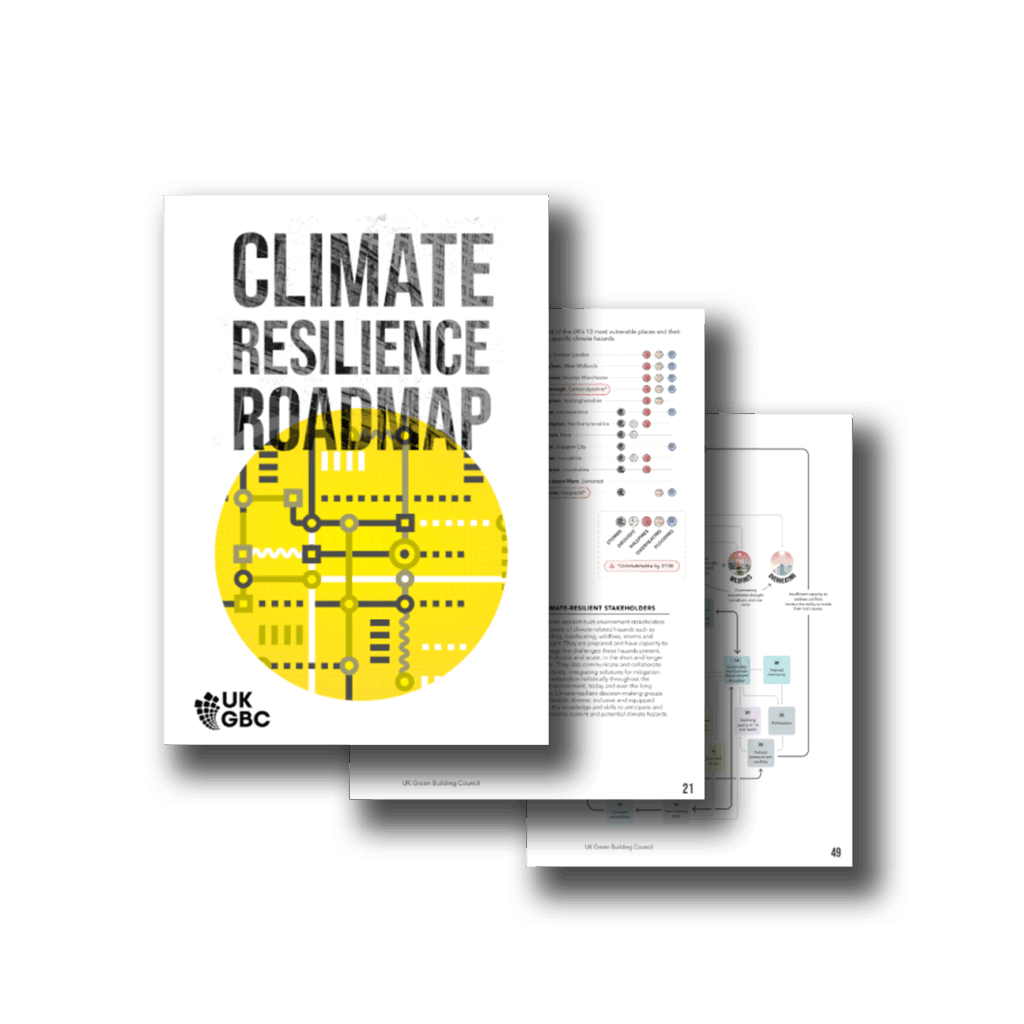
    The CCC has made the challenge plain: the UK must adapt faster or face mounting threats to people, places and the economy. UKGBC’s Climate Resilience Roadmap shows how that shift can be made in practice, with joined-up action across the built environment and government. The challenge is serious, but it is not beyond us if we choose to act now.”

    The Climate Change Committee’s (CCC) latest assessment of climate risk is a clear and urgent signal that the UK must accelerate adaptation now. Climate impacts are already being felt across the country, and the report makes plain that higher temperatures, flooding, drought and cascading infrastructure risks will intensify unless government, business and communities act at pace. UKGBC strongly welcomes the CCC’s focus on practical, evidence-based action, and the emphasis on clear targets, delivery plans and accountability.

    This message echoes what UKGBC has been saying through our Climate Resilience Roadmap, which sets out how the built environment can move from awareness of climate risk to assessment, prioritisation and implementation. We have long argued that resilience cannot sit in isolation: it must be integrated with decarbonisation, nature, health and wellbeing, and long-term value. The CCC’s report reinforces that approach, particularly in relation to homes, infrastructure, public services, and the need to protect the most vulnerable.

    On the built environment, the CCC highlights the need for new buildings to be fit for a changing climate, for existing homes and assets to be retrofitted and upgraded, for better preparedness, and for cooling and water resilience to be addressed at scale. UKGBC’s Climate Resilience Roadmap supports exactly this shift: from broad ambition to the practical, site, portfolio, and community-level decisions needed to reduce risk and deliver more resilient places.

    For industry, the message is straightforward. Climate resilience needs to become a core part of investment, design, planning, procurement and asset management. That means acting now on heat risk, flood risk, water scarcity and infrastructure interdependencies, and using the tools, standards and methods already available to make adaptation routine rather than exceptional.


    For government, the priority is equally clear. The CCC sets out the case for stronger objectives, measurable targets, delivery plans and monitoring, backed by regulation, standards and investment. UKGBC support this direction and would add that policy must enable joined-up action across departments and sectors, so that resilience measures are not delivered piecemeal. Planning policy, building standards, infrastructure development, and funding programmes all need to reflect the climate risks we already face, and the more severe future risks that are now unavoidable.

    There is a strong case for greater emphasis on nature-based solutions, passive cooling, flood risk management and long-term asset maintenance, all of which can deliver resilience and wider co-benefits. The CCC’s analysis shows that many adaptation actions are cost-effective today, and that delay only increases cost and harm. UKGBC believes this should galvanise a shift in both mindset and delivery: adaptation is no longer a future issue, but an immediate investment in safety, wellbeing and economic stability.

    The CCC’s report and UKGBC’s Climate Resilience Roadmap both make the same case: adaptation needs to move from principle to practical delivery. The UK needs clear leadership, practical delivery and sustained investment to create a well-adapted built environment. The opportunity here is to reduce harm, protect lives and livelihoods, and create places that resilient, inclusive and fit for the climate reality we are already entering.

    The post UKGBC responds to the CCC’s ‘A Well Adapted UK’ report appeared first on UKGBC.

  • From Learning to Doing: Taking your Sustainability Knowledge Further 

    Hello, learner. 

    Are you ready to start building your knowledge about sustainability and the built environment?  

    Great. But before you dive in, I want to ask you one important question:

    What will you do with that new knowledge?  

    It might feel like an odd place to start. But in my world of learning and development, we’ve come to realise something vital: knowledge alone doesn’t change much. Real change happens when knowledge is applied; when it shifts how we think, decide and act in our day-to-day roles and drives action.  

    Building your Sustainability Knowledge with UKGBC

    A great starting point is our Level 1 learning. 

    UKGBC’s introductory learning is designed to support professionals across the built environment to build essential sustainability knowledge, no matter your foundations. 

    If you’re new to sustainability and want a clear introduction to the core concepts, our starter pack is a great place to begin. It includes: 

    Together, these courses will help you build confidence, develop a shared language and understand how sustainability connects to your role. By the end, you’ll feel more knowledgeable and better equipped to take part in meaningful conversations at work.  

    If you’re looking to go deeper into specific topics, you can also explore our courses on Carbon Reduction and Climate Resilience and Adaptation, two interconnected areas that are increasingly critical across the built environment.  These courses support you to bring key concepts into your work and engage more effectively with design teams and clients.

    Knowledge is the Start, Action is the Point

    But here’s the thing. 

    Knowing more, or understanding more, is only the beginning. The harder and more important part comes after the learning.  

    That’s the doing. 

    By “doing”, we don’t mean something huge, unique or heroic. But we do believe it needs to be something, a first step. If none of us change anything we do, we won’t achieve the transformation the built environment needs into something regenerative, green, healthy and resilient. 

    So, I’ll leave you with one final question

    Once you’ve completed one of our courses, what one thing will you do differently to help advance the transformation of the built environment?  

    Because knowledge matters. 
    But knowledge put into action is what creates change. 

    The post From Learning to Doing: Taking your Sustainability Knowledge Further  appeared first on UKGBC.

  • Takeaways from the King’s Speech 2026

    The King’s Speech and state opening of parliament has gone ahead as the Government despite continued political turbulence around Labour’s leadership and strategy. While speculation around Cabinet dynamics and future leadership contests continues, the overall direction of travel on growth, energy security and planning reform looks unlikely to shift significantly in the short term.

    For the built environment sector, the key takeaway is that many of the Government’s core priorities – accelerating infrastructure delivery, reforming planning, improving energy security and addressing housing quality – remain firmly on the legislative agenda. Below are some of the bills most relevant to UKGBC members and the wider built environment industry:

    Energy Independence Bill

    One of the flagship measures introduced, the Energy Independence Bill focuses on improving energy security, accelerating clean energy deployment and reducing exposure to volatile fossil fuel markets. A further bill will increase the tax charged on ‘excess profits’ made by electricity generation companies (Electricity Generator Levy Bill). Expected measures range from reforms to electricity market pricing and planning changes for energy infrastructure, through to making it easier to install EV charging infrastructure, and the Nuclear Regulation Bill will implement recommendations from the Fingleton Review, including changes intended to speed up planning approvals for nuclear infrastructure.

    For the built environment industry, the direction of travel reinforces the growing importance of electrification, grid readiness and integrating low-carbon energy systems into buildings and places. It also reflects many of UKGBC’s longstanding calls for policy that supports clean energy deployment while reducing long-term energy costs for households and businesses. However, there is still a need for clarity on how ministers intend to support home energy efficiency upgrades at scale will remain critical for the sector.

    Social Housing Renewal Bill

    New legislation aimed at increasing long-term investment in affordable and social housing, will aim to increase long-term investment certainty for councils and housing associations, improve housing quality and introduce stronger protections for tenants.

    For the built environment sector, this could represent a significant opportunity to align housing delivery with wider affordable housing goals. Greater investment certainty over the longer-term should support the delivery of high-quality, energy efficient new social housing.

    Remediation Bill (Building Safety)

    The Government has introduced further legislation on building safety remediation following the Grenfell Tower tragedy. The proposed bill is likely to include a stronger legal duty to remediate unsafe cladding and wider measures aimed at improving accountability across the residential sector.

    For UKGBC members, this reinforces the continued importance of embedding safety, quality and long-term resilience across both new build and retrofit projects. The industry will be looking for legislation that not only accelerates remediation but also provides greater certainty around delivery responsibilities and funding mechanisms.


    Commonhold and Leasehold Reform

    While many more details of the legislation will come through over the coming months, the King’s Speech should provide a strong indication of where the Government intends to focus political and legislative capacity over the next parliamentary session, and should remain consistent regardless of what changes might happen at the top.

    For UKGBC, key questions remain around whether the Government will match its growth ambitions with the long-term policy certainty needed to deliver healthy, affordable, resilient and low-carbon places. In particular, industry needs stronger signals on retrofit delivery, climate adaptation, nature and the role the built environment can play in improving energy security and reducing household costs.

    What UKGBC Will Be Watching

    While many more details of the legislation will come through over the coming months, the King’s Speech should provide a strong indication of where the Government intends to focus political and legislative capacity over the next parliamentary session, and should remain consistent regardless of what changes might happen at the top.

    For UKGBC, key questions remain around whether the Government will match its growth ambitions with the long-term policy certainty needed to deliver healthy, affordable, resilient and low-carbon places. In particular, industry needs stronger signals on retrofit delivery, climate adaptation, nature and the role the built environment can play in improving energy security and reducing household costs.

    The post Takeaways from the King’s Speech 2026 appeared first on UKGBC.

  • UKGBC Launches #BuildingLife Roadmap Ambassadors Campaign

    UKGBC is launching today the  Roadmaps Ambassador Campaign, a collective effort from industry leaders and policymakers to support the adoption of the Net Zero Whole Life Carbon Roadmap and the UK Climate Resilience Roadmap across the built environment sector.  

    UKGBC’s Roadmaps guide the built environment sector in building a low carbon, resilient and regenerative built environment at the pace required to meet climate targets. Adopting the roadmaps more widely will help deliver a sustainable built environment that protects lives, homes, jobs, communities and nature.

    Why Now?

    Findings from the Whole Life Carbon Roadmap Progress Report show that the built environment is dangerously behind on decarbonisation. Since 2018, emissions in the built environment have fallen by just 14% against the 24% needed. The evidence is clear: systemic acceleration is required.  

    This campaign, part of WorldGBC’s #BuildingLife initiative, is working across Europe to eliminate emissions across the full lifecycle of buildings and deliver a climate-neutral built environment. It directly supports WorldGBC’s initiative which aims to promote a whole life carbon approach across 12 counties and supports the global ambition of making near-zero and resilient buildings the norm by 2030

    commercial retrofit

    Paul Cahalan, Associate Director of Membership, Marketing and Communications said:

    “This campaign comes at a critical time for the sector amid a rapidly changing climate and brings together industry and political voices to take the key messages from the two roadmaps deeper into industry and policy conversations. Though greater adoption, industry and policymakers can use the roadmaps to help create a low carbon, resilient and regenerative built environment.”

    The following individuals have joined the campaign as Roadmap Ambassadors:

    • Will Arnold, Head of Sustainable Materials, Useful Simple Trust.
    • Ashley Bateson, Director & Head of Sustainability, Hoare Lea.
    • Louise Clarke, Group Head of Sustainability, Berkeley Group PLC.
    • Georgia Elliott-Smith, Founder & Director, Fighting Dirty | Sustainability Director, Elliott Wood.
    • Emma Howard Boyd CBE, Chair, National Heat Risk Commission | Chair – ClientEarth Group Board | Co-Chair, HERA (formerly Climate Resilience for All)
    • Stephen Good, CEO, Built Environment – Smarter Transformation.
    • Douglas Morrison, Deputy CEO, Built Environment – Smarter Transformation.
    • Chinyelu Oranefo, Managing Director, Sustainability Advisory, Real Estate & Housing, Lloyds Corporate & Institutional.
    • Duncan Price, Partner, Sustainability, Buro Happold.
    • Rt Hon Chris Skidmore, OBE, Former UK Energy Minister, Chair of the Climate Action Coalition, Working Group Chair – UK Transition Finance Council.
    • Simon Sturgis, Founder, Targeting Zero
    • Katherine Willis, Baroness Willis of Summertown, Principal, St. Edmund Hall, University of Oxford | Professor of Biodiversity in the Department of Biology, University of Oxford | Cross-Bench Peer, House of Lords | Founder and Director, NatCap Research LTD.

    The post UKGBC Launches #BuildingLife Roadmap Ambassadors Campaign appeared first on UKGBC.

  • Reducing Carbon Specification v Substitution (Guest Post) G#43394

    Reducing Carbon Specification v Substitution Guest Post

    GBE > Advertise > Collaborate > Services > Guest Posts > G#43394

    About:


    Reducing Carbon Through Specification, Not Substitution

    Efforts to reduce greenhouse gas emissions in the built environment increasingly focus on material selection. However, material substitution alone does not reliably deliver carbon reduction. A lower-carbon alternative product may underperform structurally, increase maintenance cycles, require greater quantities, or introduce unintended compliance risks. Consequently, carbon reduction in construction should be pursued through precise specification rather than simplistic substitution.

    Specification refers to the documented performance, technical, and environmental requirements for products and systems within a construction project. It defines measurable criteria—such as compressive strength, thermal conductivity, fire classification, durability class, and environmental impact metrics—against which products are tested, accredited, or certified.

    It is vitally important that both performance and environmental criteria are included within a robust specification clause. These criteria form the basis for equivalency comparisons during “value engineering,” cost-cutting, and substitution scenarios. Notably, value engineering as often practiced within UK quantity surveying can focus on individual components and initial costs at the expense of whole systems and whole-life performance.

    Substitution, by contrast, refers to replacing one product with another—often driven by contractor-led initial cost savings or a single attribute such as embodied carbon.

    This article examines how carbon reduction can be achieved more effectively through performance-based specification, supported by recognised standards, structured Life Cycle Assessment (LCA), and whole-life carbon evaluation in accordance with UK practice.

    Defining Carbon in Construction

    Carbon in construction is typically divided into:

    • Embodied carbon: greenhouse gas emissions associated with extraction, manufacturing, transport, construction, maintenance, and end-of-life
    • Operational carbon: emissions arising from energy use during the building’s operational life

    Embodied carbon is quantified through Life Cycle Assessment (LCA), standardised under ISO 14040 and ISO 14044. For buildings, LCA methodology is structured under BS EN 15978, which divides assessment into modules (A1–D).

    Environmental data is commonly provided through Environmental Product Declarations (EPDs), prepared in accordance with BS EN 15804 and reporting Global Warming Potential (GWP) in kgCO₂e.

    However, EPDs are only comparable when based on identical Product Category Rules (PCRs), functional units, and system boundaries. Specification decisions must therefore interrogate declared units, lifecycle stages, and data quality.

    The Limitations of Material Substitution

    A common approach to reducing embodied carbon is replacing a product with one perceived to have lower GWP per kilogram. This approach is limited:

    1. Functional equivalence may not be maintained
      Lower-strength materials may require increased volume.
    2. Assembly-level impacts may increase
      For example, insulation with lower embodied carbon may require greater thickness. While unlikely to directly increase structural loading significantly, it may influence the size or detailing of surrounding structural components and envelope systems.
    3. Durability assumptions may change
      Shorter service life increases lifecycle emissions (B stage impacts).
    4. Regulatory compliance or competency risks may emerge
      Fire, structural, moisture, or acoustic performance may be compromised.

    Carbon reduction should therefore prioritise performance thresholds and lifecycle outcomes—not material categories.

    Performance-Based Specification

    A performance-based specification defines measurable outcomes:

    • Concrete specified by strength class and maximum GWP per cubic metre
    • Insulation specified by thermal conductivity, fire classification, and increasingly decrement factor to address summer overheating
    • Steel specified by recycled content and verified EPD data

    This approach enables manufacturers to innovate—reducing clinker content, increasing recycled inputs, and improving efficiency—without forcing wholesale material replacement.

    Concrete as a Case Study

    Concrete contributes significantly to embodied carbon due to cement production emissions.

    Substitution strategies (e.g., replacing concrete with timber or steel) introduce trade-offs:

    • Steel is energy-intensive
    • Timber requires assumptions about durability and end-of-life scenarios

    There is also increasing debate around how LCA methodologies treat timber end-of-life scenarios—often relying on speculative assumptions (e.g., landfill or incineration decades into the future), while equivalent assumptions for steel and concrete are treated differently. In reality, a mature circular economy may significantly alter these outcomes, enabling reuse rather than disposal.

    A more robust approach is specification-led optimisation:

    • Lower cement content mixes
    • Increased use of supplementary cementitious materials (SCMs) such as ground granulated blast furnace slag (GGBS).
    • Avoiding over-specification
    • Specifying strength only where required

    This allows the supply chain to value engineer in its true sense—optimising performance and carbon, not simply reducing cost.

    Operational Versus Embodied Carbon

    A common concern is that reducing embodied carbon may compromise operational performance.

    The correct approach is integrated assessment:

    • Operational performance regulated under Approved Document L
    • Whole-life carbon assessed over a typical UK design life of 60 years

    Specification must be building performance context-sensitive, balancing embodied and operational impacts.

    Addressing EPD Limitations

    EPDs have limitations:

    • May reflect industry averages
    • Often exclude transport (A4 stage)
    • Vary in end-of-life assumptions

    Specification must therefore:

    1. Confirm lifecycle stages
    2. Ensure consistent functional units

    (e.g., per m³, per m² at defined thickness).

    1. Adjust for project-specific conditions (e.g. transport miles)

    Without this, substitution decisions risk being misleading.

    Fire and Structural Compliance

    Specification must align with statutory requirements:

    • Fire classification (BS EN 13501-1)
    • Structural compliance (Eurocodes)

    Carbon reduction must not compromise structural and life safety factors.

    Whole-Life Costing

    Whole-life costing (ISO 15686-5) considers capital, maintenance, and disposal.

    Specification should define:

    • Service life expectations
    • Maintainability and maintenance cycles

    This aligns with established BS and ISO standards on durability and life expectancy.

    Design Optimisation Before Material Change

    Carbon reductions can often be achieved without substitution:

    • Optimising structural grids
    • Reducing spans
    • Avoiding unnecessary finishes
    • Minimising overdesign

    Further efficiencies include:

    • Dimensional coordination to reduce offcut waste
    • Selecting manufactured sizes aligned to grid systems
    • Choosing smaller components to reduce size of perimeter offcuts
    • Replacing multiple low-performance layers with a single higher-performance component
    • Using multifunctional components avoiding multiple components

    Design efficiency should always precede material change.

    Circularity and Adaptability

    Specification can support circular economy principles:

    • Reversible connections
    • Disassembly documentation
    • Recycled content thresholds without compromising performance
    • Avoiding hard-to-recycle composites

    Cost Versus Performance

    Low-carbon specification may increase upfront cost in some cases, though this is not universal.

    Market evidence suggests specification requirements can drive competition and reduce cost premiums over time—although this remains optimistic and dependent on market maturity.

    Costs must be evaluated against:

    • Lifecycle carbon
    • Regulatory trajectory
    • Potential future carbon pricing

    Conclusion

    Reducing carbon through specification rather than substitution provides a more reliable and defensible pathway.

    Substitution alone risks:

    • Increased material use
    • Reduced durability
    • Compliance issues
    • Misleading carbon assessments

    Effective carbon reduction requires:

    • Life Cycle Assessment (ISO 14040, ISO 14044, BS EN 15978)
    • Verified EPDs (BS EN 15804)
    • Structural compliance (Eurocodes)
    • Fire performance verification (BS EN 13501-1)
    • Consideration of all building performance criteria—not solely carbon
    • Whole-life costing (ISO 15686)

    Carbon reduction must be embedded within specification frameworks.

    The regulatory landscape remains both voluntary and evolving, with ongoing discussion around measures such as a potential Building Regulations Approved Document Z—which, despite industry advocacy, has yet to be formally implemented by the UK Government.

    A standards-aligned, specification-led approach ensures clarity, comparability, and robust whole-life carbon outcomes—without compromising safety, durability, or performance.


    GBE Team 

    Guest Author

    Name: Preeth Vinod Jethwani

    Editorial comments: BrianSpecMan


    © GBE GBC GRC GIC GGC GBL NGS ASWS Brian Murphy aka BrianSpecMan ******
    27th March 2026

    Images:


    GBE Team 

    Guest Author


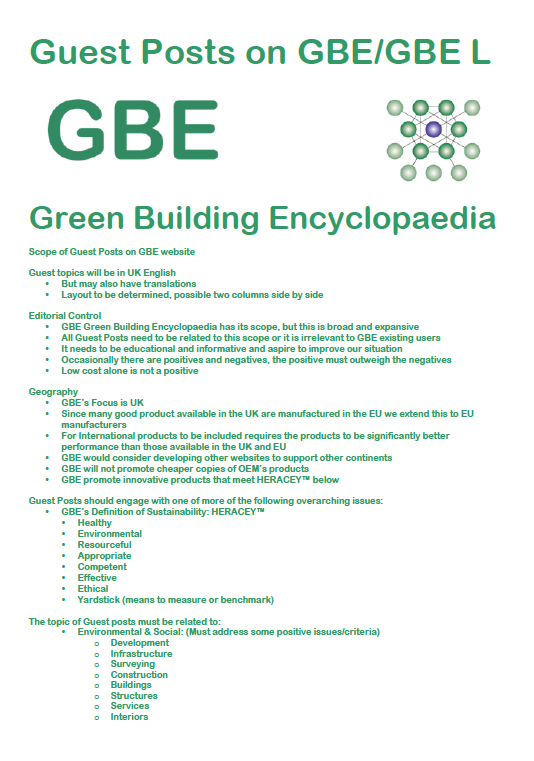
    Guest Posts on GBE A01 BRM 020420 PNG, GBE Guest Post (Collaborate) G#

    Equivalency Cover, GBE CPD, Or Equivalent,

    GBE Green Building Encyclopaedia GBL Green Building Learning GBS Green Building Specification CPD Continuing Professional Development Seminar lecture A90 Performance Specification A06 BRM BrianSpecMan 210226 S1 Cover Slide PNG

    GBE Specification Clause Content CPD

    GBE Specification Clause Content CPD


    © GBE GBC GRC GIC GGC GBL NGS ASWS Brian Murphy aka BrianSpecMan ******
    27th March 2026

    See Also:


    GBE Guest Posts


    GBE Circular


    GBE Links


    GBE Other’s Stuff


    GBE Brain Dumps


    GBE CPD Titles


    © GBE GBC GRC GIC GGC GBL NGS ASWS Brian Murphy aka BrianSpecMan ******
    27th March 2026

    Reducing Carbon Specification v Substitution (Guest Post) G#43394 End.

    The post Reducing Carbon Specification v Substitution (Guest Post) G#43394 appeared first on Green Building Encyclopaedia.